

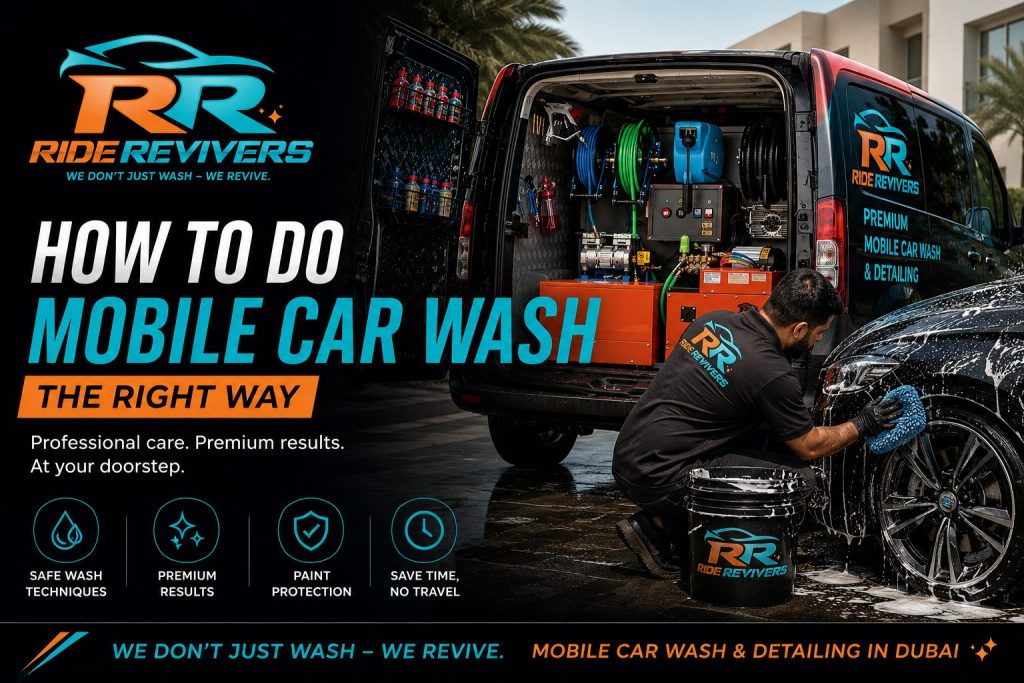
A quick rinse in a parking lot can make a car look cleaner for an hour. A proper mobile service does far more. If you want to learn how to do mobile car wash in a way that protects paint, lifts grime safely, and leaves a polished finish at the customer’s location, the process matters as much as the products.
Mobile washing is not just a regular wash moved outdoors. You are working around heat, limited space, customer schedules, and different vehicle conditions. That means your setup, technique, and finish standards need to be tighter, not looser. When done well, a mobile wash delivers convenience without sacrificing shine.
How to do mobile car wash without cutting corners
The first step is preparation. Before water touches the vehicle, assess the condition of the paint, wheels, glass, and interior touchpoints. A lightly dusty sedan needs a very different approach than an SUV covered in road film, brake dust, and dried bird droppings. This short inspection helps you choose the right chemicals, the right wash method, and the right amount of time.
Your mobile setup should be organized and professional. That usually means clean microfiber towels separated by task, dedicated wheel brushes, a safe wash mitt, spray bottles labeled clearly, and enough water or waterless products for the service type. If you are using a tank-and-pressure system, make sure pressure is strong enough to loosen dirt but not so aggressive that it drives grit across the surface. If you are offering eco-conscious doorstep service in a residential setting, low-water methods can be a strong advantage, but only when the vehicle is not heavily soiled.
Temperature and timing also affect results. Washing a hot car in direct sun can cause soap, rinseless solution, or water spots to dry before you can wipe them properly. If possible, position the vehicle in shade or work panel by panel. Premium results often come from controlling small details like this.
Start with the dirtiest areas first
Wheels, tires, and lower panels usually carry the heaviest contamination. Clean them before the paint so brake dust and grime do not splash back onto already washed surfaces. Use separate tools for wheels and tires. This is non-negotiable. The dirt found on wheels is harsher than what sits on the hood or doors, and using the same mitt across both can leave marks.
Spray a wheel-safe cleaner, agitate with the proper brush, and rinse or wipe thoroughly depending on your method. Tires should be scrubbed until old dressing and brown residue are removed. That clean base is what gives tire dressing a dark, even finish later instead of a patchy shine.
After that, move to bug splatter, bird droppings, and stuck-on residue around the front bumper, mirrors, and lower doors. Let the product dwell long enough to soften buildup, but do not let it dry. The goal is always the same – remove contamination with lubrication and patience, not pressure.
Use the right wash method for the condition
If the car is moderately to heavily dirty, a pre-rinse followed by a safe hand wash is the better choice. If the car has only light dust or fresh road film, a rinseless or water-saving method can work very well in a mobile setting. This is where many people get it wrong. They use one method for every vehicle because it is faster. That may save minutes, but it can cost gloss.
For a traditional hand wash, start with a pre-soak or foam to loosen dirt. Then wash from top to bottom using straight-line motions rather than circles. Roof, glass, hood, upper doors, lower sections, and rear should be handled in that order. The lower the panel, the more contamination it holds.
Rinse your mitt often and switch towels when needed. A towel that has reached its limit stops being safe. Premium service is built on clean tools as much as skilled hands.
With a rinseless method, lubrication becomes even more important. Use multiple clean microfiber towels, fold them properly, and change sides often. One overloaded towel can undo all the care you put into the first half of the vehicle.
Drying is where finish quality shows
A lot of washes go wrong after the cleaning is done. Poor drying creates streaks, missed drips, and swirl marks that flatten the final look. Use a dedicated drying towel with high absorbency and keep it clean. If needed, support the drying stage with a drying aid or spray sealant to increase slickness and gloss.
Work top down again and pay attention to mirrors, badges, handles, trim edges, and wheel nuts where water tends to hide. Compressed air or a compact blower can help in a mobile setup, especially if you want a cleaner finish on grills and emblems.
This is also the point where a wash starts to feel premium. Customers notice the difference between a car that is mostly dry and a car that looks finished.
Interior touch-ups should feel fresh, not rushed
Many customers booking a mobile wash want more than exterior shine. They want the cabin to feel reset. Even if the package is not a full interior detail, the basics should be done well. Remove loose dust, vacuum visible debris, wipe high-touch surfaces, clean interior glass, and finish with a neat, dry appearance.
Avoid greasy dressings on dashboards and door panels. A clean satin finish looks more refined and attracts less dust. On family vehicles, this matters even more because fingerprints, crumbs, and light stains build up quickly. For busy professionals, clean glass and a fresh cabin often matter just as much as paint shine because that is the space they live with every day.
There is a trade-off here. A fast maintenance wash should not promise deep stain extraction or odor treatment unless that service is actually included. Clear scope protects the customer experience and keeps your standards intact.
Add protection if you want the wash to last
If you are serious about learning how to do mobile car wash well, think beyond cleaning. Protection is what keeps the finish looking revived after the appointment ends. A basic spray wax or sealant adds gloss, improves water behavior, and makes the next wash easier. It also helps customers feel that visible difference between a standard wash and a premium one.
Not every vehicle needs the same level of protection. A commuter car that gets washed regularly may benefit from a quick maintenance sealant. A darker vehicle exposed to strong sun may need more careful polishing and a stronger protective layer over time. If the paint feels rough even after washing, that is usually a sign that a clay treatment or deeper decontamination may be the better next step, not more soap.
This is where service quality grows. You are not just cleaning what is visible today. You are helping preserve finish, resale value, and the overall impression of the vehicle.
How to do mobile car wash as a professional service
Technique matters, but presentation matters too. Arrive on time, work neatly, communicate clearly, and leave the space as clean as you found it. Customers choosing a doorstep wash are paying for convenience, but they are staying for consistency.
That means confirming the package before you begin, setting realistic expectations based on the vehicle’s condition, and pointing out any areas that need advanced treatment. A heavily neglected interior, etched water spots, or scratched paint cannot be solved by a maintenance wash alone. Being honest about that builds trust.
It also helps to structure your service around outcomes rather than vague promises. Exterior wash for gloss and clean paint. Interior refresh for a fresher cabin. Add-on protection for longer-lasting shine. That language is easier for customers to understand and easier for a premium brand to deliver consistently.
In areas like Dubai, where heat, sand, and daily driving can dull a vehicle quickly, mobile washing only works at a high level when the process is disciplined. Convenience gets attention. Results earn repeat bookings.
Common mistakes that lower the finish
The biggest mistake is rushing the contact wash. Dirt that should have been loosened first gets dragged across the paint instead. The second is reusing dirty towels too long. The third is offering the same quick method for every vehicle, whether it needs a light refresh or a deeper clean.
Another common issue is focusing only on body panels and ignoring the details that customers notice immediately – tire finish, clean glass edges, door jamb touch-ups, and dry trim. These are small things, but they shape whether the vehicle looks washed or truly cared for.
A strong mobile wash feels effortless to the customer because the system behind it is disciplined. That is the standard worth aiming for.
If you want your mobile wash to stand out, treat every appointment like a revival, not a rinse. Clean safely, finish carefully, and make the vehicle look like someone took real pride in touching it.