

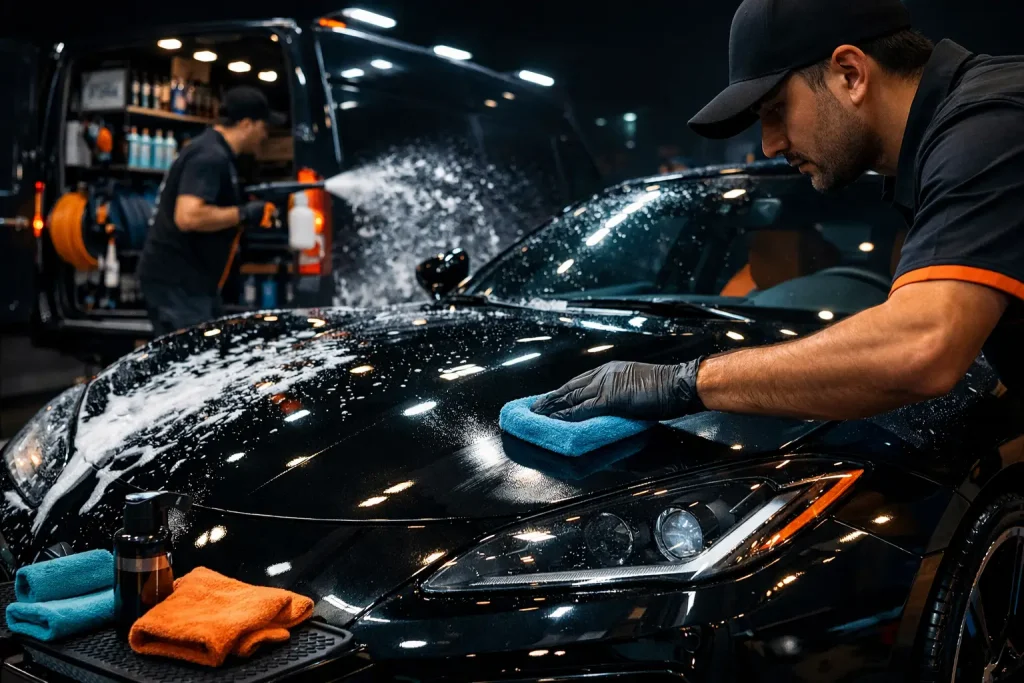
A freshly detailed car looks incredible for about five minutes in real-world conditions. Then the dust settles, water spots show up, and daily driving starts to chip away at that just-finished shine. That is exactly why ceramic coating for cars has become one of the most requested protection services among owners who want their vehicle to stay glossier, cleaner, and easier to maintain without constant effort.
For busy drivers, the appeal is simple. You want protection that lasts longer than a standard wax, looks better than a quick shine product, and does not demand a full detailing appointment every few weeks. Ceramic coating fits that need well, but only when expectations are realistic and the prep work is done properly.
What ceramic coating for cars actually does
Ceramic coating is a liquid protective layer applied to a vehicle’s painted surfaces. Once cured, it bonds to the surface and creates a more durable shield than traditional wax or sealant. The result is a slick, glossy finish that helps repel water, reduce dirt buildup, and make routine washing easier.
The biggest visible change is usually the finish. Paint tends to look deeper, sharper, and more reflective after the coating is applied. Dark colors often show this most dramatically, but lighter vehicles benefit too because the surface looks cleaner and more refined.
Protection is the other major reason people book it. A ceramic coating helps defend the paint against UV exposure, road grime, bird droppings, light chemical contaminants, and everyday environmental fallout. It does not make the car indestructible, but it does give the surface a stronger line of defense than wax alone.
What it does not do
This is where many car owners get misled. Ceramic coating does not make your vehicle scratch-proof. It does not stop rock chips, prevent door dings, or erase swirl marks that are already in the paint. If the paint has defects before application, the coating can actually lock those flaws in under a very glossy layer.
That is why prep matters so much. Washing, decontamination, and in many cases paint correction are what create the clean, even surface the coating needs. If anyone offers ceramic coating as a fast add-on with no serious prep, the finish usually tells the story later.
It also does not mean your car never needs washing again. Dirt still lands on the surface. The difference is that contaminants have a harder time sticking, and cleaning usually takes less time and less effort.
Why drivers choose it over wax
Wax still has a place. It is affordable, it adds shine, and it works well for owners who enjoy frequent upkeep. But it is short-term protection. Heat, washing, and weather break it down relatively quickly.
Ceramic coating lasts longer and performs better in daily use. For drivers who park outside, commute often, or simply want a cleaner-looking vehicle between washes, that extra durability is the main advantage. The surface stays glossier for longer, water beads more effectively, and maintenance becomes more manageable.
For families with multiple vehicles or professionals who do not have time to keep booking appearance touch-ups, that convenience matters. A protected car is not just easier to clean. It usually looks newer for longer, which is part of the value.
When ceramic coating for cars makes the most sense
Not every vehicle needs ceramic coating right away. If a car has neglected paint, oxidation, or visible swirl marks, the better first move may be correction and restoration before sealing in the finish. If the paint is in good condition, ceramic coating becomes a smart way to preserve it.
It makes the most sense for newer cars, recently polished vehicles, premium daily drivers, and any owner who cares about long-term appearance. It is also a strong choice before seasons of intense heat and sun exposure, especially in places where UV damage and dust are part of normal driving conditions.
There is also a resale angle. Buyers notice paint condition quickly. A vehicle that has been protected and maintained well tends to present better, photograph better, and hold stronger visual appeal when it is time to sell or trade in.
The process behind a proper ceramic coating service
A quality ceramic coating service is not just a bottle and an applicator pad. The real work happens before the coating touches the paint.
The vehicle should first be washed thoroughly to remove loose dirt and surface grime. Then comes decontamination, which may include clay bar treatment to lift bonded contaminants that normal washing leaves behind. If the paint has swirl marks, haze, or light scratches, polishing or paint correction may be recommended to improve clarity before protection is applied.
Once the surface is fully prepared, the ceramic coating is applied carefully panel by panel. After that, it needs time to cure. Exact cure times vary by product and conditions, but this stage is critical. Rushing the process can affect bonding and long-term performance.
This is one reason mobile service matters more than people think. The convenience is obvious, but so is the value of having trained technicians handle prep and application professionally at your location. When done right, the service saves time without lowering standards.
How long does ceramic coating last?
It depends on the product used, how well the surface was prepared, how the car is maintained afterward, and what kind of conditions the vehicle sees every day. A professionally applied coating can last far longer than wax, but longevity is never one-size-fits-all.
A car that lives outdoors, goes through frequent washing, and faces heavy sun and road exposure will wear protection differently than a weekend vehicle kept covered most of the time. Maintenance also matters. Using the wrong wash methods can shorten the life of the coating and dull the finish.
That is why ceramic coating should be seen as a long-term protection step, not a one-time miracle fix. The better the aftercare, the better the result over time.
Is ceramic coating worth the cost?
For the right owner, yes. The value is not just in the shine on day one. It is in easier maintenance, stronger surface protection, and a vehicle that keeps its polished look with less effort. If you already invest in keeping your car clean and well-presented, ceramic coating often saves time and helps those results last longer.
If you are looking for the cheapest possible way to add short-term shine, wax may be enough. But if you want your vehicle to stay protected through daily use and still turn heads in the parking lot, ceramic coating is the more serious option.
This is especially true for drivers who see their vehicle as part of their personal standard. A clean, glossy, protected car feels different to drive, easier to maintain, and more satisfying to own.
Aftercare matters more than most people expect
Once the coating is in place, maintenance becomes easier, not optional. Gentle washing methods, proper drying, and avoiding harsh chemicals help preserve the coating’s performance. Letting bird droppings, bug remains, or hard water sit too long is still a bad idea, even with protection on the paint.
The good news is that upkeep becomes far more efficient. Dirt releases faster, the finish holds its gloss better, and your vehicle spends less time looking tired between services. For many owners, that convenience is what turns ceramic coating from a luxury add-on into a practical decision.
At Ride Revivers, that is the standard we believe in – not just making a car look good for the moment, but helping it stay revived, protected, and easier to care for in everyday life.
If you are considering ceramic coating, think beyond the product itself. The real question is whether you want your vehicle to keep fighting daily wear on its own, or whether you want to give it a finish built to hold its shine longer with less effort from you.