

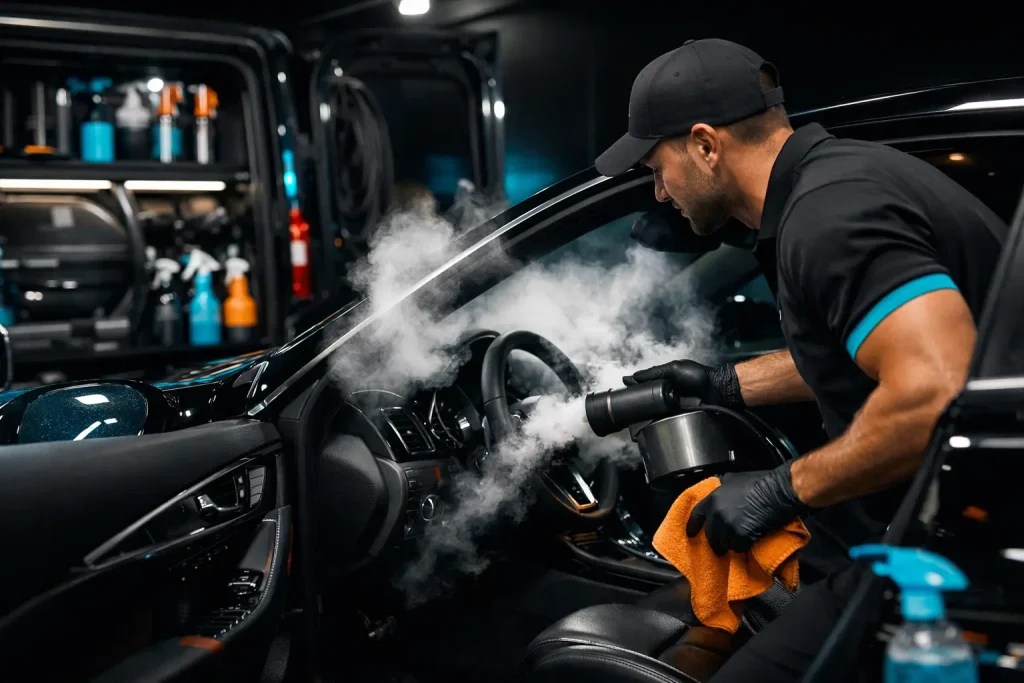
That stale smell hits the moment you open the door, and suddenly even a clean-looking car feels neglected. If you’re searching for how to remove car odor, the fix is rarely a stronger air freshener. Real odor removal starts with finding the source, cleaning it properly, and making sure it does not return the next day.
A car cabin is a small, enclosed space. That means smells settle into fabric, carpet, vents, and even the headliner faster than most drivers realize. Coffee spills, gym bags, food wrappers, pet hair, moisture, smoke, and old AC buildup all leave behind more than a surface-level scent. They create residue, and residue keeps producing odor until it is removed.
How to remove car odor by finding the real source
Before you spray anything, stop and identify what kind of smell you are dealing with. A sour smell usually points to moisture, mildew, or an old spill. A musty cabin often means water is trapped in the carpet or AC system. Smoke odor behaves differently because it clings to nearly every soft surface. Food and organic smells tend to hide under seats, inside seat rails, and in cup holders where crumbs and liquid collect.
This part matters because the right treatment depends on the source. If the smell comes from bacteria in damp carpet, perfume-based fresheners only layer over it. If the odor is inside your ventilation system, deep-cleaning the seats alone will not solve much. Premium results come from matching the cleaning method to the problem.
Start with a quick inspection in good light. Check under seats, floor mats, trunk corners, child seat bases, door pockets, and around cup holders. If you recently had a leak, pay special attention to the footwells. Press the carpet with a dry paper towel. If moisture transfers, you are not dealing with odor alone – you are dealing with trapped dampness.
Start with a full interior reset
The first real step is removing everything that can hold smell. Empty the car completely. That includes bottles, wrappers, sports gear, reusable shopping bags, trunk organizers, and floor mats. Many odors stay in the vehicle because the source is still sitting there in plain sight, just overlooked because it has become part of the daily routine.
Once the cabin is empty, vacuum thoroughly. Go beyond the obvious areas. Use a crevice tool along seat tracks, between cushions, inside storage compartments, and around the edges of the trunk. Dust, crumbs, pet dander, and hair all trap odor, especially when mixed with humidity.
Floor mats deserve separate attention. Rubber mats can usually be washed and dried completely. Carpet mats need a more careful cleaning because if they stay damp, they can make the whole car smell worse. Clean them, then let them dry fully before putting them back.
Clean fabric, carpet, and soft surfaces properly
If your seats and carpets are fabric, they are likely absorbing more odor than any other part of the cabin. Spot-cleaning visible stains helps, but broad odor removal usually requires cleaning the surrounding material too. Smells spread beyond the center of a spill, even after the stain fades.
Use a fabric-safe interior cleaner and work in sections. Light agitation with a soft brush helps lift residue from the fibers. Do not soak the material. Too much liquid can push the problem deeper into the padding and create a moisture issue that takes longer to fix.
After cleaning, extraction is ideal if available. If not, blot with microfiber towels until the surface feels only slightly damp. Then leave the doors open in a shaded, ventilated area or use fans to speed drying. This is the part people rush, and it often determines whether the odor is actually removed or temporarily masked.
The headliner needs extra care. If it carries smoke or food odor, clean it gently with minimal product. Overwetting a headliner can loosen adhesive and create sagging. A light fabric-safe application and careful blotting usually works better than aggressive scrubbing.
Leather interiors need a different approach
Leather does not absorb odor the same way cloth does, but it still holds onto oils, smoke residue, and trapped grime in seams and perforations. If the car has a luxury interior, avoid harsh household cleaners. They can strip the finish and leave the surface looking dry or uneven.
Use a proper leather cleaner, especially around stitched areas and perforated panels where residue builds up. Follow with a conditioner if the product requires it. If the smell remains after cleaning the leather, it may actually be coming from the carpet, under-seat padding, or vents nearby.
Do not ignore the AC system
A car that smells fine when parked but unpleasant the moment the air turns on usually has contamination in the ventilation system. Dust, moisture, and bacteria can collect around the evaporator and vents, producing that familiar musty smell.
Replace the cabin air filter first. It is a simple step, but it makes a noticeable difference when the existing filter is old or dirty. After that, use an AC-safe odor treatment designed for vehicle ventilation systems. Let the fan run as directed so the product can circulate.
There is also a preventive habit that helps. A few minutes before you park, turn off the AC cooling and leave the fan running. That allows moisture to dry out inside the system instead of sitting there and feeding odor-causing buildup.
Smoke odor takes more than one pass
Smoke is one of the hardest smells to remove because it settles into fabric, plastic, leather, and glass at the same time. If you are dealing with cigarette or cigar odor, clean every interior surface, not just the seats and carpet.
Wipe down glass, dashboard surfaces, door panels, steering wheel, and trim. Smoke film on glass is easy to miss, but it continues to carry odor. Fabric and headliner cleaning matter more here, and the cabin air filter should almost always be replaced.
Even with careful cleaning, smoke can be stubborn. This is one of the clearest cases where professional interior detailing is worth it. Ozone or specialized odor-neutralizing treatment may be needed, but it depends on how long the smoke exposure lasted and whether the vehicle is still being smoked in.
Natural remedies can help, but know their limits
Baking soda can help absorb mild lingering smells from carpet or cloth seats when sprinkled lightly, left for several hours, and vacuumed thoroughly. Activated charcoal can also reduce residual odor when left inside the cabin for a day or two.
These methods are useful after cleaning, not instead of cleaning. If there is a milk spill under the seat or mildew in the carpet padding, absorbents will not solve the root issue. They help polish the result, but they are not the main treatment.
When professional odor removal makes sense
Some odors are simply bigger than a quick weekend fix. Deep spills, pet accidents, smoke, repeated food spills, water intrusion, and long-term neglect usually need more than consumer sprays and a vacuum. The issue is not effort alone – it is access to the right tools, extraction methods, and products that neutralize odor rather than covering it up.
That is where a premium detailing service can save time and frustration. A proper interior reset targets seats, carpets, mats, trunk space, hard surfaces, and ventilation-related odor points in one process. For busy owners, especially families with multiple vehicles, that kind of professional care is often the fastest route back to a cabin that actually feels revived.
How to keep car odor from coming back
Once the smell is gone, maintenance matters. Avoid leaving food containers, damp towels, sports gear, or trash in the cabin overnight. Clean spills immediately, even small ones. Wash floor mats regularly, and replace the cabin air filter on schedule.
If you live in a hot climate, parked heat can intensify any lingering residue inside the car. That makes quick cleanup even more important. A clean interior does not just look better – it stays fresher because there is less organic material and moisture available to create odor in the first place.
A light air freshener is fine if you enjoy it, but it should feel like the finishing touch, not the solution. The best-smelling car is not the one with the strongest fragrance. It is the one that has been cleaned well enough that it smells like nothing at all – just fresh, dry, and properly cared for.
If your car still smells off after a full clean, trust that signal. Odor is usually evidence, not mystery. Remove the cause with the same attention you would give the paint, the shine, or the finish, and the cabin starts feeling premium again every time you open the door.