

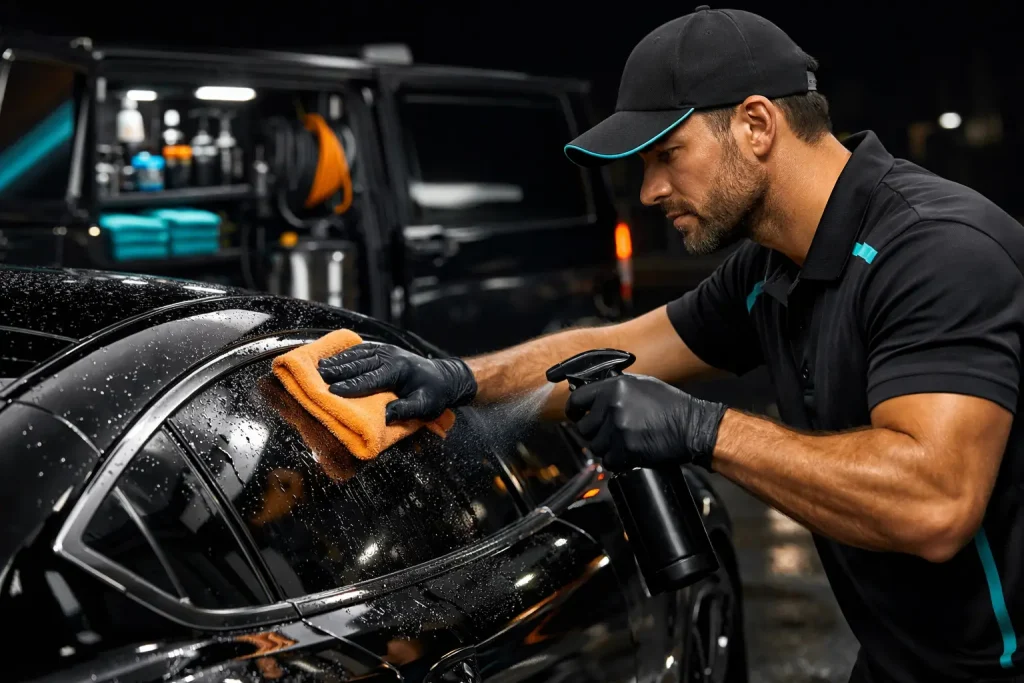
A clean car can develop chalky rings in a single afternoon. A few dried drops from a wash, sprinkler, rain shower, or AC runoff can leave mineral residue on paint and glass. Knowing how to remove water spots properly matters because the wrong shortcut can turn a removable mark into dull, scratched, or etched paint.
The good news is that most fresh water spots respond well to a careful wash and the right product. Older spots need more patience, and deeply etched marks may require professional polishing. The goal is not to scrub harder. It is to remove the minerals safely, then restore protection so the next wash leaves a spotless finish.
What Water Spots Are and Why They Get Worse
Water spots form when water evaporates and leaves behind minerals such as calcium and magnesium. On a dark vehicle, they often look like white or gray circles. On glass, they can create a hazy film that becomes especially noticeable in sunlight or at night.
Heat accelerates the problem. When droplets sit on a hot hood, roof, or windshield, the water disappears quickly while the minerals stay behind. In places with strong sun and mineral-heavy water, a vehicle can pick up visible spotting between routine washes.
There are two levels of damage. Surface deposits sit on top of the clear coat, glass, or trim and can usually be removed with a dedicated water spot remover. Etched spots have started to mark the surface itself. At that stage, a cleaner may remove the mineral deposit but leave behind a faint ring that needs polishing to correct.
How to Remove Water Spots Without Damaging Paint
Start in a shaded area with a cool vehicle. Never work on panels that are hot to the touch. Heat causes products to dry too quickly, which can leave streaks and make the job harder.
Wash away loose dirt first
Do not apply a spot remover to dusty paint. Dirt and road grit can scratch the finish as you wipe. Rinse the vehicle thoroughly, then wash it with a pH-balanced car shampoo and a clean microfiber wash mitt. Use separate tools for wheels and paint so brake dust does not transfer onto body panels.
Rinse again and dry the car with a plush microfiber drying towel. If the spots disappear after washing and drying, they were likely fresh surface residue. If rings remain, move to a targeted treatment.
Use a dedicated water spot remover
Choose a product made specifically for automotive paint and glass. These formulas are designed to dissolve mineral deposits while being gentler than harsh household cleaners. Read the label carefully, especially if your car has matte paint, satin trim, paint protection film, or a ceramic coating.
Apply the product to a soft microfiber applicator or towel rather than spraying heavily across the entire panel. Work on a small section, such as half a door or a portion of the hood. Wipe gently in straight, overlapping passes, then remove the residue with a second clean microfiber towel.
Check the panel before repeating. If the spot improves but does not disappear, a second application may be enough. Avoid aggressive rubbing. Pressure does not remove minerals more effectively, but it can create fine swirls in the clear coat.
Use a vinegar solution only with caution
A diluted white vinegar solution can help with light mineral marks on exterior glass. Mix equal parts white vinegar and distilled water, apply it to a microfiber towel, and wipe a small glass section at a time. Follow with a clean, damp towel and dry the surface completely.
Vinegar is not the best first choice for paint, delicate trim, or coated surfaces. It is acidic, and leaving it on too long can affect sensitive finishes. Never allow it to dry on the vehicle. For paintwork, a purpose-made automotive water spot remover is the safer option.
Clay only after deposits are removed
If paint feels rough after washing, a clay bar or synthetic clay mitt can lift bonded contamination that normal shampoo cannot remove. It is useful when water spots are mixed with overspray, road film, or industrial fallout.
Clay does not repair etching. It also needs generous lubrication and careful technique because it can mar paint. After claying, apply a wax, sealant, or other protective treatment because the process removes existing surface protection.
Removing Water Spots From Glass, Chrome, and Trim
Glass usually tolerates mineral-removal products better than paint, but it still deserves a controlled approach. Clean the windshield, side windows, mirrors, and rear glass one section at a time. Use a dedicated glass microfiber towel to avoid lint and streaking.
For persistent spots on glass, a glass polish may be needed. This is different from a standard cleaner: it lightly refines the surface to improve clarity. It should be used sparingly and kept away from rubber seals and unpainted plastic unless the product instructions say otherwise.
Chrome and glossy black trim can show water spots quickly. Treat these surfaces with a trim-safe or metal-safe formula, then wipe dry with a clean microfiber towel. Avoid abrasive pads, scouring sponges, and stiff brushes. They may remove the spot, but they can leave permanent haze or scratches that are far more visible than the original deposit.
When Water Spots Need Professional Polishing
If you can still see the outline of a water spot after cleaning, the minerals may have etched into the clear coat or glass. This is common on cars that have sat in direct sun after a wash or sprinkler exposure.
Paint correction uses controlled polishing to level very fine surface damage and restore gloss. The right approach depends on the paint condition, panel age, paint thickness, and the severity of the etching. A light polish may correct mild marks, while deeper defects may need a more involved multi-step process.
This is a point where DIY work has real trade-offs. Polishing can dramatically improve a finish, but improper pads, compounds, or machine technique can create holograms, remove too much clear coat, or leave uneven results. For valuable vehicles, dark paint, or widespread etched spotting, trained detailing is the safer route.
What Not to Use on Water Spots
A few common shortcuts create more risk than reward. Do not use bathroom descalers, oven cleaner, abrasive powders, steel wool, or rough kitchen sponges on exterior paint. These products are not formulated for automotive finishes and can stain trim, damage coatings, or scratch clear coat.
Avoid washing a vehicle in direct sun when possible. Also skip the habit of letting it air-dry. Even filtered water can leave residue, and ordinary tap water can deposit minerals as each droplet evaporates.
Do not assume a ceramic coating makes water spots impossible. Quality protection helps water bead and makes routine cleaning easier, but droplets can still dry on the surface. A coated car still needs prompt drying and proper maintenance.
Keep Water Spots From Coming Back
Prevention is simpler than correction. After every wash, dry the vehicle promptly with clean microfiber drying towels or filtered air. Pay extra attention to mirrors, door handles, grilles, window seals, and panel gaps, where trapped water can run out later and leave streaks.
A durable wax, paint sealant, or ceramic coating adds a sacrificial barrier between mineral deposits and the clear coat. It will not eliminate spotting, but it gives you more time to remove water before deposits bond or etch into the finish. Reapply protection according to the product and your vehicle’s exposure to sun, water, and outdoor parking.
If sprinklers regularly hit your parking space, move the car when possible or cover it once the vehicle is completely cool and dry. A fresh rinse after sprinkler exposure is far easier than correcting baked-on mineral rings days later.
For cars that need consistent shine without another stop on the schedule, Ride Revivers brings professional washing, polishing, and protective care directly to your doorstep. A well-maintained finish is easier to clean, looks better in every light, and gives water spots far less chance to settle in.