

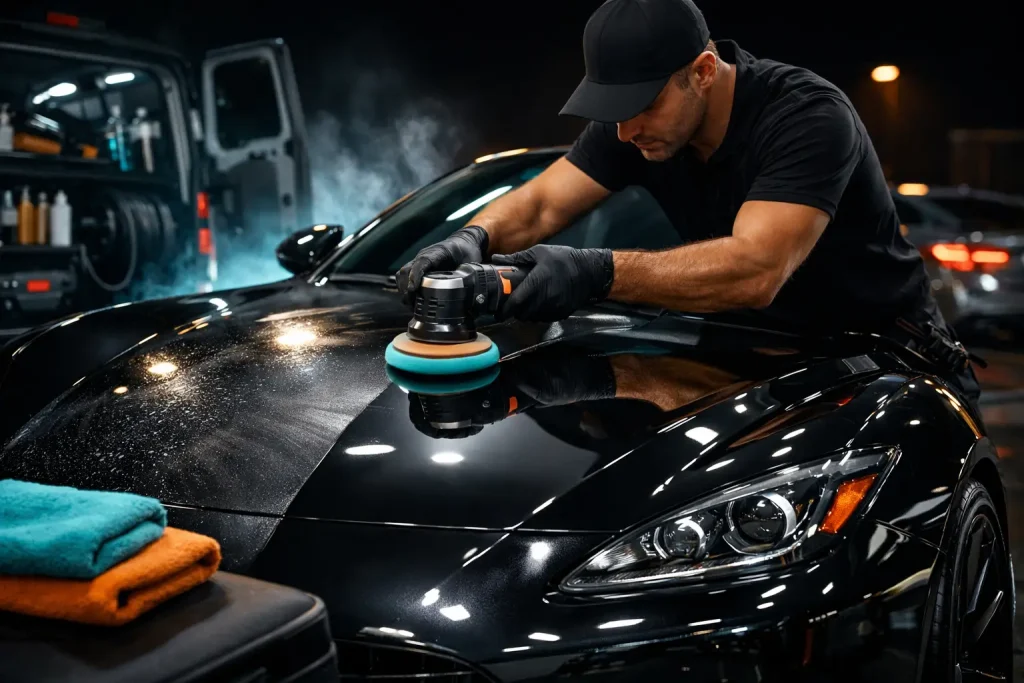
A car can be freshly washed and still look tired. That flat reflection, the web of swirl marks under parking lot lights, the hazy finish on darker paint – those are the signs that cleaning alone is no longer enough. This car paint correction guide is for owners who want more than a temporary shine. It is for anyone who wants their paint to look sharper, richer, and properly cared for.
Paint correction is the process of removing defects from a vehicle’s clear coat. That includes light scratches, swirl marks, oxidation, water spot etching, and dullness caused by improper washing or everyday exposure. It is not a cover-up. It is a controlled polishing process that levels out imperfections so the finish reflects light more evenly.
That difference matters because gloss is not just about wax or dressing. Real gloss comes from smooth paint. If the surface is full of fine damage, no wash package or quick polish will fully restore that deep, clean look.
What a car paint correction guide should make clear
One of the biggest misconceptions is that paint correction means the same thing for every vehicle. It does not. Some cars need a light one-step polish to lift haze and improve clarity. Others need a more involved correction process with compounding and refining to remove heavier defects.
The right approach depends on the paint condition, paint hardness, vehicle color, age, and owner expectations. A daily-driven family SUV with years of automatic car wash marks will need a different treatment than a newer sedan with mild swirl marks from hand washing. If you expect perfection, the process will be longer and more expensive than if your goal is a strong visual improvement.
This is where a professional assessment matters. Good paint correction is not aggressive for the sake of it. It is measured. The goal is to improve the finish safely while preserving as much clear coat as possible.
What paint correction actually fixes
When people hear the term, they often think only of scratches. In reality, correction targets a wider range of surface issues. Swirl marks are the most common. These are the circular micro-scratches that show up in sunlight or under direct lighting, often caused by poor wash technique, dirty towels, or automated brushes.
It can also reduce oxidation, which makes paint look chalky or faded. On darker vehicles especially, correction can dramatically improve depth and reflection. Water spot marks, light scuffs, and old polishing haze can often be improved as well.
What it cannot do is fix everything. If damage has gone through the clear coat into the base color, polishing alone will not remove it. Deep scratches, stone chips, peeling clear coat, and repaint issues may require touch-up work or body shop refinishing. A premium detailer should say that clearly rather than promise a miracle.
The basic stages of paint correction
Before any machine touches the paint, the vehicle needs proper prep. That starts with a safe wash to remove loose dirt, followed by chemical and physical decontamination. If bonded contaminants remain on the surface, they can interfere with polishing and even cause more marring during the process.
Once the paint is clean, the surface is inspected under proper lighting. This step matters more than most owners realize. Overhead garage lighting can hide defects that become obvious outdoors. Professional inspection helps identify the true condition of the finish and determines whether a one-step or multi-step correction makes sense.
The correction stage itself involves machine polishing with specific pad and compound combinations. A cutting stage removes heavier defects. A refining stage improves gloss and clarity. Not every car needs both. In many cases, a one-step polish delivers the best balance of visible improvement, time, and paint preservation.
After correction, the paint should be protected. Bare corrected paint looks excellent, but without a protective layer it is more exposed to contamination and wear. A sealant, wax, or ceramic coating helps preserve the finish and maintain that revived look longer.
One-step vs multi-step correction
A one-step correction is often the smart choice for owners who want strong visual results without chasing absolute perfection. It combines defect removal and gloss enhancement in a single polishing stage. Depending on paint type and condition, this can remove a meaningful portion of swirl marks while noticeably improving shine.
A multi-step correction goes further. It uses a more aggressive initial stage to remove deeper defects, followed by a finer polishing stage to restore clarity and finish quality. This is more time-intensive and usually better suited to neglected paint, darker colors, or owners who care deeply about presentation.
The trade-off is simple. More correction can mean better results, but it also means more labor and more clear coat removal. That is why the best service is not always the most aggressive one. It is the one that matches the car and the owner’s priorities.
Is paint correction worth it?
If you plan to keep your vehicle looking premium, yes, often it is. Paint correction can dramatically improve how a car presents in daylight, under streetlights, and in photos. It also helps restore pride of ownership. For many busy drivers, that visual reset is worth more than another routine wash that fades in a few days.
It also makes sense before applying ceramic coating. Coating a damaged surface locks in defects underneath. Correcting first gives the protective layer a cleaner, glossier base to preserve.
That said, not every vehicle needs it immediately. If your car has only very light wash marks and you are maintaining it properly, a lighter polish may be enough. If the paint has severe failure, repainting may be the better investment. The smart decision depends on condition, budget, and how long you want the result to last.
How to maintain corrected paint
A corrected finish can look exceptional, but it is still vulnerable to poor maintenance. Most swirl marks come back because the wash process never changed. That is why aftercare matters almost as much as the correction itself.
Use pH-safe products, clean microfiber towels, and proper drying methods. Avoid automatic brush washes. Do not wipe dust off a dry panel with whatever cloth is nearby. Those shortcuts are usually what caused the problem in the first place.
Regular maintenance washing helps preserve the result, especially in climates where dust, heat, and mineral-heavy water put more stress on the finish. For drivers in places like Dubai, where sun exposure and airborne dust are part of daily life, paint protection and safe washing are not cosmetic extras. They are part of keeping the vehicle looking consistently premium.
When to book a professional instead of trying it yourself
There is a reason paint correction sits above basic detailing. The tools matter, but technique matters more. Pad choice, machine speed, polish selection, panel temperature, and paint sensitivity all affect the outcome. Done well, correction revives the finish. Done poorly, it can leave haze, buffer trails, or unnecessary clear coat loss.
DIY correction can work for enthusiasts with time, patience, and the right setup. But for most owners, especially those with newer vehicles, darker paint, or limited free time, professional service is the better route. It saves trial and error, avoids preventable damage, and usually delivers a more refined result.
That is also where mobile premium care has a real advantage. When trained staff handle inspection, polishing, and protection at your doorstep, the process becomes far easier to fit into a working week. Ride Revivers was built around that kind of convenience – professional results without asking you to rearrange your day around vehicle care.
A final word on expectations
The best paint correction is not about making every car look brand new at any cost. It is about restoring clarity, reducing visible defects, and bringing back the finish your vehicle deserves. Sometimes that means a major transformation. Sometimes it means a thoughtful improvement that protects the paint for the long run.
If your vehicle still looks dull after a wash, the issue is probably not dirt anymore. It is the condition of the paint itself. Fix that properly, and the shine stops looking temporary.