

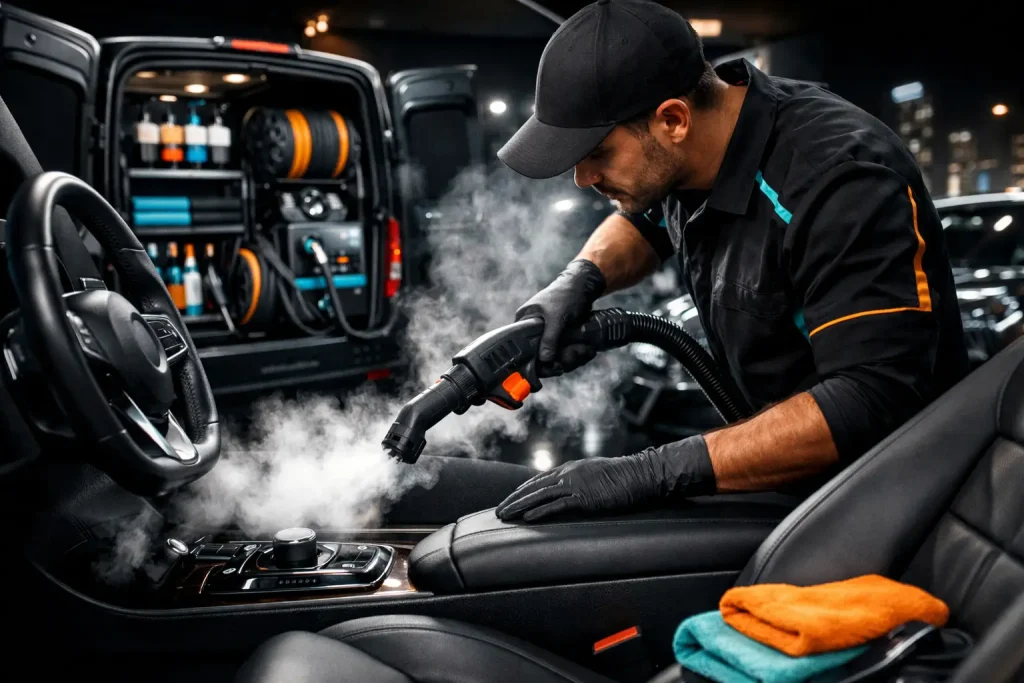
Coffee in the cupholder, sunscreen on the armrest, snack crumbs pressed into the seat seams – a car interior gets dirty in ways a quick wipe never fully fixes. That is why steam cleaning car interior surfaces has become a go-to option for drivers who want more than a surface-level clean. It cuts through buildup, helps reduce odors, and refreshes the cabin without soaking everything in heavy chemicals.
For busy owners, the appeal is simple. You want the cabin to look sharp, feel clean, and stay pleasant to sit in, especially if you carry kids, clients, or daily passengers. Steam can do that well, but only when it is used with the right technique and on the right materials.
Why steam cleaning car interior surfaces works so well
Steam cleaning uses heated vapor to loosen grime from fabric, plastic, vinyl, rubber, and many hard-to-reach creases. Instead of flooding a surface with liquid cleaner, steam targets contamination with heat and controlled moisture. That matters inside a car, where too much water can leave fabrics damp, create odors, or lead to mildew if drying is rushed.
One of the biggest advantages is how well steam reaches detail areas. Air vent slats, cupholder edges, stitching lines, door panel seams, and seat tracks collect dirt that ordinary towels miss. Steam softens the buildup so it can be lifted away cleanly.
It also helps with the kind of dirt that builds slowly and becomes part of the cabin. Body oils on steering wheels, residue on touchpoints, dried spills around trim, and light stains on mats often respond well to steam. The finish looks cleaner, but just as important, it feels cleaner. That difference is easy to notice the moment you get back behind the wheel.
What steam cleaning is best at
Steam is not a magic fix for every interior problem, but it is excellent for maintenance and deep-refresh work. It performs especially well on high-contact surfaces that collect daily grime. Steering wheels, gear selectors, door handles, dashboard plastics, center consoles, floor mats, and cloth seats are often the strongest candidates.
For family vehicles, steam is especially useful. Food spills, sticky fingerprints, and mystery spots tend to collect fast when the car doubles as a school-run shuttle and weekend transport. Steam can break down that mess efficiently without turning the interior into a wet-cleaning project.
It is also a smart choice when odor reduction matters. If the cabin smells stale from food, pets, or everyday use, steam can help by lifting the residue that causes those smells. It will not always solve deep odor issues on its own, especially if contamination has reached the padding below the fabric, but it often makes a noticeable improvement.
Where steam needs caution
Not every interior material should be steamed aggressively. That is the part many DIY guides skip. Heat is useful, but too much heat in the wrong place can cause problems.
Leather is the biggest example. Some sealed automotive leather can handle light, controlled steaming as part of a professional process, but overdoing it can dry the surface or affect the finish. The same goes for delicate headliners. They are usually attached with adhesive, and excess heat or moisture can weaken that bond over time.
Electronics need care too. Buttons, infotainment screens, sensors, charging ports, and powered seat controls should never be blasted directly. A trained technician knows how to clean around them safely, using steam as a precise tool rather than a broad spray.
This is where premium service makes a difference. The goal is not to apply the most steam possible. The goal is to restore the interior without stressing the materials that give the cabin its finished look.
Steam cleaning car interior fabric vs. leather
Cloth interiors usually benefit the most from steam. Fabric seats and carpet fibers trap dust, crumbs, and light stains below the surface, and steam helps release that buildup without oversaturating the material. Done properly, it leaves the fabric refreshed and easier to dry than older extraction-heavy methods.
Leather requires a different approach. It responds best to controlled cleaning, followed by proper conditioning if needed. Steam may still play a role, especially in seams and tight creases where grime settles, but it should be handled with restraint. If your seats are perforated, caution matters even more because moisture and heat should be tightly managed around those openings.
If you are not fully sure what finish your seats have, it is better not to guess. Premium detailing is often less about dramatic tools and more about knowing exactly how far to go on each surface.
What to expect from a professional steam interior service
A proper steam interior treatment should feel methodical, not rushed. The process usually starts with dry debris removal. That means vacuuming under seats, along edges, and in seat rails before any steam touches the surfaces. If loose dirt is left behind, heat just turns it into mud.
Next comes targeted steam work on the areas that need it most. High-touch plastics, trim details, mats, pedals, cupholders, and fabric surfaces are cleaned section by section. In premium service, towels and brushes are used alongside the steamer so loosened grime is actually removed instead of moved around.
The finishing stage matters just as much as the steam itself. Surfaces should be dried down, glass checked for haze, and the cabin left with a clean, fresh feel rather than a damp one. That is the difference between a quick pass and a real interior revival.
For customers who book doorstep service, convenience is part of the value. A trained team can handle the process at your home or building parking area, which means your day stays on track while your vehicle gets the level of care it needs. For many urban drivers, that is the real upgrade.
Is steam cleaning enough for stains and odors?
Sometimes yes, sometimes no. For light to moderate staining, steam can be very effective. Fresh spills, surface grime, and common daily-use marks often lift well when treated correctly. For older stains, success depends on what caused them, how long they have been there, and whether they have soaked below the visible fabric.
Odors work the same way. If the smell is coming from surface contamination, steam may improve it quickly. If the source is deeper in the carpet padding, seat foam, or AC system, steam alone may not fully solve it. In those cases, a more complete interior treatment may be the better route.
This is why good service should never overpromise. Steam is a strong tool, but the best results come from matching the method to the condition of the car.
When steam cleaning makes the most sense
If your interior looks tired rather than damaged, steam is often the right move. It is ideal for maintenance between full details, seasonal refreshes, pre-sale presentation, and post-travel cleanup. It also works well when you want a cleaner cabin without the heavy wetness of shampoo-based interior cleaning.
For owners who keep a regular detailing schedule, steam can help preserve that just-cleaned standard longer. It keeps high-use areas under control before they turn into bigger restoration jobs. That matters if you care about resale value, cabin hygiene, or simply enjoying the drive more.
In Dubai, where heat, dust, and daily commuting can wear down an interior quickly, steam cleaning is especially practical. Fine dust settles into every seam, and touchpoints pick up grime fast. A professional steam service helps reset the cabin without adding unnecessary downtime.
Choosing the right team for steam interior work
The machine matters less than the operator. A premium result comes from technique, material awareness, and attention to finish quality. Anyone can buy a steamer. Not everyone knows how to use it safely across mixed interior surfaces.
Look for a service that understands fabric, leather, trim, and electronics as separate cleaning zones, not one broad area. The team should know where steam adds value, where it should be minimized, and how to leave the car properly finished afterward. Convenience matters too, but convenience without care is just speed.
That is the standard Ride Revivers is built around – premium doorstep care that restores the look and feel of your vehicle without cutting corners. When interior cleaning is done well, the result is not just a tidier cabin. It is a car that feels revived every time you open the door.
A clean interior changes more than appearance. It makes the everyday drive feel lighter, fresher, and more put together, which is exactly what good vehicle care should do.