

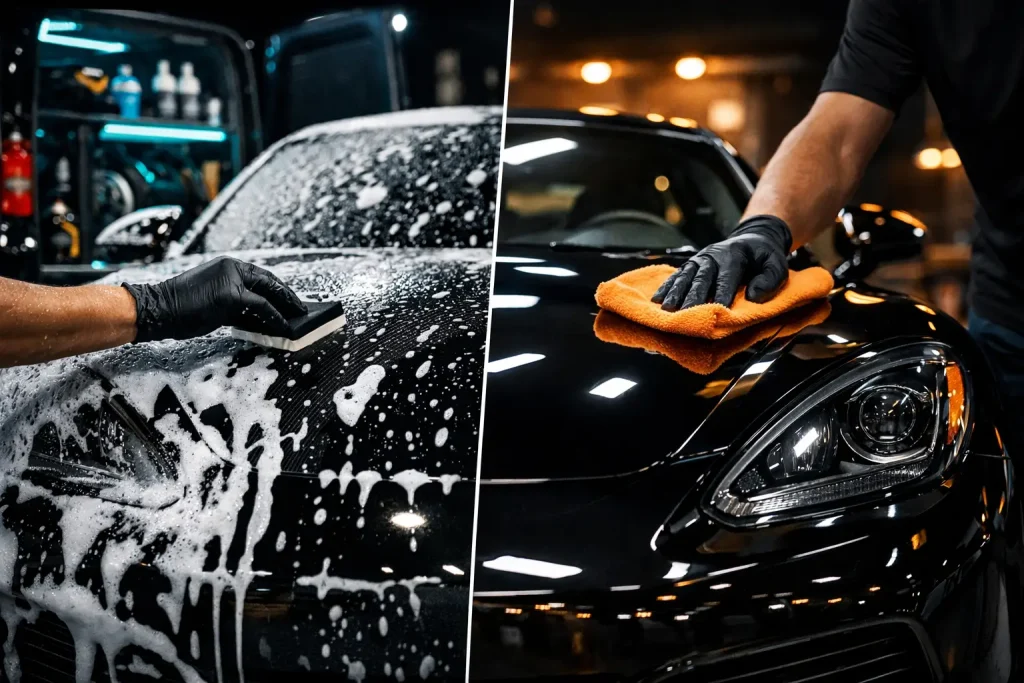
Your car can look freshly detailed on Friday and tired by Monday. That is usually the moment owners start comparing ceramic coating vs wax protection – not as a theory, but as a practical decision about time, gloss, and how often they want to maintain the finish.
Both options protect paint, improve shine, and help your vehicle stay cleaner for longer. But they do not perform the same way, and they are not meant for the same type of owner. If you want a straightforward answer, wax is the simpler, lower-cost option for short-term gloss. Ceramic coating is the longer-term choice for stronger protection, easier maintenance, and a finish that holds up better under daily use.
Ceramic coating vs wax protection: what changes in real life?
The biggest difference is not what happens on application day. It is what happens weeks and months later.
Wax sits on the paint as a sacrificial layer. It adds warmth, shine, and a smoother surface, but it wears down relatively quickly from sun exposure, washing, road grime, and weather. For drivers who enjoy frequent upkeep or want a polished look before an event, wax still has a place.
Ceramic coating forms a much more durable protective layer that bonds to the surface. That creates stronger resistance to water spotting, dirt buildup, UV exposure, and chemical contamination. It does not make your car invincible, but it does make routine maintenance noticeably easier. Dirt releases faster, wash results are better, and the gloss tends to stay more consistent between services.
For busy owners, that difference matters. If you would rather not think about paint protection every few weeks, ceramic coating is usually the better fit.
How wax protection works
Wax has been the classic answer for paint protection for years because it is accessible, affordable, and visually rewarding. A quality wax can deepen the look of paint, especially on darker colors, and leave the surface feeling slick and freshly finished.
It works by adding a protective layer over the clear coat. That layer helps repel some water, light contamination, and minor environmental exposure. The problem is durability. Heat, washing, and daily driving slowly strip wax away, which means the protection fades faster than many owners expect.
That does not make wax a bad option. It makes it a specific option. If your car is garaged, driven less often, or maintained on a regular detailing schedule, wax can deliver solid results. It is also a smart choice for someone who wants a lower upfront cost and does not mind reapplying protection more often.
How ceramic coating works
Ceramic coating is built for longer-term performance. Once properly applied to a corrected and prepared surface, it bonds more securely than wax and creates a harder-wearing barrier.
That barrier helps reduce the way contaminants cling to the paint. Water beads more effectively, dust and grime are easier to wash away, and the vehicle keeps that cleaner, glossier look with less effort. This is one reason premium vehicle owners often move from waxing to coating. The finish stays sharper between appointments, which supports both appearance and resale value.
There is also a practical advantage that gets overlooked. When your protection lasts longer, your maintenance routine becomes simpler. You still need regular washing, but the vehicle is easier to care for and less likely to look neglected after a few days on the road.
Durability is where the gap gets clear
If you are choosing based on lifespan, ceramic coating wins comfortably.
Wax may last a few weeks to a few months depending on product quality, climate, wash frequency, and how the vehicle is stored. In hotter conditions, that lifespan can drop faster. Anyone who has waxed a car and watched the beading disappear soon after already knows this story.
Ceramic coating is designed to last far longer. Exact longevity depends on the coating used, how well the paint was prepared, and how the car is maintained afterward, but the difference is still substantial. Instead of frequent reapplication, you are investing in protection that stays on the vehicle through normal use for a much longer period.
That longer lifespan changes the value equation. Wax costs less upfront, but it asks for more repeat effort. Ceramic coating costs more initially, but it reduces the need for constant rework.
Which one gives a better shine?
This is where preference comes in.
Wax often delivers a rich, warm glow that some enthusiasts still love, especially on classic finishes and darker paint. It can make the paint look freshly dressed and visually soft in a way that feels familiar and satisfying.
Ceramic coating tends to create a sharper, glassier finish. The reflection looks cleaner and more defined, which suits modern vehicles especially well. Many owners describe it as a more premium look because the gloss appears crisp and stays more consistent after washes.
Neither is wrong. If your priority is a short-term cosmetic boost, wax may satisfy you. If you want a polished, high-clarity finish that keeps showing up week after week, ceramic coating usually feels like the upgrade.
Ceramic coating vs wax protection on maintenance
This is often the deciding factor for families, professionals, and anyone managing more than one vehicle.
Wax can make washing easier for a while, but once it starts breaking down, dirt sticks more readily and the finish loses that slick feel. To keep the vehicle looking its best, you need regular reapplication.
Ceramic coating simplifies the maintenance cycle. The surface stays easier to clean, and the car tends to hold a freshly detailed appearance for longer. That does not mean you can skip washing altogether. It means each wash is more effective, and the vehicle is less work to keep presentable.
For doorstep detailing customers, this matters even more. Stronger long-term protection pairs better with a consistent wash plan because every maintenance visit works with the coating instead of constantly replacing short-lived protection.
Cost: cheaper now or better value later?
Wax wins on immediate affordability. If you want basic paint protection without a larger initial investment, waxing is the entry point.
Ceramic coating sits in the premium category because the process is more demanding. Proper decontamination, paint preparation, and careful application all affect the result. You are paying for more than a product. You are paying for preparation, technique, and longer-lasting performance.
The better question is not which one is cheaper. It is which one fits your ownership habits.
If you change cars often, keep your vehicle mostly indoors, or enjoy regular detailing sessions, wax may be enough. If your car is exposed daily, parked outdoors, or expected to look sharp with minimal effort, ceramic coating often delivers better value over time.
When wax makes sense
Wax is still the right choice in a few common situations. It suits owners who want a visible shine upgrade at a lower price, drivers who do not need long-term protection, and vehicles that already follow a hands-on maintenance routine. It can also work well as part of periodic detailing for someone who prefers flexibility over a bigger upfront commitment.
There is nothing outdated about choosing wax if it matches your habits. The mistake is expecting wax to perform like a coating.
When ceramic coating makes sense
Ceramic coating fits owners who want premium results without constant upkeep. It is especially useful for daily-driven vehicles, family cars, SUVs exposed to heat and dust, and anyone who cares about preserving a cleaner, glossier finish over time.
It is also a strong fit for people who value convenience. If you prefer professional care at your location and want your vehicle to stay easier to maintain between washes, coating supports that lifestyle better than wax does.
That is why many customers who start with standard detailing eventually move up to more durable paint protection. Once you see the difference in wash ease and finish retention, it is hard to go back.
The better choice depends on how you use your car
There is no universal answer because not every vehicle is driven, stored, or maintained the same way. A weekend car and a daily commuter do not need the same protection plan. Neither do a single sedan and a family fleet.
If you want affordable shine and do not mind repeating the process, wax is still a valid option. If you want longer-lasting protection, easier maintenance, and a finish that keeps its premium look with less effort, ceramic coating is the stronger investment.
At Ride Revivers, we see this decision come down to lifestyle more than preference. The right protection should match how you actually use your vehicle, not just how it looks on service day.
The best finish is not the one that sounds most advanced. It is the one that keeps your car looking cared for without asking more time from you than you want to give.