

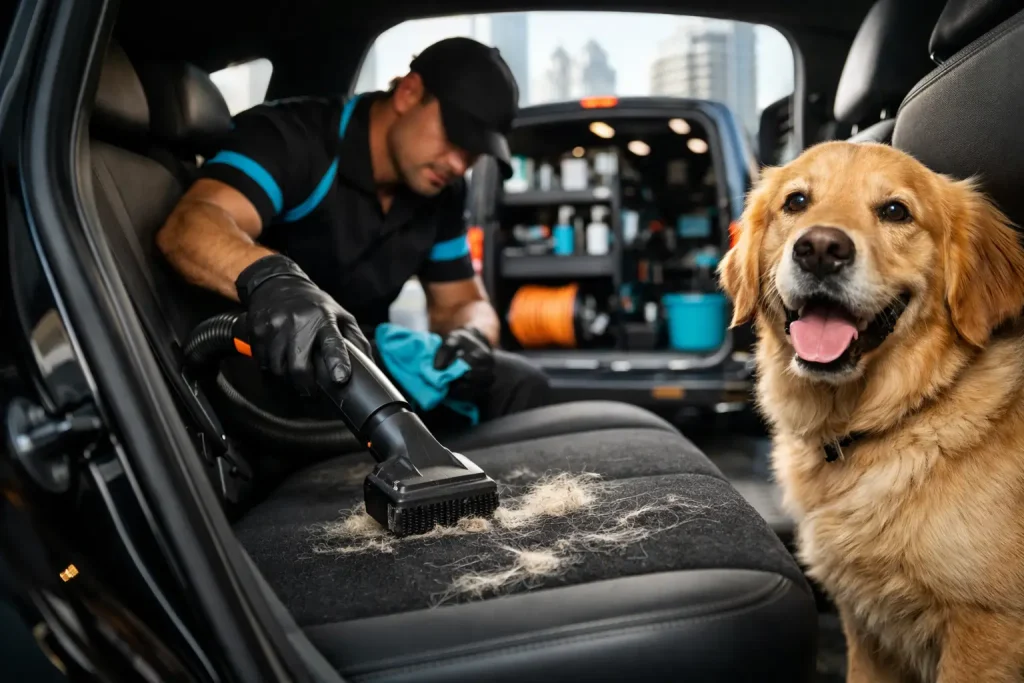
Pet hair has a way of settling into every part of a vehicle – the seat seams, carpet fibers, cargo area, floor mats, and even the air vents. Car detailing for pet hair is not a quick vacuum-and-go service. It is a focused interior revival that removes trapped fur, lifts dander, addresses odor, and brings your cabin back to the clean, polished standard you expect.
For families, pet owners, and busy drivers, the goal is not to stop bringing your dog along for the ride. It is to enjoy those trips without letting your car look or smell like a permanent pet zone.
Why Pet Hair Is So Difficult to Remove
Loose pet hair is easy to spot. The real problem is the hair that works its way into upholstery, carpeting, and the narrow edges around seats. Static electricity causes fine strands to cling tightly to fabric, while movement from passengers pushes hair deeper into the fibers over time.
Leather and synthetic seats are usually easier to clean, but hair can still collect around stitching, seat rails, buckles, and between cushions. Fabric interiors require more patience because hair can become woven into the material instead of simply resting on top.
A standard vacuum helps, but it often leaves behind the fine layer that becomes obvious as soon as sunlight hits the seats. Professional detailing combines the right tools, controlled agitation, and careful finishing work to reach the areas a basic clean misses.
What Car Detailing for Pet Hair Should Include
A proper pet-hair detail starts with a full interior assessment. The service should account for your vehicle’s seat material, how often pets travel in it, and whether there are related concerns such as odor, stains, or heavy dander buildup.
The process usually begins by removing loose debris from footwells, seat pockets, cargo areas, and under-seat spaces. Detailers then use high-suction vacuum equipment with specialized attachments to pull hair from carpet, mats, upholstery, and hard-to-reach edges.
For hair embedded in fabric, vacuuming alone is rarely enough. Detailers may use rubber tools, brushes, compressed air, or carefully selected extraction methods to loosen the fibers without damaging the surface. The best technique depends on the interior. Aggressive brushing can work on durable carpet, for example, but should be used with greater care on delicate upholstery.
Once hair is removed, interior surfaces should be wiped and treated to reduce dust, dander, and residue. Door panels, center consoles, seat belts, cup holders, and trim all matter. These are the areas pets touch, lean against, or shed on during everyday drives.
If odor is present, it needs separate attention. Fragrance can make a car smell pleasant for a short time, but it does not remove the source of pet odor. A quality treatment targets organic residue in the upholstery, carpet, and cargo area before any finishing scent is applied.
The Areas Pet Owners Most Often Miss
Even careful owners tend to focus on visible seat hair. That is understandable, but the hidden areas are where buildup lingers. A thorough service should pay close attention to the seams between the seat base and backrest, the carpet beneath the front seats, the trunk or cargo floor, and the spare-tire compartment if pet blankets or accessories are stored there.
Air vents and cabin filters also deserve consideration when a vehicle carries pets frequently. Hair and dander can circulate through the cabin, especially when the air conditioning is running. Cleaning visible vent surfaces helps improve the cabin finish, while replacing a heavily loaded cabin filter can be a practical next step when odor or allergy concerns persist.
Pet hair also gathers around seat anchors, child-seat attachment points, door sills, and window channels. These details may not be the first thing passengers notice, but cleaning them is what makes the vehicle feel fully revived rather than simply vacuumed.
When Vacuuming at Home Is Enough
A regular home cleanup is useful between professional appointments. If your pet rides occasionally, a handheld vacuum, lint brush, and washable seat cover can keep the interior under control. This is especially effective when hair is still sitting on the surface and has not been repeatedly pressed into the carpet.
The trade-off is time. Removing hair strand by strand from fabric seats or a textured cargo area can take far longer than expected, and household vacuums may not have the suction or attachments needed for deep cleaning. Home care is ideal for maintenance. Professional detailing is the better choice when hair has built up over weeks, when guests regularly ride in the car, or when you are preparing the vehicle for resale.
Signs Your Vehicle Needs a Professional Pet-Hair Detail
You do not need to wait until the interior feels overwhelming. Book a deeper clean when you notice hair returning immediately after vacuuming, a lingering pet smell after the cabin has aired out, or visible buildup in seat seams and carpet edges.
It is also worth scheduling a service before a long road trip, a special occasion, or a vehicle sale. A clean interior changes how the car feels to you and how it is perceived by passengers or potential buyers. For families with multiple cars, maintaining the vehicle that pets use most can prevent the mess from spreading to every part of your routine.
A professional service is particularly valuable if someone in the household is sensitive to pet dander. While detailing is not a substitute for medical advice or allergy treatment, removing hair, dust, and surface residue can create a noticeably fresher cabin environment.
How to Keep Pet Hair Under Control Between Details
The easiest way to reduce detailing time is to contain the mess before it reaches the upholstery. A fitted pet seat cover or cargo liner creates a protective barrier and can be removed for regular cleaning. Choose one that covers the seat edges, not just the center cushion, since that is where hair often escapes.
Brushing your pet before longer drives can also make a real difference, particularly during seasonal shedding. Keep a small lint roller or reusable hair remover in the vehicle for quick touch-ups, and shake out pet blankets before putting them back in the car.
For frequent pet travel, clean small areas often rather than waiting for a full buildup. A five-minute refresh of the cargo area or rear seats after a weekend outing is much easier than tackling months of embedded fur later. It also helps preserve the finish of carpets and upholstery by reducing the need for aggressive agitation.
Freshness Matters as Much as Appearance
A spotless-looking interior can still feel unclean if pet odor remains. Moisture, saliva, mud, food crumbs, and wet fur can all contribute to odors that settle into fabric. In Dubai’s heat, those smells can become more noticeable quickly when the vehicle is parked.
The right approach is to clean the source, allow surfaces to dry properly, and then finish the cabin with a clean, refined result. This is why a rushed interior wipe-down often disappoints. Premium vehicle care is about the details passengers experience the moment they open the door: clean seats, fresh air, clear surfaces, and no reminder of yesterday’s muddy paws.
A Better Standard for a Pet-Friendly Vehicle
Your car does not have to choose between being pet-friendly and looking professionally maintained. With regular upkeep and occasional deep cleaning, even a vehicle used daily for school runs, vet visits, beach trips, and weekend drives can stay fresh and presentable.
Ride Revivers brings that higher standard directly to your doorstep, so restoring a hair-free, polished interior does not mean giving up a day at a detailing center. Give your vehicle the same care you give the passengers who make every ride worth taking.