

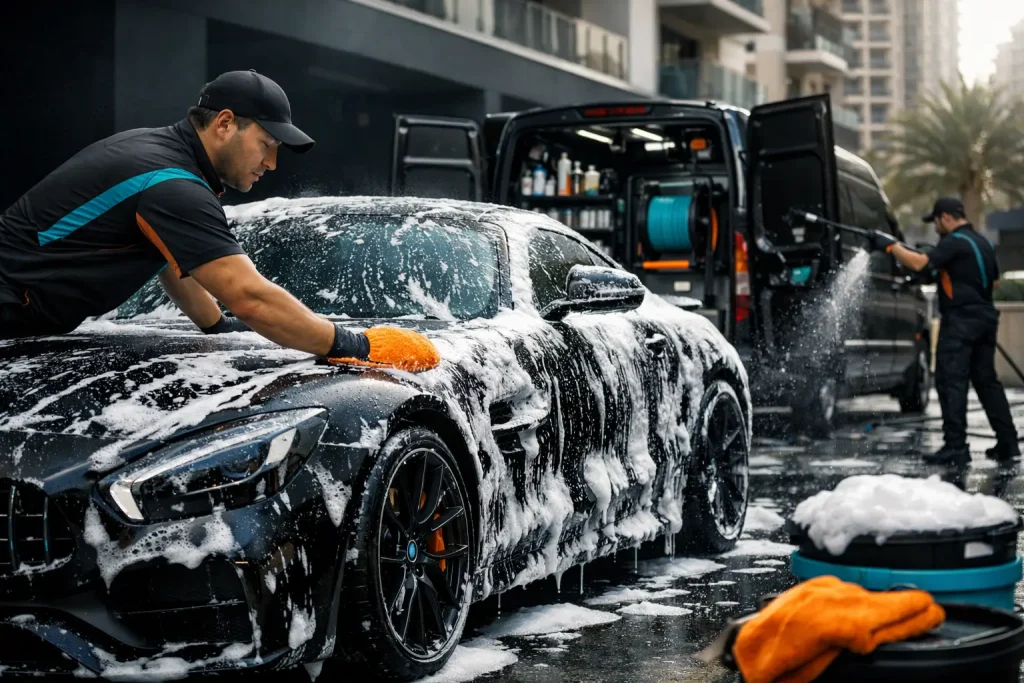
A dusty car in an apartment parking space is more than a cosmetic problem. Sand, road film, bird droppings, and tree residue can dull the finish and slowly damage clear coat if they sit too long. If you have searched how to wash car apartment parking without creating a mess or upsetting building management, the answer is not a garden hose and a bucket full of runoff. It is a controlled, low-water routine that protects your vehicle, your parking area, and your community rules.
The best approach depends on your building policy, the level of dirt on the car, and whether you have access to a designated wash bay. For light dust and weekly upkeep, a waterless or rinseless wash can deliver a surprisingly polished finish. For mud, heavy sand, or a neglected vehicle, professional doorstep care is often the safer choice.
Check Your Apartment Rules Before You Start
Start with your building’s parking and community guidelines. Many apartment properties restrict car washing in regular parking bays because wastewater can carry dirt, oil residue, and cleaning chemicals into drains. Some allow low-water cleaning, while others require all washes to happen in a dedicated area or through an approved mobile service.
Do not assume a quiet corner of the garage makes washing acceptable. Security teams and property managers are usually concerned with slippery floors, blocked parking spaces, water stains, and drainage – all reasonable concerns in a shared residential setting.
If washing is permitted, keep it discreet and efficient. Choose a time when the parking area is less busy, avoid occupying more than one space, and never let water flow toward walkways, elevators, or neighboring vehicles.
How to Wash a Car at an Apartment With Minimal Water
A rinseless wash is the most practical method for apartment residents when the vehicle has light to moderate dust. Unlike a traditional wash, it uses a lubricating cleaning solution that lifts dirt into a microfiber towel rather than requiring a continuous hose rinse.
You will need a rinseless wash solution, a spray bottle or pump sprayer, several clean microfiber towels, a soft wheel brush, a separate towel for wheels, and a small bucket if your building permits it. Using enough clean towels matters. Reusing one dirty towel across the whole car can drag grit over the paint and leave fine scratches.
Start With a Dry Assessment
Walk around the vehicle before spraying anything. If you see thick mud, hardened bird droppings, wet sand, or heavy grime around the lower doors and wheel arches, do not rub it with a dry towel. That is where swirl marks begin.
For fresh bird droppings or sticky spots, saturate the area with your cleaning solution and let it soften for a minute. Lift the contamination gently with a plush microfiber towel rather than scrubbing in circles.
Clean From the Roof Down
Spray one small panel at a time, beginning with the roof, glass, hood, and upper doors. Give the solution enough coverage to lubricate the surface, then wipe in straight, overlapping passes with a folded microfiber towel. Turn to a clean side after each pass.
Follow immediately with a dry microfiber towel to buff away remaining moisture. This prevents streaking, which is especially noticeable on dark paint and glass. Work panel by panel instead of spraying the entire car at once, particularly in warm parking areas where product can dry too quickly.
The lower doors, rocker panels, bumpers, and rear of the vehicle collect the most abrasive dirt. Use extra product and fresh towels here. If the towel starts to feel rough or visibly dirty, retire it and reach for a clean one.
Treat Wheels as a Separate Job
Wheels hold brake dust, road grime, and grease that should never touch your paint towels. Use a separate wheel cleaner that is suitable for your wheel finish, along with dedicated brushes and microfiber towels.
Avoid flooding the wheels in an apartment garage. Apply product sparingly, agitate gently, and wipe away residue with a damp towel. If the wheels are heavily soiled, a low-water wipe-down may not be enough. It is better to book a proper service than force a deep wheel clean in a space without suitable drainage.
What Not to Do in Apartment Parking
The fastest way to turn a simple wash into paint damage or a building complaint is to use the wrong method. Avoid dish soap, which can strip protective waxes and leave the paint unprotected. Skip rough sponges, old bath towels, and paper towels, as they trap debris and create visible micro-scratches.
Do not wash a hot vehicle immediately after driving. Heat makes water and cleaning products dry too fast, increasing the risk of streaks and residue. If the parking area is warm, wait until the body panels cool or work during a cooler part of the day.
Also avoid pouring leftover wash water into a parking drain unless your property specifically permits it. Even eco-friendly products need responsible use. Less water is not only more convenient in apartment living – it is cleaner, safer, and easier to manage.
When a Waterless Wash Is Not Enough
Waterless and rinseless methods are excellent for routine maintenance, but they are not a cure-all. A vehicle covered in caked mud, construction dust, salty residue, or thick sand needs a more thorough process. Trying to wipe severe contamination away by hand can grind particles into the clear coat.
This is where a professional mobile wash makes sense. A trained team can assess the paint condition, use controlled water methods, clean difficult areas such as wheel arches and door jambs, and finish with protective products that help the vehicle stay cleaner longer. For apartment residents, the real value is not just convenience. It is the confidence that the wash is being completed with the right tools, towels, products, and process.
Ride Revivers brings that premium care directly to your location, making regular upkeep easier without a trip to a traditional wash center. It is especially useful for families managing multiple vehicles, professionals with limited time, and owners who want their car to look consistently polished between deeper detailing appointments.
Protect the Finish After Every Wash
A clean car looks better, but protection is what keeps it looking better for longer. After a light apartment wash, use a quality spray sealant or quick detailer formulated for automotive paint. Apply it to a clean, cool surface with a fresh microfiber towel. This adds gloss, improves water beading, and makes future dust easier to remove.
For stronger, longer-lasting defense, wax, paint sealant, and ceramic coating each offer different benefits. Wax can give paint a warm, rich shine but usually needs more frequent application. Synthetic sealants generally last longer, while ceramic coatings offer durable protection and easier maintenance when professionally applied. The right choice depends on where you park, how often you drive, and how much time you want to spend on upkeep.
Do not forget the interior. Apartment living often means short drives, school runs, gym bags, coffee cups, and daily clutter building up quickly. A quick vacuum, dashboard wipe, and odor check after an exterior wash can make the whole vehicle feel renewed.
Keep a Simple Apartment Car Care Rhythm
For most urban drivers, a light exterior clean every one to two weeks prevents dirt from becoming a bigger job. Clean bird droppings, tree sap, and fuel spills as soon as possible. Schedule a deeper wash and interior refresh monthly, or more often if your vehicle is exposed to dust, open parking, children, pets, or frequent highway driving.
The goal is not to turn your apartment parking space into a detailing studio. It is to use a smart, respectful routine that preserves your car’s shine without creating unnecessary water use, mess, or risk. When the dirt is beyond a careful low-water wash, let professional doorstep care handle the heavy lifting – then enjoy stepping into a vehicle that looks as polished as the rest of your day.