

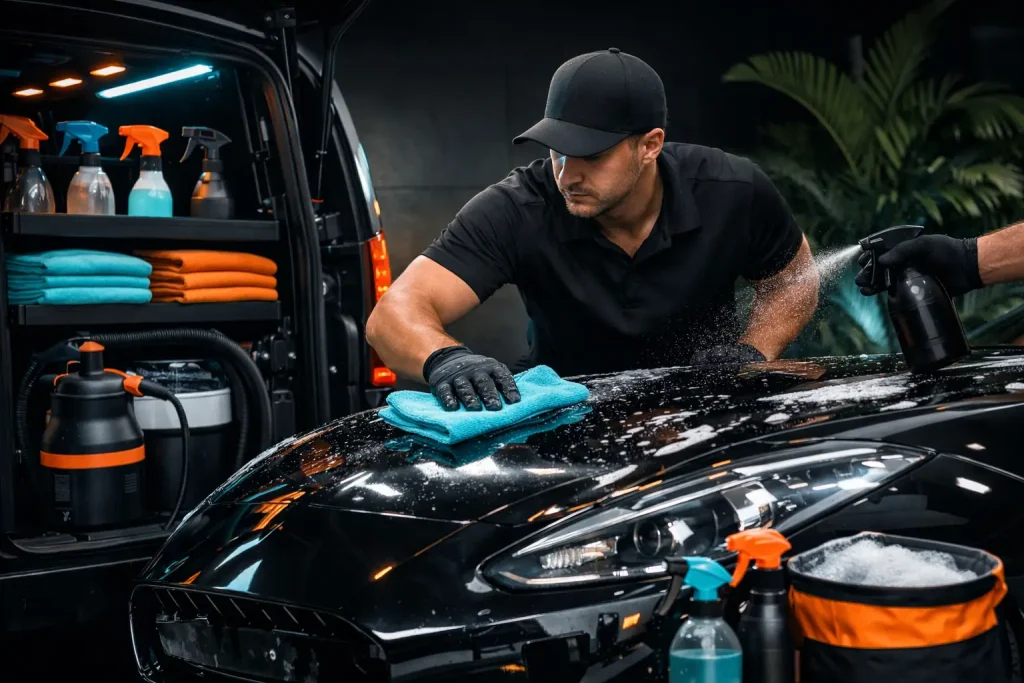
A dusty windshield, bird droppings on the hood, and brake dust on the wheels can make a well-kept car look neglected fast. The best eco friendly way to wash car is not simply using less water. It is using the right amount of water, choosing paint-safe products, and preventing dirty runoff from reaching drains while preserving the gloss you paid for.
For busy owners, the goal is simple: a spotless finish without wasting water, scratching the paint, or turning vehicle care into a two-hour driveway project. Here is how to make every wash cleaner for your car and lighter on resources.
What Makes a Car Wash Eco-Friendly?
A conventional hose wash can use far more water than most people realize, especially when the water runs continuously between steps. That water carries road grime, oil residue, tire dressing, brake dust, and cleaning chemicals into the nearest drain. In many neighborhoods, storm drains lead directly to waterways rather than a treatment system.
An eco-conscious wash reduces that impact in three ways: it limits water use, controls runoff, and uses biodegradable, pH-balanced products that are safer for surfaces and the surrounding environment. It should also protect your vehicle. A harsh degreaser or rushed wash that leaves swirl marks is not a premium result, no matter how little water it used.
The right method depends on the car’s condition. A lightly dusty sedan needs a different approach than an SUV covered in dried mud after a desert drive. Trying to make one method work for every level of dirt is where paint damage and wasted product begin.
The Best Eco Friendly Way to Wash Car: Match the Method to the Dirt
For a vehicle with light dust, fingerprints, and everyday city grime, a waterless or rinseless wash can be an excellent option. These formulas lift and encapsulate loose dirt so it can be removed with clean microfiber towels. They use a fraction of the water required for a hose wash and work particularly well when applied carefully in a shaded area.
Waterless washing is not the answer for every vehicle. If your car has visible sand, caked mud, heavy salt residue, or gritty buildup around the lower panels, rubbing it with towels can drag abrasive particles across the clear coat. In that case, start with a controlled low-pressure rinse or choose a professional service equipped to manage water and runoff responsibly.
A rinseless wash is often the practical middle ground. The product is diluted in a bucket, applied panel by panel, and wiped away with a clean microfiber towel. You still get lubrication and cleaning power, but without leaving a hose running across the driveway. It is efficient, polished, and ideal for regular maintenance between deeper washes.
Set Up for a Safer, Cleaner Finish
Where and when you wash matters as much as what you use. Direct sunlight causes water and cleaning solution to dry too quickly, leaving spots and forcing you to use more product. A shaded, cool surface gives you more control and a better finish.
Before you begin, check the ground beneath the car. Avoid washing where dirty water can flow straight into a storm drain. If you are washing at home, use the smallest practical amount of water and keep the process contained. A professional mobile team can be especially useful in apartment communities, offices, and shared parking areas where runoff and space are harder to manage.
You do not need a cabinet full of products. A quality rinseless or waterless wash solution, several plush microfiber towels, a dedicated wheel brush, and a separate towel for glass are enough for most maintenance washes. The key is using clean towels generously. Reusing one dirty towel across the entire car defeats the purpose of a careful wash.
A Low-Water Wash Routine That Protects Your Paint
Start by parking in the shade and letting hot panels cool down. Remove loose items around the windshield wipers, inspect the body for stubborn contamination, and clean the wheels first with tools reserved only for wheels. Wheel grime is among the dirtiest material on the car, so it should never be transferred to the paint.
For the bodywork, work from the top down. Spray or apply your rinseless solution to one panel at a time, allowing it to loosen surface dirt. Wipe in straight, gentle passes rather than aggressive circles. Fold the microfiber towel into clean sections and switch to a fresh side as soon as it picks up visible dirt.
Dry each panel with a separate, clean microfiber towel before moving on. This prevents water spotting and gives you a chance to inspect the finish. If you feel rough specks after washing, do not scrub them harder. They may be bonded contaminants that need clay treatment or professional detailing rather than more pressure.
Finish the glass with a dedicated cleaner and towel, then clean door jambs only if you can do so without sending grime and product into drains. For tires, choose a water-based dressing rather than a heavy solvent-based shine. The result should look clean and conditioned, not artificially wet.
Use Less Water Without Cutting Corners
Saving water should not mean accepting a dull or streaky car. Small changes make a meaningful difference while keeping the finish at a premium standard:
- Turn off the hose between steps if a rinse is necessary. Never let water run while you prepare towels or products.
- Use a bucket or pump sprayer for targeted rinsing instead of flooding the entire vehicle.
- Wash on a regular schedule. Light weekly or biweekly cleaning is easier and less resource-intensive than removing months of baked-on dirt.
- Protect the paint with a quality wax, sealant, or ceramic coating. Protected surfaces release dirt more easily, reducing the effort and water needed at the next wash.
Protection is the often-overlooked part of sustainable car care. When the paint is properly maintained, contaminants are less likely to bond to the surface. That means fewer harsh chemicals, less scrubbing, and a longer-lasting gloss. It also supports resale value by helping preserve the clear coat from sun exposure, oxidation, and everyday fallout.
Skip These Common “Green” Mistakes
Dish soap is a frequent shortcut, but it is not designed for automotive paint. It can strip protective waxes and leave the surface less prepared to resist dirt. Choose a car-specific, pH-balanced formula instead.
Another mistake is assuming every product labeled biodegradable can be freely washed into a drain. Biodegradable does not mean harmless in concentrated amounts, and the dirt coming off the car still contains contaminants. Use products sparingly and manage runoff whenever possible.
Finally, do not use a waterless wash on heavily soiled paint just because it sounds more sustainable. Preventing scratches is part of responsible vehicle care. A controlled rinse followed by a rinseless wash may use slightly more water, but it is better than creating paint correction work that requires additional chemicals, energy, and cost.
When Professional Doorstep Care Makes More Sense
There are weeks when a careful at-home wash is easy, and weeks when it is not realistic. Multi-car households, busy work schedules, building restrictions, and intense dust can all make DIY maintenance inconvenient. That is where a trained mobile service provides real value: the vehicle is cleaned where it is parked, with the right method for its condition and finish.
Ride Revivers brings premium doorstep care to that routine, combining professional products, trained handling, and services that go beyond a basic wash. For vehicles needing more than surface cleaning, options such as clay treatment, polishing, interior care, and protective coatings can restore the finish while helping future washes stay quicker and more efficient.
A clean car should not come at the expense of your time, your paint, or unnecessary water use. Choose the method that suits the dirt in front of you, keep the tools clean, and protect the finish after every wash. That is how a regular wash becomes lasting care.