

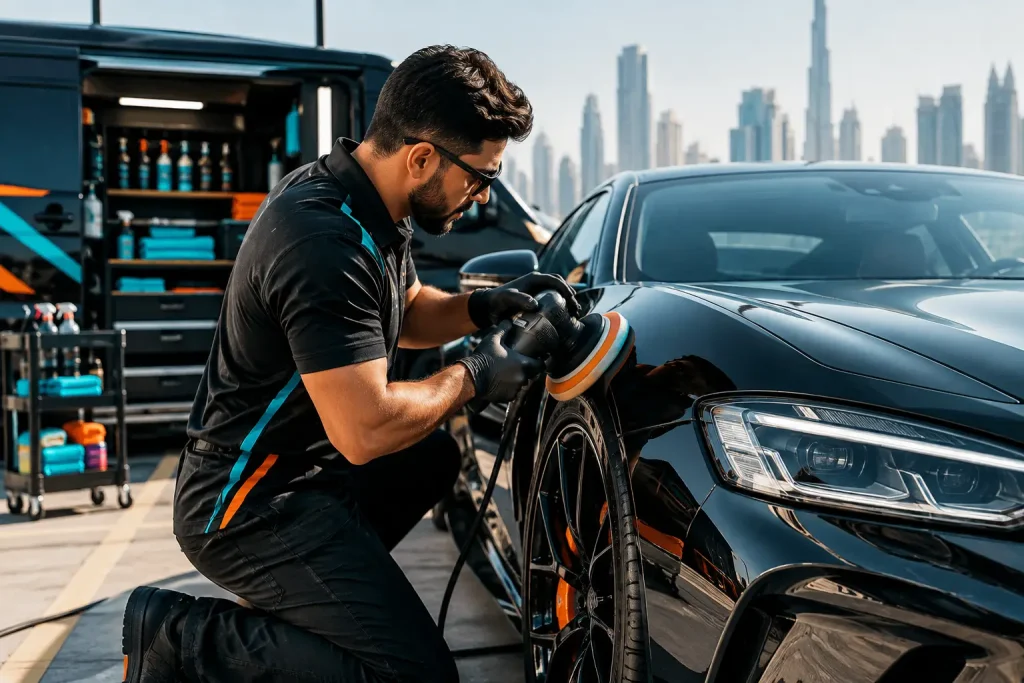
A vehicle can look clean and still lose its presence under direct sunlight. Fine swirl marks, hazy clear coat, water-spot etching, and dull panels scatter the light instead of reflecting it. That is where paint correction comes in – and why paint correction costs are about far more than applying a polish.
The right service can revive depth, gloss, and clarity while preparing the paint for lasting protection. The wrong approach can waste money, leave defects behind, or remove more clear coat than necessary. A professional assessment makes the difference.
What are paint correction costs in Dubai?
For most vehicles, paint correction costs in Dubai commonly fall between AED 500 and AED 5,000 or more. The wide range is not arbitrary. A lightly swirled sedan needing a single-stage polish is a very different job from a neglected SUV with deep wash marks, oxidation, and multiple years of visible wear.
As a practical guide, a light enhancement polish may start around AED 500 to AED 1,200. A more thorough one- or two-stage correction often sits between AED 1,200 and AED 2,500. Multi-stage correction for heavily marked paint, larger vehicles, premium finishes, or demanding restoration work can reach AED 2,500 to AED 5,000-plus.
These ranges are best treated as starting points, not a fixed menu. The paint needs to be inspected in person under proper lighting before a detailer can recommend the right level of correction. A lower quote is not automatically better if it promises perfection without allowing the time and process required to achieve it.
What you are actually paying for
Paint correction is a measured refinement process. It uses machine polishing, pads, compounds, finishing polishes, and controlled technique to level microscopic imperfections in the clear coat. The goal is to reduce visible defects while preserving as much paint thickness as possible.
The service begins with proper preparation. The vehicle is washed carefully, contaminants are removed from the paint, and the surface is inspected. A clay treatment or chemical decontamination may be necessary because bonded fallout and road film can interfere with polishing and create additional marring.
Next comes the correction itself. A technician may test several pad and polish combinations on a small area to find the safest effective result for that particular paint. Some clear coats are relatively soft and respond quickly. Others are harder and need more time, more passes, and a more refined process to achieve a clear finish without haze.
The final price also covers skill, not just products. Machine polishing near edges, body lines, trim, badges, and repainted areas calls for judgment. Good correction is not aggressive correction. It is the right amount of correction for the vehicle’s condition and the owner’s goals.
The factors that change the price
Vehicle size and panel complexity
A compact sedan generally requires less time than a full-size SUV, luxury sedan, or large pickup. More surface area means more washing, decontamination, masking, polishing, and final inspection. Complex bodywork can also slow the process. Sharp lines, vents, trim pieces, and tight panel sections demand careful handwork and precision.
The condition of the paint
This is usually the largest cost driver. Light wash swirls and reduced gloss can often be improved with a single-stage enhancement polish. Dense swirls, random deep scratches, bird-dropping marks, heavy water spots, and oxidation may require multiple correction stages.
Not every mark can or should be removed. If a scratch catches a fingernail, it may extend too deeply into the clear coat or beyond it. Chasing complete removal could compromise the finish. A responsible detailer will explain when reducing the appearance of a defect is safer than eliminating it entirely.
Paint type, color, and paint history
Dark colors tend to reveal every swirl under sunlight, while black paint can require extra finishing work to look truly crisp. Softer paint may correct easily but can also mark more easily. Harder paint can be durable yet time-intensive to refine.
Previous bodywork matters, too. Repainted panels may not have the same thickness or hardness as factory paint. A paint-depth reading, where appropriate, helps a professional work with more confidence and avoid over-correcting a panel with limited clear coat.
The correction level you choose
A light enhancement service aims to noticeably improve gloss and reduce lighter defects. It is an excellent option for well-maintained vehicles, leased cars, or owners who want a stronger finish without pursuing near-perfection.
A one-stage correction offers a more meaningful improvement, often reducing a significant amount of visible swirling while maintaining a sensible balance between results, time, and budget. Two-stage and multi-stage correction are for owners who want a more refined result and are prepared to invest in the added labor. The difference becomes especially visible on dark paint in direct sun or under inspection lighting.
Paint correction versus a regular polish
The terms are sometimes used interchangeably, but the results can be very different. A basic polish may add temporary gloss and reduce light haze. Paint correction is a more deliberate process that targets paint defects through controlled abrasion and refinement.
A wax or glaze can make a car look better for a short period by filling minor marks and increasing shine. That has its place, particularly before an event or sale. It is not the same as correcting the surface itself. Once the fillers wear away, the underlying swirls can become visible again.
If your vehicle already looks good but lacks the final level of clarity, an enhancement polish may be all you need. If sunlight reveals a web of wash marks across the hood and doors, correction is likely the better investment.
Is ceramic coating included in the cost?
Usually, no. Paint correction and ceramic coating are separate services, although they work exceptionally well together. Correction restores the appearance of the paint. A ceramic coating adds a protective layer that supports water behavior, makes regular cleaning easier, and helps preserve the freshly corrected finish.
Applying a coating over swirls locks in the look of those swirls. That is why a correction service is commonly recommended before coating, particularly on a used vehicle or one that has been through frequent automatic washes. The ideal level of correction depends on your expectations. There is no need to pay for a multi-stage restoration if a one-stage improvement delivers the finish you will be happy to see every day.
How to choose the right service without overspending
Start with the result you want, not the most expensive package on the menu. Ask yourself whether you want a noticeably glossier daily driver, a polished vehicle before resale, or a near-showroom finish protected for the long term.
Then request a condition-based recommendation. Clear photos in direct sunlight can help with an initial estimate, but an inspection is more reliable. Ask what level of defect reduction is realistic, whether deep scratches will remain visible, and what protection is recommended after the correction.
Also consider your ownership plans. If you expect to keep the vehicle for years, correcting the paint and protecting it can make routine maintenance easier and preserve the visual standard you paid for. If you are selling soon, a targeted enhancement may offer better value than extensive restoration.
Protect the result after correction
A corrected finish will not stay flawless if it returns to harsh brushes, dirty towels, or rushed washing methods. Use clean microfiber towels, a pH-balanced shampoo, and careful drying practices. Remove bird droppings and tree sap promptly, especially in Dubai’s heat, where contaminants can become more difficult to address.
Regular professional maintenance is the practical way to protect the investment. Ride Revivers can help keep a revived finish clean, glossy, and protected at your doorstep, without turning vehicle care into another weekend task.
The best paint correction is not the one that promises impossible perfection. It is the one that gives your vehicle a dramatic, safe improvement and makes every walk back to the driver’s door feel worth it.