

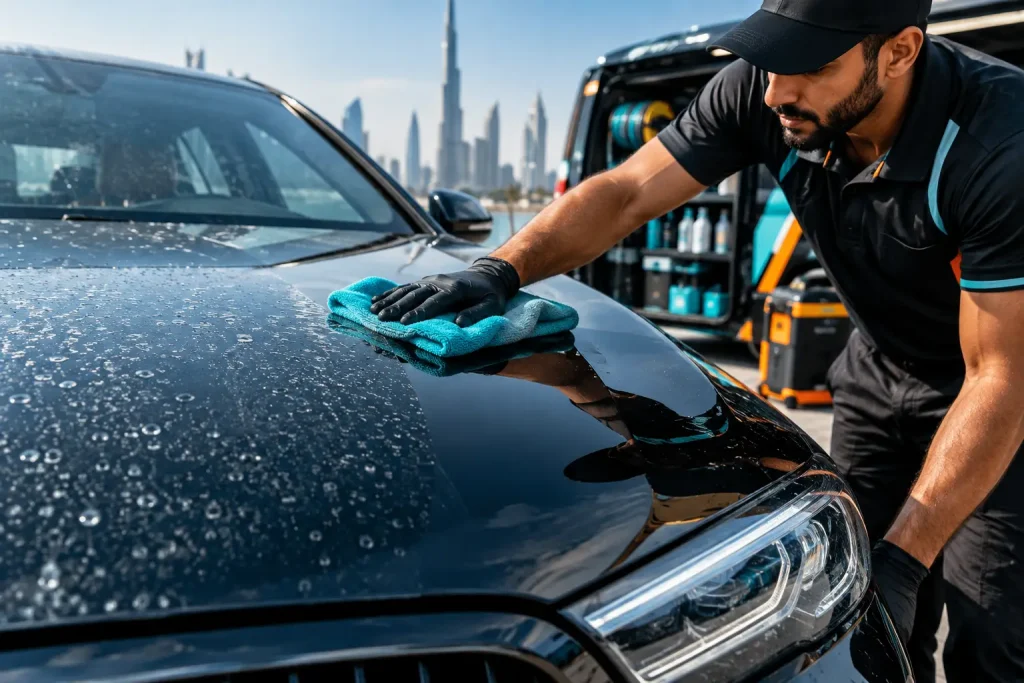
A freshly washed car can look worse than it did before the wash when the sun catches a ring of white marks across the hood, glass, or mirrors. So, can detailing remove water spots? In many cases, yes. Professional detailing can safely remove mineral deposits, restore clarity and gloss, and add protection that makes future spots less likely to bond to the surface.
The right approach depends on what caused the marks and how long they have been sitting. Some water spots are surface-level residue. Others have etched into clear coat or glass, which calls for more careful correction. The goal is not just to make the spots disappear for the day. It is to revive the finish without taking unnecessary risks with your vehicle’s paint.
What Water Spots Really Are
Water spots are left behind when water evaporates and deposits minerals on the vehicle. In Dubai, hard water, dust, heat, and rapid evaporation can make the problem especially visible. A quick rinse followed by direct sun can leave minerals concentrated in small circles across paint, windows, chrome, and trim.
There are two common types. The first is a topical mineral deposit sitting on top of the surface. These spots often feel slightly rough and can usually be removed with the correct wash process, decontamination treatment, or dedicated spot remover.
The second is etching. This happens when mineral-rich water remains on a hot surface long enough to affect the clear coat or glass. The mark may look like a faded ring, cloudy patch, or dull area that does not disappear after a normal wash. Etching is more stubborn, but professional polishing can often improve it significantly or remove it completely when the damage is not too deep.
Can Detailing Remove Water Spots Safely?
Yes, detailing can remove water spots safely when the technician identifies the surface and severity before treating it. A premium detail is far more than applying a strong chemical and wiping the area. The process should start with a gentle assessment because paint, coated surfaces, matte finishes, glass, polished metal, and plastic trim all respond differently.
For fresh deposits, a trained detailer may use a pH-balanced cleanser or a purpose-made mineral remover after a proper exterior wash. This dissolves or loosens the mineral buildup without aggressive scrubbing. If contamination remains, a clay bar treatment may be used to lift bonded particles and leave the paint smooth again.
When spots have etched into the clear coat, machine polishing is often the next step. Polishing carefully levels a very fine layer of damaged clear coat to reduce the appearance of the etched mark and restore reflection. It is a precision service, not something to repeat casually at home. Over-polishing can reduce available clear coat, so the safest choice is always the least aggressive method that delivers a visible improvement.
Glass needs its own treatment. Mineral deposits on side windows and windshields may clear with a dedicated glass polish or water-spot remover. Deep glass etching may remain faintly visible even after treatment. A professional assessment sets honest expectations before work begins.
Why a Basic Car Wash Often Does Not Work
A standard wash removes loose dust, road film, and everyday grime. It may make water spots look lighter, but it does not always dissolve hardened minerals or correct etched paint. This is why a vehicle can look clean from a distance yet still appear dull up close.
Trying to scrub the marks away with a dry towel, household cleaner, or abrasive pad usually creates a second problem: swirl marks and scratches. Vinegar-based home remedies are also inconsistent. They may help with very light mineral residue on some surfaces, but they can affect unprotected trim, coatings, or sensitive finishes when used incorrectly.
Detailing uses products and techniques selected for the vehicle’s condition. That distinction matters when you care about preserving gloss, resale appeal, and the long-term health of the paint.
The Professional Water Spot Removal Process
A quality service usually begins with a thorough, safe exterior wash to remove grit that could scratch the paint during later stages. The detailer then inspects the paint, glass, wheels, chrome, and trim under proper lighting. Water spots that look alike in shade can require very different treatment in direct light.
Next comes targeted decontamination. Fresh mineral deposits may lift with a specialized remover, while embedded contamination can require clay treatment. The surface is cleaned and checked again before any polishing begins.
If correction is needed, the technician performs a test spot first. This small section reveals which pad, polish, and machine setting can improve the marks while preserving as much clear coat as possible. Once the result is confirmed, the rest of the affected panel can be corrected consistently.
The final stage is protection. Wax, paint sealant, or ceramic coating creates a smoother, more water-resistant surface. Protection does not make a car immune to water spots, especially in intense heat, but it reduces mineral bonding and makes routine maintenance easier. It also brings back the deep, clean gloss people expect after a premium detail.
When Water Spots May Not Fully Disappear
Not every spot can be erased completely. If etching has penetrated deeply into glass or clear coat, a detailer may be able to reduce its visibility rather than remove it entirely. Severe damage can call for more extensive paint correction, wet sanding, glass restoration, or, in rare cases, refinishing.
That is not a reason to delay service. Early treatment gives the best chance of a full result. The longer mineral deposits bake onto a hot vehicle, the more time they have to affect the surface. Addressing spots while they are still topical is faster, safer, and usually more cost-effective.
Ceramic-coated vehicles also need the right care. A coating can become contaminated with minerals and lose its water behavior, even though the coating itself remains intact. A professional decontamination service can often restore its performance without stripping the protection.
How to Prevent Water Spots Between Details
The most effective habit is simple: do not let rinse water dry naturally on the vehicle. After washing, use clean microfiber drying towels or a safe air-drying method, paying close attention to mirrors, door handles, badges, and window seals where water drips later.
Parking in shade after a wash helps, but shade alone is not a complete solution. Dust can settle on damp paint, and mineral-rich water can still leave marks as it dries. Regular maintenance washing and a protected finish make a meaningful difference, particularly for vehicles parked outdoors.
For busy owners, consistent doorstep care removes the usual delay. Ride Revivers can maintain the finish between deeper services with professional washing, polishing, and protective treatments delivered where your vehicle is parked. That means less time spent chasing a clean car and less opportunity for small water spots to become permanent-looking marks.
A water spot is easiest to remove when it is new. If your paint feels rough, your glass looks cloudy, or those pale rings keep returning after every wash, treat it as a surface-care issue rather than something to hide. The right detailing service can bring back the spotless, reflective finish your vehicle deserves.