

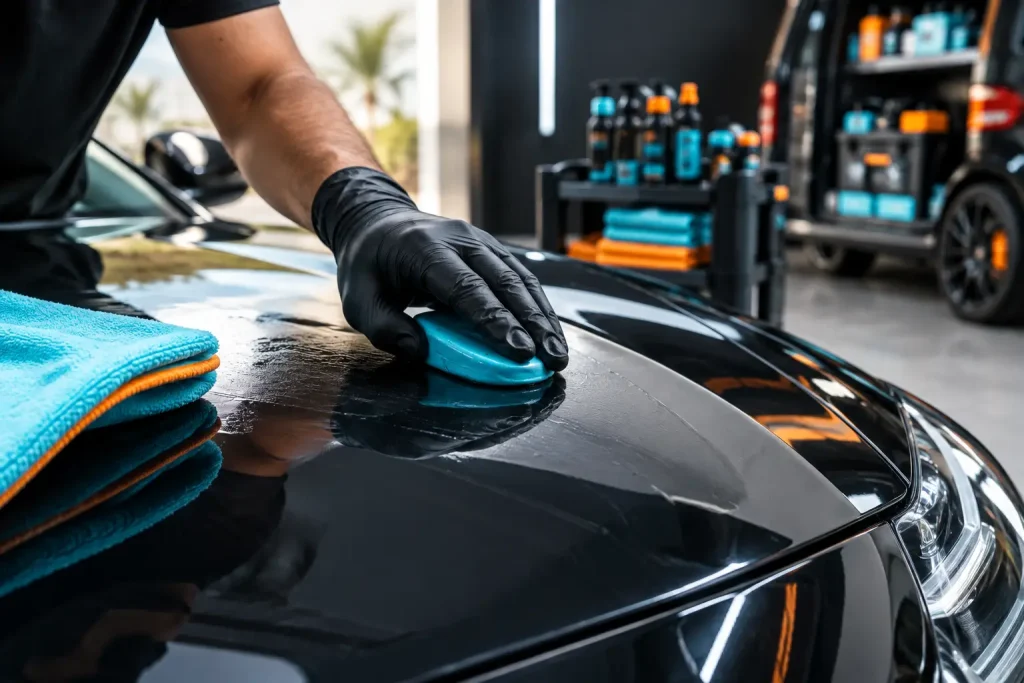
A clean car can still look tired when sunlight reveals every mark across the hood and doors. So, does clay bar remove scratches? Usually, no. A clay bar is designed to remove bonded contamination sitting on top of your paint, while a scratch is typically damage in or through the clear coat. The difference matters because the right treatment can restore a smooth, glossy finish, while the wrong one can leave you disappointed.
Clay treatment is still one of the most valuable steps in premium exterior care. It prepares the paint for wax, sealant, ceramic protection, or polishing, helping the final result look sharper and last longer. It just should not be sold as a scratch repair solution.
What a Clay Bar Actually Removes
Even after a proper wash, paint can hold on to tiny particles that normal shampoo cannot lift. These contaminants bond to the surface over time, creating a rough feel and dulling the shine. In Dubai, dust, road film, brake dust, construction fallout, and airborne pollutants can build up quickly, particularly on vehicles parked outdoors.
A clay bar, or clay mitt, glides across lubricated paint and safely pulls these embedded particles away. After treatment, the surface should feel noticeably smoother to the touch. This is why clay is often included before waxing, paint protection, or polishing services.
Clay treatment can remove contamination such as:
- Industrial fallout and embedded brake dust
- Tree sap residue, pollen, and road grime
- Light overspray from paint or construction work
- Mineral deposits that remain after washing
- Stubborn residue left by old protection products
When these particles are gone, the paint reflects light more evenly. That alone can make faint marks appear less obvious. But the clay did not repair the marks. It simply cleaned the surface around them.
Does Clay Bar Remove Scratches or Just Make Them Look Better?
A clay bar does not remove true scratches because it does not level paint. Scratch removal requires correcting the clear coat around the defect so the surface becomes more even. That is the role of machine polishing, paint correction, or, for deeper damage, touch-up and refinishing.
The confusion comes from marks that look like scratches but are actually transferred material or bonded contamination. For example, a light scuff from brushing against a painted wall, a rubber mark near a door edge, or residue from another object may sit on top of the clear coat. Clay may reduce or remove that material, making the area look dramatically better.
There is an important limit, though. If you can see a line that catches your fingernail, it is likely a deeper scratch. Clay will not fill it, erase it, or stop it from showing under direct light. A trained detailer should inspect whether polishing can safely improve it or whether the damage extends beyond the clear coat.
The Fingernail Test Is a Useful Clue
Gently run a clean fingernail across the mark. If your nail glides over it, it may be surface contamination, paint transfer, or a very light clear-coat imperfection. If your nail catches in the line, the defect is more likely embedded in the paint.
This is only a quick check, not a complete diagnosis. Dark-colored vehicles, especially black, deep blue, and charcoal gray, can show wash marring and swirl marks that are difficult to judge without proper lighting. A professional assessment is the best way to decide whether a clay treatment, a polish, or both will deliver the result you want.
Clay Bars and Swirl Marks Are Different Problems
Swirl marks are the fine circular scratches often visible in sunlight, parking garage lighting, or under fuel station lights. They are commonly caused by improper washing, dirty towels, automatic wash brushes, or wiping dust from dry paint.
Clay will not remove swirls. In fact, clay used without enough lubricant or with too much pressure can create light marring, especially on softer paint. Marring looks like a hazy patch or very fine scratches and may need a finishing polish to restore full clarity.
That does not mean clay is risky when done correctly. It means the process should be careful: start with clean paint, use plenty of dedicated lubricant, work in small sections, and avoid aggressive pressure. The goal is to let the clay collect contamination, not grind it into the surface.
When Clay Treatment Is the Right Choice
Clay treatment is ideal when your car feels rough after washing, has lost some of its glass-like finish, or is being prepared for lasting protection. Try the plastic-bag test if you are unsure: place your hand inside a thin plastic bag and lightly glide it over clean, dry paint. The bag amplifies texture, making bonded contamination easier to feel.
It is particularly useful before applying wax, paint sealant, or ceramic coating. Protection products bond better to a properly decontaminated surface. Without this preparation, a coating or wax may sit over contamination, reducing its appearance and durability.
Clay is also a smart first step before polishing. Polishing contaminated paint can drag particles across the panel and introduce more defects. A proper detail follows the correct order: wash, decontaminate, assess the paint, polish if needed, then protect.
What Removes Scratches Instead?
The right scratch-removal method depends on the depth and condition of the paint. Light clear-coat defects may improve significantly with a one-step machine polish. This process uses a polishing pad and compound or finishing polish to carefully level a microscopic amount of clear coat around the marks.
More noticeable swirls, oxidation, water-spot etching, and wash-induced haze may need multi-stage paint correction. This takes more time but can create a major transformation in gloss and reflection. The trade-off is that polishing removes a small amount of clear coat, so it should be performed thoughtfully rather than repeated unnecessarily.
For deep scratches that expose primer, metal, or plastic, polishing is not a complete fix. It may soften the edges and improve the look, but paint repair is usually needed for a lasting result. Trying to aggressively polish a deep scratch can thin the surrounding clear coat without removing the damage.
A Safer Route to Smooth, Glossy Paint
If your car has rough paint and visible marks, avoid choosing a service based on one promise. Ask for a paint assessment that separates contamination from actual paint defects. A premium treatment plan may include clay decontamination for smoothness, polishing for clarity, and a protective layer to preserve the renewed finish.
At Ride Revivers, this approach keeps the focus where it belongs: visible improvement without unnecessary steps. Your vehicle may only need a clay and wax service, or it may benefit from paint polishing before protection. The condition of the paint should decide the treatment, not a one-size-fits-all package.
For daily-driven cars, regular safe washing and periodic protection do more to prevent future swirls than repeated correction. Use clean microfiber towels, avoid wiping dusty paint when dry, and give contaminants less time to bond to the surface.
A clay bar can make your paint feel remarkably smooth and help its shine come back to life. When the issue is a true scratch, however, the best next move is a careful inspection and the right level of polishing, not more pressure on the clay.