

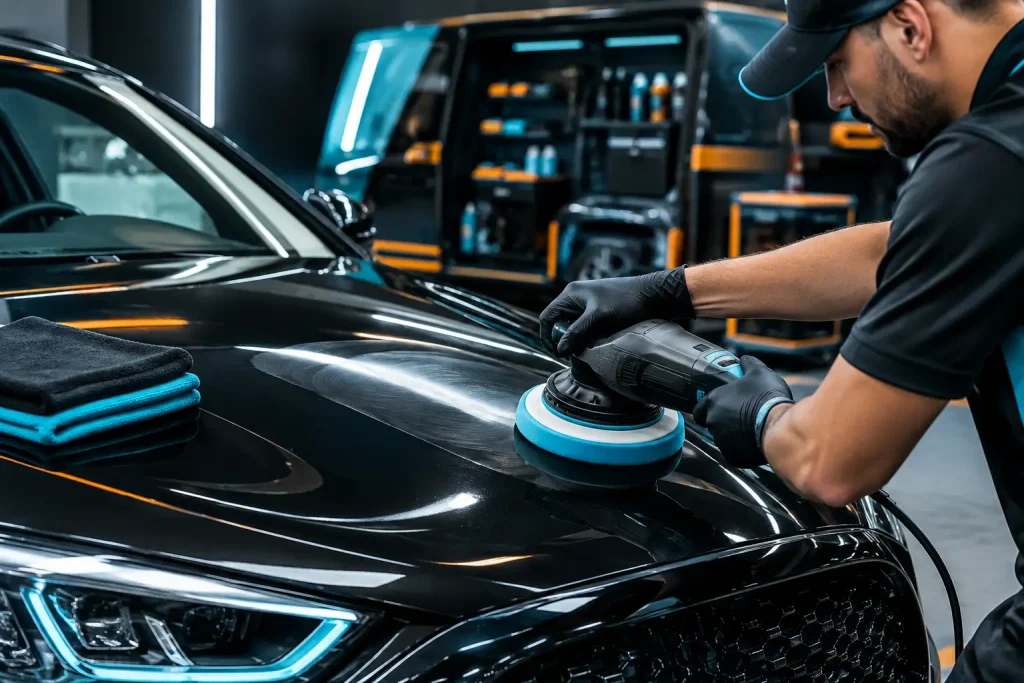
Those faint circular lines that appear under sunlight, parking-garage LEDs, or a phone flashlight can make an otherwise clean car look tired. They are especially frustrating after a wash, when the paint should look its best. So, can polishing remove swirl marks? In many cases, yes. The right polishing process can dramatically reduce or fully remove light swirls, restoring a deeper, sharper gloss without repainting the vehicle.
The result depends on one essential detail: how far the damage extends into the paint. A professional polish corrects defects in the clear coat, but it cannot reverse every scratch or paint failure. Knowing the difference protects your finish, your time, and your expectations.
What Swirl Marks Actually Are
Most swirl marks are not true swirls in the paint. They are clusters of fine, shallow scratches in the clear coat, the transparent protective layer above your vehicle’s color. As light hits those tiny scratches from different angles, it scatters instead of reflecting cleanly. That is why the finish looks hazy, webbed, or dull.
Common causes are more ordinary than most owners expect. A dusty car wiped with a dry towel, a worn wash mitt, harsh automatic wash brushes, or improper drying can all create fine marring. Sand and road dust act like abrasives when they are dragged across the surface.
Dark colors tend to reveal swirl marks faster because they create stronger contrast under direct light. Black, deep blue, gray, and rich metallic finishes often need more careful wash habits to keep their reflection crisp.
Can Polishing Remove Swirl Marks Completely?
Polishing can remove swirl marks completely when they are light and limited to the upper portion of the clear coat. The polish uses fine abrasives to level the surrounding clear coat very slightly until the scratch edges are no longer visible. It is not filling the marks temporarily. Proper correction refines the surface so light reflects evenly again.
That said, “completely” is not always the right target. A responsible detailer assesses paint thickness, paint condition, previous correction work, and the vehicle’s age before deciding how aggressively to polish. Removing every visible defect may require taking away more clear coat than is sensible. A premium service should prioritize a beautiful finish that remains safe and protectable for the long term.
A one-step polish often delivers a major visual improvement for daily-driven vehicles with moderate swirls. Heavier defects may need a multi-stage correction: a cutting stage to address deeper marks, followed by a refining stage that restores clarity and gloss. More correction can produce a more dramatic transformation, but it also takes longer and costs more.
When Polishing Is Not the Full Answer
Not every mark is a swirl, and not every defect can be polished away. If a scratch catches your fingernail, it may be too deep for safe correction. It could extend through the clear coat and into the color layer. Polishing may soften its appearance, but it will not make it disappear.
Paint chips, peeling clear coat, oxidation that has progressed too far, bird-dropping etching, and deep key scratches often need a different solution. Depending on the problem, that could mean touch-up work, wet sanding by a qualified professional, or repainting.
There is also a difference between correction and concealment. Some waxes, glazes, and all-in-one products contain fillers that mask light swirls for a short period. They can improve the appearance before an event or sale, but the marks can return as the product wears away. Paint polishing is the better choice when you want genuine correction rather than a temporary cover-up.
How Professional Paint Polishing Works
A quality polishing service begins well before the machine polisher touches the vehicle. Paint must be clean and free of bonded contamination. If dust, tar, or industrial fallout remains on the surface, polishing over it can create additional marring.
The typical process includes a careful wash, chemical decontamination when needed, and a clay-bar treatment to remove embedded particles. The paint is then inspected under focused lighting. This step matters because swirl marks can look minor in shade yet become obvious under direct sun.
A trained technician performs a test spot on a small panel first. This reveals which pad and polish combination delivers the desired correction while preserving as much clear coat as possible. Once the right approach is established, each section is polished methodically, checked, and refined where necessary.
After correction, remaining polishing oils should be removed before protection is applied. A quality wax, sealant, or ceramic coating helps preserve the fresh finish and makes routine washing easier. Protection will not make paint scratch-proof, but it adds a valuable barrier between the clear coat and daily contamination.
Why DIY Polishing Can Go Wrong
A consumer-grade polish and a basic machine can improve light swirls, especially for experienced owners. But polishing is more technical than it appears in quick before-and-after videos. Different paint systems respond differently, and edges, body lines, and repainted panels need special care.
The main risk is overcorrection. Every polishing session removes a microscopic amount of clear coat. Excessive pressure, too many passes, an aggressive compound, or poor pad control can leave holograms, uneven gloss, or, in severe cases, clear-coat damage.
For a newer vehicle with very light wash marring, a gentle finishing polish may be suitable. For an older vehicle, dark paint, deep scratches, or a car with unknown detailing history, professional assessment is the safer route. The goal is not simply to make paint shiny for one day. It is to revive it without compromising its future condition.
The Best Way to Keep Swirl Marks From Returning
Polishing corrects the damage already present. Your wash routine determines how quickly new marks appear. After investing in paint correction, use a pH-balanced shampoo, clean microfiber towels, and separate tools for wheels and paint. Never use the same towel on lower panels and upper painted surfaces.
Avoid wiping dry dust from the car. Rinse or use a suitable waterless-cleaning product with plenty of clean microfiber instead. When drying, pat or glide the towel gently rather than pressing hard. Wash mitts and towels also need regular cleaning because trapped grit can undo careful work in minutes.
For busy owners, consistent professional maintenance is often the easiest way to protect the result. A proper mobile wash service brings trained care to your doorstep, which means the vehicle can be maintained without rushed visits to a wash center or harsh brush systems. Ride Revivers can pair exterior care with polishing and protective treatments to keep the finish looking revived between deeper detailing appointments.
In Dubai, this care becomes even more valuable. Heat, fine dust, road film, and frequent washing can quickly dull an unprotected finish. A durable protective layer and correct wash technique reduce the effort required to keep the paint looking clean and reflective.
How Often Should You Polish a Car?
There is no fixed calendar rule. A well-maintained vehicle may only need light polishing once a year or less. A neglected vehicle may benefit from a correction service sooner, followed by protection and better upkeep. The condition of the paint matters more than the date on the calendar.
If you notice haziness under bright light, reduced gloss after washing, or fine spider-web patterns across the hood and doors, schedule an assessment. The earlier light swirls are addressed, the less correction is usually needed.
A polished finish should look like clean glass, not merely a freshly washed surface. Choose correction that respects the paint, then protect that result with the same level of care. Your vehicle will hold its shine longer, and every drive will feel that much more put together.