

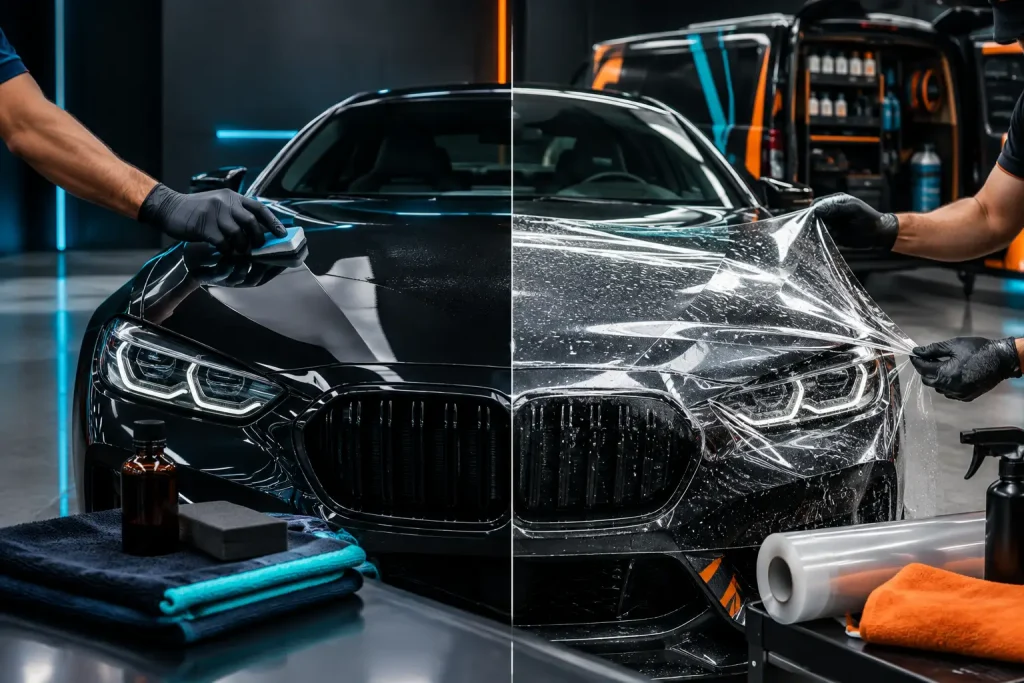
A freshly detailed car can lose its sharp finish surprisingly quickly. One highway drive can leave stone chips on the bumper. A week of heat, dust, and parking outdoors can dull an otherwise beautiful paint finish. When choosing ceramic coating versus PPF, the right answer comes down to the type of protection your vehicle actually needs – not simply which option sounds more premium.
Both treatments improve the way a vehicle looks and help preserve its finish. But they solve different problems. Ceramic coating makes paint easier to clean and helps it maintain a deep, polished gloss. Paint protection film, commonly called PPF, provides a physical barrier against chips, scratches, and road debris.
Ceramic Coating Versus PPF: The Core Difference
Ceramic coating is a liquid protective treatment applied to properly prepared paint. Once cured, it forms a durable, slick surface that enhances gloss and repels water, dust, and everyday contaminants. It does not add a thick physical layer to the car, but it makes washing easier and helps reduce the wear caused by repeated cleaning.
PPF is a transparent urethane film installed over painted panels. It is designed to take the hit before your paint does. Quality PPF can absorb the impact of small stones, resist scuffs, and, in many cases, self-heal minor swirl marks and light scratches when exposed to heat.
That distinction matters. Ceramic coating protects the finish from staining, oxidation, grime, and the friction of regular washing. PPF is built to protect against physical damage. A ceramic coating will not stop a rock chip. PPF will not make dirt disappear, although many modern films have hydrophobic top layers that make maintenance easier.
Choose Ceramic Coating for Gloss and Easier Maintenance
Ceramic coating is a strong choice for owners who want their vehicle to stay cleaner-looking between washes. Water beads and rolls away more easily, dust is less likely to cling to the surface, and bugs, bird droppings, and road film are generally easier to remove before they bond to the paint.
For busy drivers, that benefit is practical. A protected vehicle needs less aggressive scrubbing, which means fewer opportunities to add wash swirls. It also gives paint a richer, more reflective look that makes a clean car look noticeably more refined in daylight.
Ceramic coating is particularly well suited to vehicles that are already in good cosmetic condition or have received paint correction first. Coating locks in the appearance of the surface underneath it. If the paint has swirl marks, haze, or light scratches, those imperfections will still be visible after the coating is applied. Proper polishing before application is what creates that crisp, revived finish.
In Dubai, ceramic coating can also be valuable for vehicles exposed to intense sun, dust, and frequent outdoor parking. It helps reduce the effort required to maintain a polished exterior, but it is not a replacement for routine washing. Sand and dust still need to be removed carefully rather than wiped across dry paint.
Most professional coatings are marketed with multi-year durability, but real-world lifespan depends on preparation, parking conditions, wash habits, and maintenance. A coating is a long-term treatment, not a permanent force field.
Choose PPF for High-Impact Areas
PPF is the better choice when your concern is chips, scratches, and abrasion. Think about the panels that meet debris first: the front bumper, hood, fenders, mirror caps, headlights, rocker panels, and the area behind the rear wheels. These are the places where daily driving leaves visible evidence.
A full-front PPF package is often the practical middle ground. It focuses protection where it is most needed while preserving the original painted look of the vehicle. For owners of performance cars, new vehicles, dark-colored cars, or vehicles that spend significant time on highways, this can make a meaningful difference to long-term appearance and resale appeal.
Full-body PPF offers the highest level of protection. It makes sense for a vehicle with premium paintwork, a matte or satin factory finish, a high-value resale plan, or an owner who wants to preserve every panel as closely as possible. It is also useful for vehicles that regularly encounter gravel roads, tight parking spaces, or heavy urban driving.
PPF is more expensive than ceramic coating because the material cost, installation precision, panel preparation, and edge finishing are more involved. The installer must accurately fit the film, manage curves and complex body lines, and avoid visible contamination or lifting edges. It is a specialized process, and the quality of installation matters as much as the film itself.
Can You Apply Ceramic Coating Over PPF?
Yes. In fact, combining the two is often the premium protection plan for owners who want impact defense and easier maintenance.
PPF goes on first to shield the paint from chips and scuffs. Ceramic coating can then be applied over the film to boost gloss, add water repellency, and make the surface easier to wash. The result is a vehicle that is better protected on the road and simpler to keep spotless at home.
This combination is not mandatory for every car. If budget is focused on preventing damage, prioritize PPF on vulnerable areas first. If the vehicle is mostly city-driven and your primary goal is a glossy, easy-to-maintain finish, ceramic coating may deliver the best value. The right investment should match how the vehicle is used rather than follow a one-size-fits-all package.
How to Decide What Your Vehicle Needs
Start with the condition of the paint. A new vehicle is an ideal candidate for PPF because the original finish can be protected before chips and scratches accumulate. An older vehicle may benefit from paint correction and ceramic coating if the priority is restoring depth, shine, and cleanliness.
Then consider your driving pattern. Frequent highway travel, long commutes, and regular road trips increase the case for PPF on the front end. A weekend car that stays parked indoors may not need full-body film, but ceramic coating can still provide a high-gloss finish and reduce upkeep.
Color also changes the decision. Dark paint shows wash marks, dust, and fine scratches quickly, making ceramic coating especially appealing. White and light silver vehicles can hide light swirls more effectively, but they still benefit from PPF in chip-prone zones. Matte paint requires particular care, since polishing is not an option for correcting defects in the same way it is on gloss paint. PPF can help preserve its original texture.
Finally, think about your maintenance habits. Neither treatment eliminates the need for professional washing. Harsh brushes, dirty towels, strong chemicals, and wiping dust from a dry panel can reduce the benefits of any protection package. Gentle, consistent maintenance is what keeps the finish looking premium year after year.
What Protection Does Not Cover
Clear expectations make for better results. Ceramic coating does not prevent deep scratches, dents, or stone chips. PPF cannot prevent every impact, especially a severe strike, and it can eventually need replacement after years of exposure. Neither product repairs damaged paint underneath it.
Preparation is equally important. Before applying either treatment, a professional should assess paint condition, remove bonded contamination, and correct defects when appropriate. Applying high-end protection over neglected paint can preserve the problem instead of reviving the vehicle.
For the best appearance, schedule regular exterior washes and address bird droppings, tree sap, and fuel spills promptly. These contaminants are easier to remove from protected paint, but leaving them in place for too long can still cause damage.
The Best Protection Is the One You Will Maintain
Ceramic coating and PPF are not competing versions of the same service. One is designed for gloss, water behavior, and easier cleaning. The other is designed for physical defense where the road is toughest on your paint.
If you want a transformed finish that stays cleaner and shines longer, ceramic coating is an excellent fit. If preventing chips and scuffs is the priority, choose PPF for the areas that take the most abuse. For owners who want both, PPF on high-impact panels followed by ceramic protection delivers a polished, practical standard of care.
Your car does not need every treatment available. It needs the right protection, professionally applied and maintained with the same level of care you expect from the vehicle itself.