

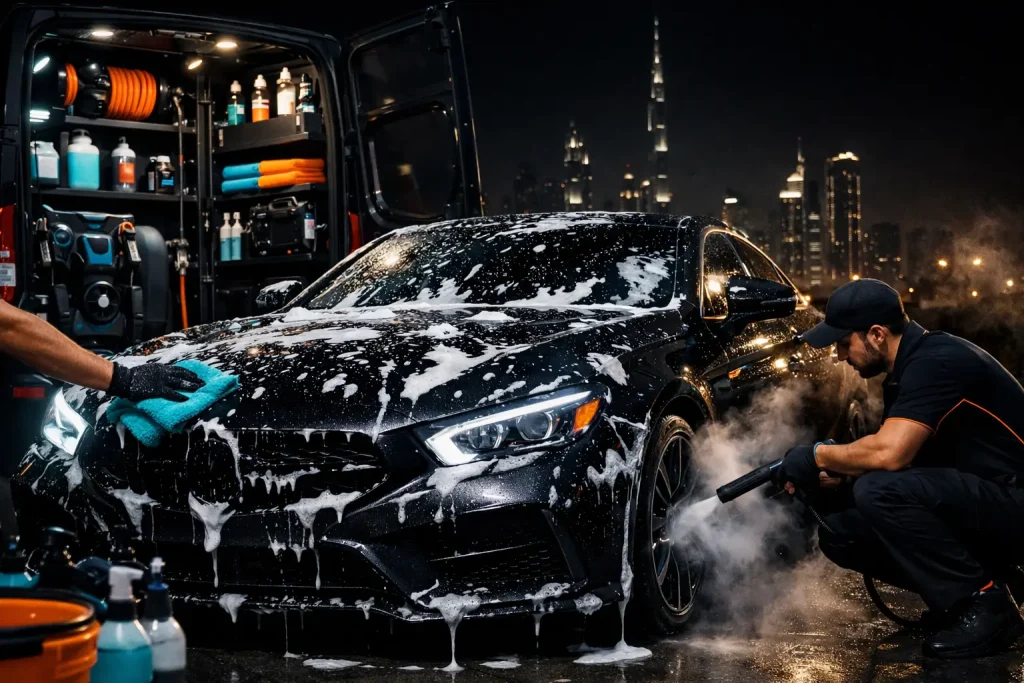
A vehicle can look freshly washed and still suffer from rushed techniques, harsh chemicals, or dirt dragged across the paint. So, are eco car washes safe? Yes, when the service uses quality products, proper wash methods, and trained professionals who understand the difference between saving water and cutting corners.
A genuinely eco-conscious wash should protect more than the environment. It should protect your paint, wheels, trim, interior surfaces, and long-term resale value too. That is the standard worth looking for when you choose a mobile or doorstep car wash.
Are Eco Car Washes Safe for Paint and Finishes?
A well-executed eco car wash is safe for modern paint, clear coat, ceramic coatings, vinyl wraps, and exterior trim. In many cases, it can be gentler than a conventional wash because it relies on pH-balanced cleaning products, controlled water use, and careful hand-washing rather than aggressive brushes.
The key is lubrication. Dust, sand, and road grime can act like fine abrasives when they are moved across a dry surface. A professional eco wash uses products that loosen and surround that contamination, allowing it to be lifted away with clean microfiber towels or a controlled rinse. This reduces the chance of swirl marks and dull patches that make dark-colored vehicles lose their depth and gloss.
Not every low-water method is suitable for every vehicle, however. A lightly dusty car can be safely cleaned with a water-saving wash process. A vehicle covered in mud, sand, salt residue, or heavy construction dust needs a more thorough pre-rinse and wash. Trying to conserve water by wiping heavy grit directly from the paint is not premium care. It is a shortcut.
The Product Matters as Much as the Process
“Eco-friendly” does not automatically mean harmless. Some products may be biodegradable yet still be too alkaline, too acidic, or poorly suited to delicate automotive finishes. The safer choice is a formula designed specifically for vehicle surfaces, with balanced chemistry and clear instructions for dilution and use.
Quality products should clean effectively without stripping waxes, drying out rubber seals, or leaving a sticky film behind. For vehicles with ceramic coating, wax protection, or paint protection film, the wash should preserve the protective layer rather than weaken its hydrophobic performance.
This is also why dish soap and household degreasers do not belong in a professional vehicle-care routine. They may remove visible dirt, but they can also remove protective oils and leave finishes looking flat over time.
What Makes an Eco Car Wash Truly Safe?
The safest eco wash is not defined by one product or one marketing claim. It is a complete service process that respects the condition of the vehicle.
First, the technician should assess how dirty the car is. Light dust calls for a different approach than brake dust baked onto wheels or sand packed into lower panels. In Dubai, this distinction matters. Fine sand settles quickly on paint and glass, and it needs to be removed with enough lubrication to avoid scratching.
Second, clean tools are non-negotiable. Microfiber towels should be fresh, soft, and separated by task. A towel used on wheels or lower rocker panels should never touch the hood, doors, or interior. Cross-contamination is one of the quiet causes of scratches, streaks, and unpleasant odors inside a vehicle.
Third, the service should leave no neglected areas. Door jambs, mirrors, wheel arches, windshield edges, and interior touchpoints all collect grime. An eco wash does not mean spraying less product and leaving the details behind. It means working efficiently, using only what is needed, and delivering a spotless finish with less waste.
Is a Waterless Car Wash Safe?
Waterless washes can be safe, but only under the right conditions. They are best suited to vehicles with light surface dust, fingerprints, or everyday city grime. The cleaning solution provides lubrication while microfiber towels lift the debris from the surface.
The trade-off is simple: the heavier the dirt, the greater the risk of friction. If the car has been through rain, off-road conditions, beach parking, or a dusty worksite, a fully waterless wipe-down is not the right service. A water-efficient wash with pre-treatment and controlled rinsing is the safer option.
Think of it this way: waterless does not mean water-free at all costs. It means using water intelligently. Premium vehicle care adapts to the vehicle in front of it rather than forcing every car through the same process.
Eco-Friendly Does Not Mean Less Clean
Some owners worry that eco-focused cleaning will leave behind dust, water spots, or a less polished result. That concern is understandable, especially when a vehicle is part of your daily routine, family life, or professional image.
A high-quality eco wash should still deliver visible results: clear glass, clean wheels, fresh exterior paint, a tidy cabin, and a finish that feels smooth to the touch. The difference is in how those results are achieved. Better product control, concentrated formulas, reusable microfiber systems, and targeted water use can reduce waste without compromising the final appearance.
For interiors, eco-conscious care can be especially valuable. Low-residue cleaners and properly managed moisture help keep dashboards, leather, fabric, and touchscreens clean without flooding surfaces or creating overpowering chemical smells. A professional interior service should leave the cabin refreshed, not damp or artificially perfumed.
Watch for These Red Flags
A few signs suggest that a wash may not be as safe as it claims. Be cautious if the team wipes a dusty vehicle with a dry towel, uses the same cloth on wheels and paint, applies overly shiny tire dressings that sling onto body panels, or cannot explain what type of products they use.
Also pay attention to drying. Water spots are more than a cosmetic annoyance, particularly in hot weather. Mineral-rich water can leave marks on glass and paint if it dries too quickly. Safe service includes careful drying with clean towels and attention to crevices where water can drip out later.
How Eco Washing Supports Long-Term Vehicle Care
Routine washing is not just about keeping a car presentable. It removes contaminants that can gradually affect paint, wheels, glass, and protective finishes. Bird droppings, tree sap, brake dust, bug residue, and road film are easier to remove when they are not left sitting for weeks.
Consistent care also makes deeper services more effective. A clean, maintained vehicle is better prepared for clay bar treatment, polishing, waxing, ceramic coating, and interior detailing. Instead of waiting until the paint looks tired or the cabin develops stubborn odors, regular maintenance keeps the vehicle closer to its best condition.
For families with more than one vehicle, a reliable doorstep schedule can make this easier to maintain. The real benefit is not simply avoiding a trip to a wash center. It is knowing each vehicle receives the right level of attention without disrupting work, school runs, or weekend plans.
Choosing a Safe Eco Car Wash Service
Ask a simple question before booking: how will this service treat my vehicle if it is heavily soiled? A professional provider should have a clear answer. They should explain when a water-saving method is appropriate, when additional rinsing is needed, and how they protect paint and interior materials throughout the process.
Look for trained staff, clean equipment, automotive-safe products, and services that go beyond a quick exterior wipe. The best providers understand that a premium finish comes from preparation and technique, not from using the most foam or the least water.
Ride Revivers approaches eco-conscious vehicle care with that balance in mind: thoughtful product use, professional execution, and doorstep convenience built around the condition of your vehicle.
Your car should not have to choose between a brilliant finish and more responsible care. Choose a wash that treats water as a resource, your vehicle as an investment, and every panel as part of the final impression.