

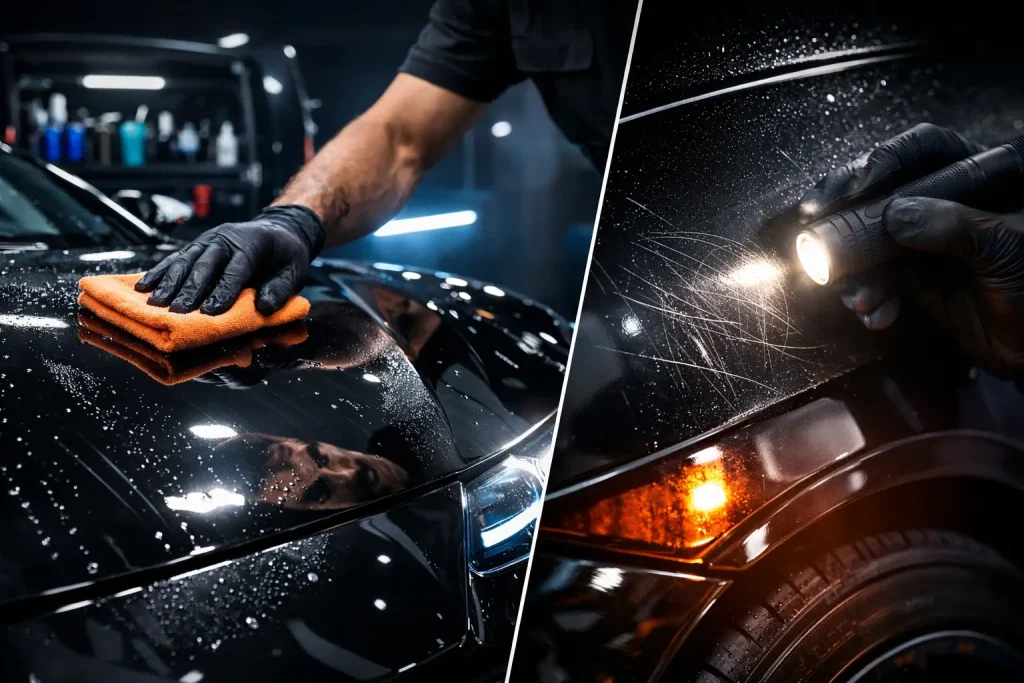
A freshly detailed car can look almost too good to drive. Then a dusty parking lot, a careless wash mitt, or a bag brushing against the door can make every owner ask the same question: does ceramic coating prevent scratches?
The honest answer is no, not completely. Ceramic coating is not a force field for your paint. It can reduce the likelihood and visibility of very light marks, but it cannot stop deep scratches, stone chips, door dings, or damage caused by rough contact. Its real value is in making your vehicle easier to clean, better protected from contamination, and more capable of holding on to that polished, high-gloss finish.
For owners who want their car to look revived between professional details, that is still a meaningful upgrade.
Does Ceramic Coating Prevent Scratches or Just Reduce Them?
A quality ceramic coating creates a thin, cured layer over the clear coat. This layer is chemically resistant and highly hydrophobic, meaning water, grime, and many contaminants have less ability to cling to the surface. When dirt is less bonded to the paint, safer washing becomes easier and there is less rubbing required to remove it.
That matters because a large share of light paint defects come from daily cleaning. Dust wiped from a dry panel, an unclean towel, or a tunnel wash brush can drag abrasive particles across the clear coat. Ceramic coating helps reduce that friction and gives minor surface contact a little more resistance.
However, the coating itself is extremely thin. It cannot absorb the force of a key, a shopping cart, a sharp edge, or gravel striking the front of the vehicle at speed. If a scratch cuts through the coating and into the clear coat or paint, the coating has not prevented the damage.
Think of ceramic coating as a premium protective treatment for the finish, not armor plating. It preserves the appearance of well-maintained paint. It does not replace careful driving, proper washing, or paint protection film in high-impact areas.
What Ceramic Coating Can Help Protect Against
The greatest strength of ceramic coating is protection from the things that slowly dull a vehicle over time. UV exposure, water spots, road film, bird droppings, tree sap, bug residue, and environmental fallout can all damage or stain an unprotected finish if they sit too long.
A properly applied coating makes these contaminants easier to remove before they leave lasting marks. It also helps limit oxidation and fading caused by sunlight, which is especially valuable for cars parked outside regularly. Dark paint, in particular, can benefit because it tends to show swirls, water spotting, and loss of gloss more clearly.
Ceramic coating may also help with very fine wash marring. These faint circular marks are often called swirl marks, even though they are usually tiny scratches in the clear coat. A slicker, protected surface can make safer maintenance easier, while the added gloss can make minor defects less noticeable.
The results depend on the coating quality, the paint condition before application, and how the car is maintained afterward. Applying ceramic coating over neglected paint will protect that surface, but it will not erase existing swirls, oxidation, or scratches. Paint correction or polishing should come first when the goal is a truly refined finish.
What Ceramic Coating Will Not Stop
Ceramic coatings are often marketed with hardness ratings, which can create unrealistic expectations. A hardness rating refers to resistance to certain types of light surface abrasion under controlled testing. It does not mean the coating makes paint scratch-proof in real-world driving.
Ceramic coating will not reliably prevent:
- Deep scratches from keys, sharp objects, or rough contact
- Rock chips and road debris damage
- Scrapes from curbs, walls, or parking incidents
- Door dings and dents
- Damage from aggressive scrubbing or contaminated wash tools
If your priority is impact protection on the bumper, hood, mirrors, door edges, and behind wheel arches, paint protection film is the stronger solution. It is thicker than ceramic coating and designed to absorb more physical impact. Many owners choose a combination: film on vulnerable areas and ceramic coating across the rest of the vehicle for easy cleaning and enhanced gloss.
The Biggest Factor: How You Wash the Car
A ceramic-coated vehicle can still pick up swirl marks quickly if it is washed carelessly. The coating makes maintenance more forgiving, but it does not make poor wash habits harmless.
Avoid wiping dust from dry paint, even when the panel looks only lightly dirty. Dust often contains fine sand and grit. Rubbing it across the surface is one of the fastest ways to create visible marring, especially on black, navy, and other deep colors.
Instead, rinse away loose debris first. Use clean, high-quality microfiber towels and wash media, along with pH-balanced products suitable for coated vehicles. Separate towels for paint, wheels, and lower panels. A towel used near brake dust or road grit should never return to the hood or doors.
For busy owners, professional maintenance is often the simplest way to protect the investment. Consistent care with clean tools, controlled techniques, and coating-safe products keeps the finish looking sharper than occasional rushed washes.
How Long Does Scratch Protection Last?
The scratch resistance benefits of ceramic coating are not permanent, because the coating slowly wears from washing, weather, friction, and daily use. How long it performs well depends on the product, preparation, application quality, parking conditions, mileage, and maintenance routine.
A professionally applied coating can provide protection and gloss for years when cared for correctly. But its hydrophobic behavior may weaken sooner in areas exposed to frequent abrasion, such as lower doors, the rear hatch, or high-contact sections around handles. This does not always mean the coating has failed. It may need professional inspection, decontamination, or a maintenance treatment to restore its performance.
The practical sign to watch is behavior. If water no longer beads or sheets cleanly, dirt begins clinging more readily, or the paint loses its easy-clean feel, it is time to assess the surface. Sometimes contamination is masking the coating. Other times, the coating has reached the end of its useful life.
Ceramic Coating vs. Wax for Scratch Prevention
Wax can add shine and a degree of water resistance, but it generally lasts for weeks or a few months, not years. It is a good option for owners who enjoy regular hands-on detailing and want a warm, freshly waxed look.
Ceramic coating is the more durable choice for owners who want long-lasting gloss with less frequent reapplication. It provides stronger chemical resistance and makes routine cleaning easier. Neither option prevents major scratches, but ceramic coating offers more consistent protection against the everyday grime and wash-related wear that gradually ages a vehicle.
Is Ceramic Coating Worth It for Your Vehicle?
Ceramic coating is worth considering if you value a clean, glossy finish and want to reduce the effort required to maintain it. It is particularly useful for newer vehicles, recently polished vehicles, dark paint, premium finishes, and cars that spend long hours outdoors.
It may be less worthwhile if you expect it to stop physical damage or if the vehicle will be washed with abrasive methods afterward. In that case, the coating will not deliver the experience you were promised. Set the right expectation: ceramic coating protects the finish from the daily causes of dullness and makes proper care easier. It does not make paint invincible.
The best results start with expert surface preparation, because the coating locks in the condition beneath it. At Ride Revivers, a premium ceramic treatment is most effective when paired with careful polishing and a maintenance routine that respects the finish.
Your car will still meet dust, traffic, tight parking spaces, and daily life. Give it the protection that keeps those ordinary moments from stealing its shine, then maintain it with the same level of care.