

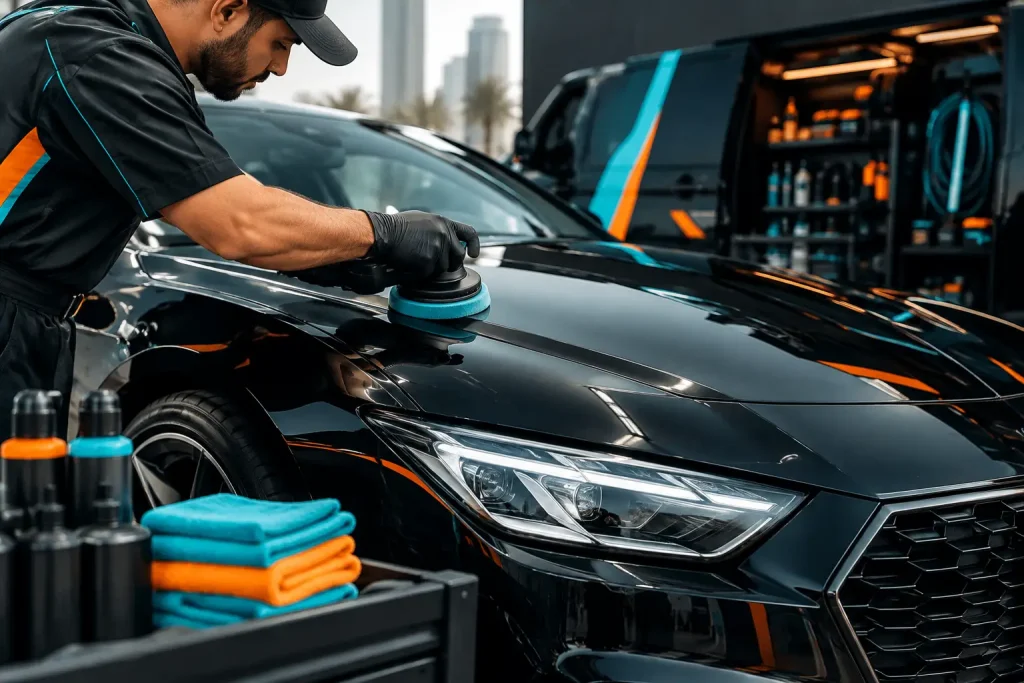
A freshly washed car can look clean for a few hours. A properly polished car looks different: deeper color, sharper reflections, smoother paint, and a finish that still catches the eye after the road dust returns. Finding the best car polish for shine is less about buying the most expensive bottle and more about matching the treatment to your paint’s real condition.
For most vehicle owners, the goal is simple: bring back a rich, glossy finish without creating more work, hiding damage temporarily, or taking unnecessary risks with the clear coat. The right polish can do that. The wrong one can leave haze, uneven results, or remove more paint than necessary.
What Creates a Deep, Noticeable Shine?
Paint shine comes from a smooth surface. When clear coat is covered in fine scratches, oxidation, water spots, and road film, light scatters instead of reflecting cleanly. That is why a car may be clean yet still look dull in direct sunlight.
Polish improves the finish by leveling very fine imperfections. It uses mild abrasives to reduce swirl marks, light scratches, and oxidation, creating a smoother surface that reflects light more evenly. Wax, sealant, and ceramic protection can add gloss and water beading afterward, but they do not correct paint in the same way.
This distinction matters. If your vehicle has light swirls around the door handles, dullness on the hood, or a faded-looking finish, a wash and wax alone may not give you the revival you expect. A suitable polish is the step that restores clarity before protection locks in the result.
The Best Car Polish for Shine Depends on Your Paint
There is no single polish that is right for every vehicle. Paint age, color, clear-coat condition, and your expectations all affect the best choice. The most effective approach is to choose the least aggressive polish that can deliver the correction you need.
For well-kept paint with light swirls
A finishing polish is usually the best fit. It is designed for vehicles that are washed regularly but have developed faint circular marks, light towel scratches, or a slightly muted gloss. This type of polish refines the clear coat rather than cutting heavily into it.
It is especially useful for darker colors, where swirls are easier to notice under parking-lot lights or Dubai sunshine. The result should be a crisp, glass-like reflection without the heavy correction process that older or neglected paint may require.
For dull, oxidized, or neglected paint
A one-step polish with moderate correction can bring back significant shine when the surface looks flat or tired. It can reduce visible defects while improving gloss in one service. This is often the practical choice for daily-driven vehicles that need a clear visual transformation but do not require a multi-stage paint correction.
The trade-off is that one-step polishing cannot remove every deep scratch. It improves the overall appearance, not the impossible. If a scratch catches your fingernail, it may extend beyond the clear coat and need more than polish.
For heavily marked paint
A compound followed by a finishing polish may be necessary for deeper swirl marks, heavy wash marring, stubborn oxidation, or extensive light scratching. This is a more involved correction process and should be assessed carefully. Aggressive polishing can create impressive results, but it also removes a measurable amount of clear coat.
For a newer premium vehicle, a classic car, or a vehicle you plan to keep for years, professional paint assessment is the smarter route. The aim is not to chase perfection at any cost. It is to achieve the strongest possible finish while preserving the paint system for the long term.
Polish, Wax, Sealant, and Ceramic Coating Are Not the Same
Many products are marketed as all-in-one shine solutions, which can make choosing confusing. They may make paint look better, but each serves a different purpose.
Polish corrects and refines the surface. Wax adds warmth, gloss, and short-term protection. Paint sealant provides longer-lasting synthetic protection and a clean, reflective look. Ceramic coating creates a durable protective layer that helps resist contamination, supports easier washing, and maintains gloss when professionally prepared and applied.
An all-in-one polish can be convenient for routine care because it combines light correction with protection. However, it will not generally match the clarity of a dedicated polish followed by a separate protective treatment. If your priority is maximum shine for a special occasion or a true exterior revival, separating the correction and protection stages usually delivers the better result.
How to Choose the Right Polish Without Guesswork
Start by looking at the vehicle in direct sunlight and under artificial light. Sunlight reveals oxidation and dullness, while focused lighting reveals swirls and fine scratches. Then consider how the vehicle is used. A garage-kept weekend car has different needs than an SUV handling school runs, highway dust, and frequent outdoor parking.
Choose based on these practical questions:
- Is the paint merely lacking gloss, or does it have visible swirl marks and oxidation?
- Do you want a short-term enhancement or correction followed by long-lasting protection?
- Is the vehicle dark-colored, where defects are more visible?
- How often can you maintain it with careful washing?
- Are you comfortable using a machine polisher, or do you need professional care?
Hand application can improve gloss with a mild finishing product, but it has limits. A dual-action machine polisher produces more consistent correction and can restore clarity more effectively when used with the right pad, speed, and technique. It also carries risk in inexperienced hands, especially near edges, body lines, and thin paint areas.
Preparation Is What Makes Polish Perform
Even the best polish will disappoint if applied over embedded dirt, tar, or mineral deposits. A premium result begins with preparation.
The vehicle should be thoroughly washed with a pH-balanced shampoo, then decontaminated to remove bonded particles that normal washing cannot lift. A clay treatment or a suitable chemical decontamination process leaves the paint smoother and prevents trapped grit from interfering with polishing.
The paint must then be dry, cool to the touch, and free from direct sun. Polishing hot panels can cause products to dry too quickly, create uneven residue, and make removal difficult. Working panel by panel is slower than rushing across the entire vehicle, but it is how consistent gloss is created.
After polishing, protect the finish. Without a protective layer, freshly corrected paint is exposed again to UV rays, dust, bird droppings, water minerals, and everyday contamination. A quality sealant, wax, or ceramic coating helps preserve the revived look and makes routine washing easier.
The Mistakes That Reduce Shine
Over-polishing is one of the biggest mistakes. Clear coat is not unlimited, and repeated aggressive correction can reduce its lifespan. A vehicle does not need a heavy compound every time it loses shine. Often, a gentle finishing polish and proper protection are enough.
Another common issue is using household cloths, rough sponges, or dirty wash mitts after polishing. These can quickly reintroduce the fine marks you just worked to reduce. Use clean microfiber towels, a dedicated wash mitt, and gentle drying methods. The way a car is maintained between detailing appointments has a major effect on how long the shine lasts.
Finally, do not confuse fillers with correction. Some products temporarily mask swirls using oils or gloss enhancers. They can look excellent at first, but the defects may reappear after a few washes. There is nothing wrong with a temporary enhancement when that is the goal, but it should not be mistaken for lasting paint refinement.
When Professional Polishing Is Worth It
Professional polishing is particularly valuable when the paint has visible damage, the vehicle is high-value, or you want the finish protected properly after correction. Trained technicians can measure paint condition, choose a safe polish and pad combination, and adjust the process across different panels.
For busy owners, it also removes the time cost. A proper exterior revival involves washing, decontamination, paint preparation, polishing, residue removal, and protection. Ride Revivers brings that premium process to your doorstep, so your vehicle can receive focused care without losing your day to a detailing center.
The best shine is not the one that looks dramatic for one afternoon. It is the finish that suits your paint, is corrected with care, and stays easier to maintain in the weeks ahead. Treat polishing as part of a complete care routine, and every wash has a better surface to reveal.