

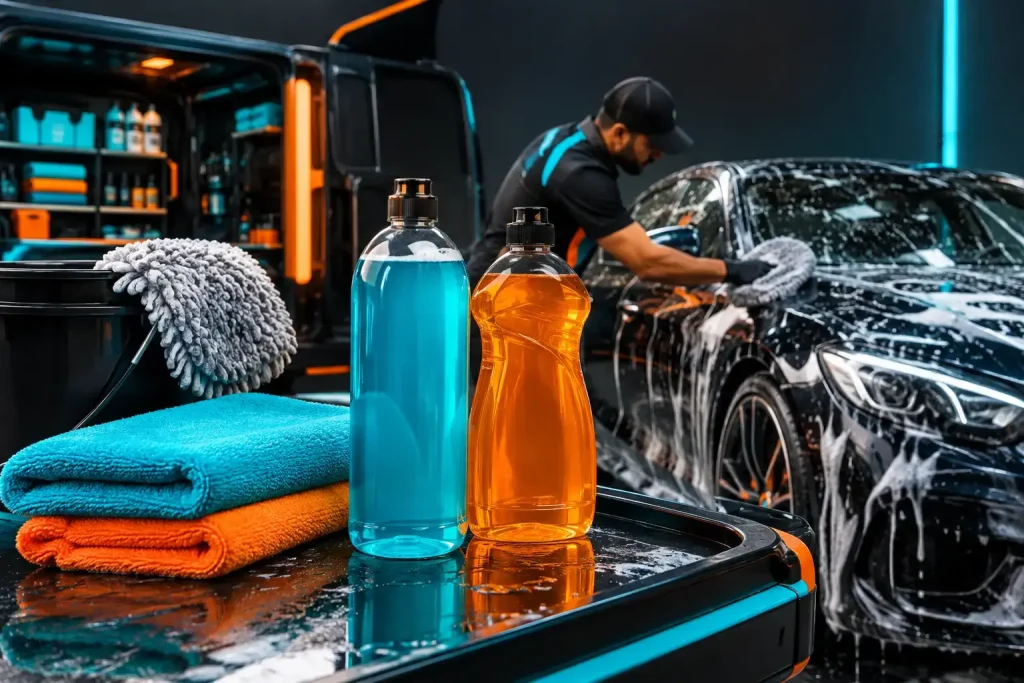
A bottle of dish soap at the kitchen sink can look like an easy answer when your car is dusty. But car shampoo versus dish soap is not simply a question of what creates more foam. It is a choice between a cleaner made to remove food grease aggressively and one designed to lift road grime while respecting paint, trim, wax, and protective coatings.
For a quick one-time wash, dish soap may leave the vehicle looking clean. The concern is what it can remove along the way: the water-repelling protection that gives paint its deeper gloss and makes routine washing easier. If you care about a consistently polished finish, product choice matters before the first bucket is filled.
Car Shampoo Versus Dish Soap: The Core Difference
Dish soap is formulated for dishes, cookware, and kitchen oils. Its job is to cut stubborn grease and leave household surfaces free of residue. That cleaning strength is useful at the sink, but automotive paint is a layered system. Clear coat, wax, sealant, ceramic protection, plastic trim, rubber seals, and painted wheels all benefit from a cleaner with controlled detergency and proper lubrication.
Car shampoo is made for that environment. A quality formula loosens dust, traffic film, light mud, and environmental fallout without unnecessarily stripping existing protection. It also provides lubrication, allowing a wash mitt to glide over the surface more safely. That matters because many visible swirls do not come from driving. They come from friction during washing and drying.
The goal of a proper wash is not just a clean-looking car. It is clean paint with its finish, protection, and depth of color still intact.
Why Dish Soap Can Dull a Protected Finish
The biggest issue with regular dish soap use is its tendency to weaken or remove waxes and some paint sealants. A car may still look shiny immediately after washing because the dirt is gone and the surface is wet. Once dry, however, you may notice water no longer beads as effectively, the paint feels less slick, or dust seems to cling sooner.
That does not mean one accidental wash with dish soap will ruin factory paint. Modern clear coat is durable. The risk comes from repetition, particularly on vehicles that receive wax, sealant, or ceramic-based protective treatments. These products are applied to add gloss, improve water behavior, and create a sacrificial barrier between the finish and daily contamination. Strong degreasers can shorten their useful life.
Dish soap can also be less forgiving around exterior trim and rubber components. Repeated exposure may leave some surfaces looking dry or faded over time, especially in high heat and sun. For drivers in Dubai, where vehicles face intense UV exposure, dust, and frequent temperature changes, preserving every layer of protection is a practical decision, not an unnecessary luxury.
When Dish Soap Has a Limited Place
There is one situation where detailers may intentionally use a stronger cleansing product: paint preparation before correction, polishing, or applying a new protective layer. The purpose is to remove old waxes, oily residue, and surface contaminants so the next treatment can bond correctly.
Even then, a dedicated automotive panel-prep product is usually the more controlled choice. It is designed for paintwork and has a specific role in a professional process. Using kitchen dish soap as a routine substitute for car shampoo is different. It is an improvised solution, not a maintenance plan.
If dish soap is all you have during an unexpected spill or mess, dilute it heavily, use it once, rinse thoroughly, and plan to restore protection afterward. Do not use it for every weekly wash simply because it is convenient.
What Good Car Shampoo Does Better
Not every automotive shampoo performs the same way, but a quality product is designed around the needs of painted surfaces. It cleans while reducing unnecessary stress on the finish.
First, it offers lubrication. As you move a clean mitt across the panel, lubricating suds help suspend particles rather than drag them against the paint. Second, it is generally pH-balanced or pH-neutral, making it a better match for routine maintenance of waxed, sealed, and coated vehicles. Third, it rinses cleanly when used at the recommended dilution, so it is less likely to leave distracting residue or streaking.
Some shampoos include gloss enhancers or ceramic-friendly ingredients. These can be useful, but they are not a replacement for professional paint protection. Think of shampoo as the maintenance step that helps your existing treatment perform as intended. It keeps the vehicle clean without constantly resetting the protection you have invested in.
A Safer Wash Routine at Home
The technique matters as much as the product. A premium shampoo cannot compensate for a dirty sponge, a dry wipe-down, or a towel that has been dropped on the ground.
Start by parking the vehicle out of direct sun whenever possible. Hot panels cause water and soap to dry too quickly, which can create spotting. Rinse thoroughly before touching the paint to remove loose dust and grit from the body, wheels, lower doors, and bumpers.
Use one bucket for shampoo solution and a separate bucket of clean rinse water. After cleaning a small section, rinse the wash mitt before returning it to the shampoo bucket. Work from the roof downward because the lower panels carry the heaviest road grime. Save wheels, tires, and wheel arches for separate tools so brake dust and dirt do not travel onto the paint.
Rinse each section well, then dry with a clean microfiber drying towel using light pressure. Do not let the vehicle air-dry if your water leaves mineral marks. The difference between a passable wash and a spotless finish often comes down to this final drying step.
Protect the Investment After the Wash
A clean car is easier to inspect. Once the paint is dry, check whether water still beads or sheets consistently, whether the finish feels smooth, and whether the trim retains an even appearance. If the paint looks flat or water behavior has weakened, it may be time for a protective treatment rather than another stronger wash.
Waxing adds warmth and gloss, while modern sealants and ceramic coatings can offer longer-lasting protection when properly applied and maintained. Clay treatment can help remove bonded contamination before polishing or protection, but it should be handled carefully because it can create marring when used incorrectly. This is where professional care becomes valuable: the right service is selected for the vehicle’s actual condition, not just the dirt visible on the surface.
Ride Revivers approaches vehicle care with that bigger picture in mind. A wash should refresh the car today while helping preserve its finish for the months ahead, whether it is part of regular doorstep maintenance or preparation for more intensive detailing.
The Better Choice for Regular Washing
For everyday vehicle care, choose car shampoo. It is the purpose-built option for lifting dirt, preserving gloss, and maintaining the wax, sealant, or coating already on your vehicle. Dish soap may feel effective because it cuts through grime quickly, but that strength is aimed at a different kind of surface and can work against the protection your paint needs.
Save dish soap for the kitchen, keep a dedicated shampoo in your car-care kit, and use a clean mitt and microfiber towels with patient technique. Your vehicle will not only look freshly washed. It will hold onto the smooth, protected finish that makes every clean feel like a proper revival.