

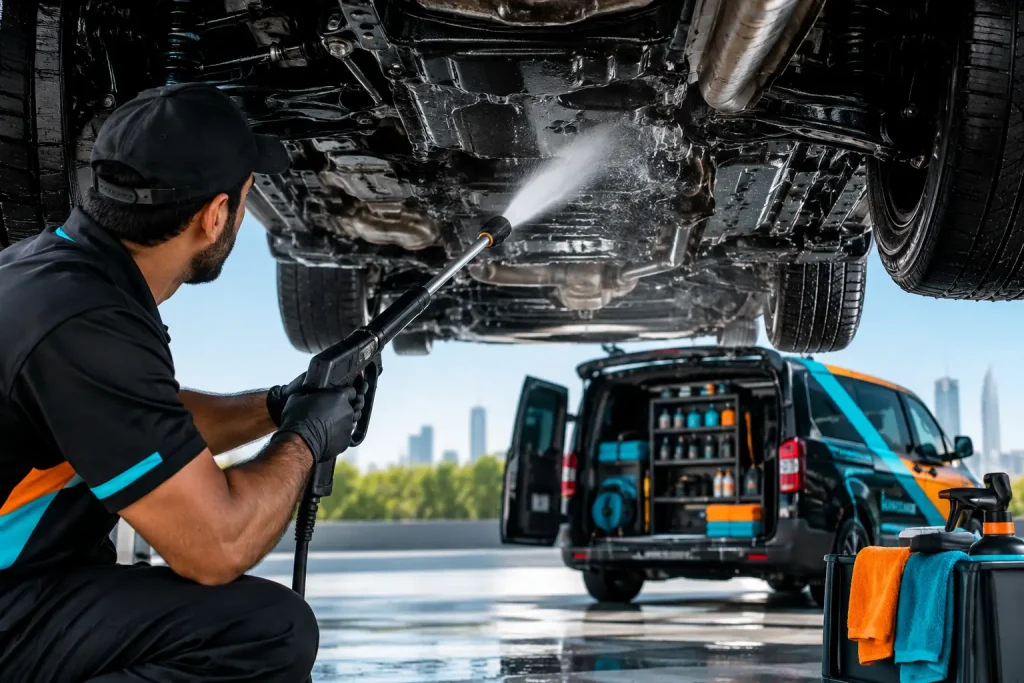
Road grime has a way of hiding where you cannot see it. It settles behind wheel liners, around suspension components, inside seams, and across the metal surfaces beneath your vehicle. So, does underbody washing prevent rust? Yes, it can significantly reduce the conditions that cause corrosion, but it is not a one-time cure or a substitute for repairing damaged paint, coatings, or metal.
A professional underbody wash removes the dirt, salt, sand, moisture-holding debris, and chemical residue that can sit against metal for weeks. For drivers who want their vehicle to stay cleaner, stronger, and more valuable over time, this often-overlooked service is practical preventive care.
Why Rust Starts Under Your Vehicle
Rust begins when bare or damaged metal is exposed to oxygen and moisture. Water alone can cause oxidation, but contaminants speed up the process. Salt is especially aggressive because it helps moisture stay active on metal surfaces and makes corrosion easier to spread.
The undercarriage is exposed to more than most owners realize. Tires throw up wet dirt, road film, oil residue, brake dust, and loose debris with every drive. That buildup collects in tight areas where airflow is limited, so it may remain damp long after the exterior of the car looks dry and spotless.
In Dubai, sand and dust are part of everyday driving. By themselves, dry particles do not create rust. The issue is what they trap. Dust mixed with humidity, rainwater, coastal air, or road contaminants can form a damp layer against metal parts. Vehicles that are regularly driven near the coast, parked outdoors, or used on sandy roads may need more attention beneath the body than vehicles kept mostly in covered parking.
Does Underbody Washing Prevent Rust Completely?
Underbody washing helps prevent rust by removing the material that feeds corrosion, but no wash can guarantee that rust will never form. A vehicle may already have stone chips, worn undercoating, damaged seam sealer, scratched suspension parts, or hidden moisture inside panels. Those issues need inspection and, where necessary, repair.
Think of underbody washing as protection through maintenance. It reduces exposure time. Instead of allowing dirt and salt residue to hold moisture against vulnerable metal, you remove them before they become a long-term problem.
This matters even more after conditions that leave heavy contamination underneath the vehicle. A drive through standing water, a trip to the beach, off-road use, road construction, or a rainy period can leave more than surface dirt behind. The undercarriage may look unchanged from the outside while grime is packed into areas you cannot easily reach with a hose at home.
A quality wash also makes future inspections easier. When components are covered in old dirt, early rust spots, leaks, cracked boots, and damaged protective coatings are harder to notice. A clean underbody gives you and your service team a clearer view of what needs attention.
What a Proper Underbody Wash Should Remove
A quick rinse is better than nothing, but it does not always release the buildup that matters. Effective underbody care uses controlled water pressure, safe cleaning methods, and careful coverage to flush out contaminated areas without treating the underside like a surface that can be blasted carelessly.
The goal is to remove sand, mud, salt residue, oily road film, and debris from around the wheel wells, suspension, chassis sections, splash guards, and lower body seams. The wash should be thorough enough to reach problem areas, yet appropriate for the vehicle’s age, condition, and protective materials.
This is where professional execution matters. Excessive pressure at the wrong angle can force water where it does not belong or disturb loose aging components. On the other hand, a light pass that misses the wheel arches and hidden edges delivers limited value. The best approach is deliberate, vehicle-aware cleaning followed by proper drying time.
How Often Should You Wash the Underbody?
There is no single schedule that suits every vehicle. Frequency depends on where you drive, where you park, and how much contamination your car collects.
For normal city driving, an underbody wash every few months is a sensible maintenance rhythm. If your vehicle is frequently exposed to sand, coastal air, rain, construction zones, unpaved roads, or beach trips, consider scheduling it more often. It is also smart to book one after any drive where the vehicle has passed through standing water or accumulated visible mud around the wheel wells.
Owners of premium vehicles, family SUVs, and cars they plan to keep for years often benefit from incorporating underbody washing into their regular care routine. It is a small step compared with the cost and inconvenience of correcting corrosion once it has progressed.
A monthly exterior wash keeps the visible finish in shape, while periodic underbody care handles the contamination that ordinary washing cannot fully address. That combination protects the polished look above and the working components below.
Underbody Washing Works Best With Other Protection
Washing removes harmful buildup, but it does not restore a compromised protective barrier. If you see flaking undercoating, bubbling paint near lower panels, orange staining on metal, or damaged plastic liners, arrange an inspection rather than relying on repeated washes alone.
For the exterior, regular washing, clay treatment when needed, polishing, waxing, or ceramic protection can reduce contamination on painted surfaces. These services do not protect every mechanical component underneath, but they help maintain the lower body panels and paint edges where corrosion can begin after chips or scratches.
Drying also matters. After an underbody wash, give the vehicle time to drain and dry naturally before parking it for an extended period in a damp, enclosed space. A short drive can help move residual water away from some areas, though it should not replace proper cleaning or repair.
Signs Your Vehicle Needs Attention Now
You do not need to wait for obvious rust to make underbody care a priority. A gritty buildup inside the wheel arches, mud packed behind mud flaps, salty residue after a coastal drive, or dirty water dripping from lower panels are all good reasons to schedule a wash.
Pay closer attention if you notice a metallic orange tint on exposed parts, peeling protective coating, persistent damp debris, or unusual noises from beneath the vehicle. Not every orange-colored component means urgent structural damage, as some surface oxidation can occur on exposed brake and suspension parts. Still, it is worth having a trained professional assess anything that looks progressive or widespread.
For older vehicles, cleaning is particularly valuable because it reveals their true condition. You cannot protect what you cannot see. Removing years of accumulated grime may expose areas that need treatment, and catching those areas early can make a meaningful difference.
Make Underbody Care Part of the Routine
The most effective rust prevention is consistent, not dramatic. A clean undercarriage does not just look better during inspection. It helps reduce trapped moisture, preserves protective surfaces, and supports the long-term condition of components that carry your vehicle every day.
Ride Revivers brings premium vehicle care to your doorstep, making it easier to give the parts beneath your car the same attention as its paintwork and cabin. Book underbody washing when your driving conditions call for it, not only when dirt becomes visible. Your vehicle’s best defense against corrosion is regular care before small buildup turns into a hidden problem.