

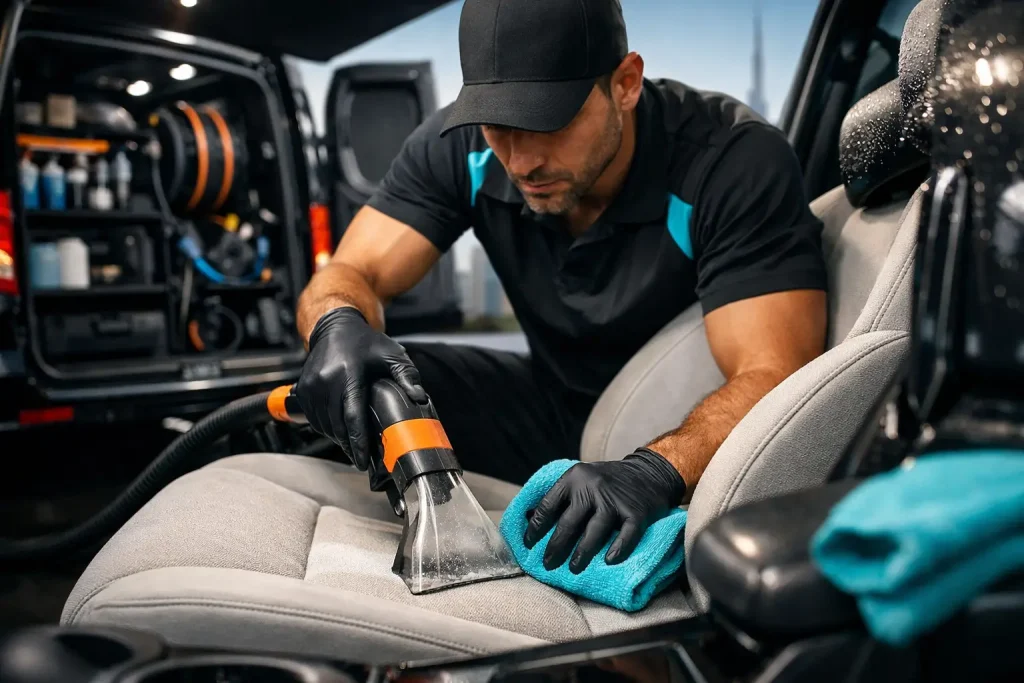
Coffee in the cup holder, snack crumbs in the seams, sunscreen on the armrest, and mystery marks on the seats – that is usually when people start searching for how to clean car upholstery. The trick is not just getting it to look better for a day. It is cleaning it in a way that lifts dirt, manages odors, and protects the finish so your interior stays fresh instead of wearing out faster.
How to clean car upholstery without causing damage
The biggest mistake people make is treating every seat the same. Fabric, leather, vinyl, suede-style inserts, and mixed-material interiors all respond differently to moisture, brushes, and cleaning products. If you use a strong cleaner on delicate material, soak a seat pad, or scrub too aggressively, you can trade one stain for fading, water marks, or a rough finish.
Start by checking what kind of upholstery you actually have. If your seats are cloth, you can usually use a fabric-safe interior cleaner with light agitation. If they are leather, the goal is different. You are not trying to saturate the surface. You are cleaning gently, then conditioning to keep it soft and prevent drying or cracking. For synthetic leather or vinyl, you still want a mild product, but conditioning may be less critical depending on the material.
Before applying anything across the full seat, test a small hidden section. It takes a minute and can save the interior from discoloration.
Start with dry cleaning, not wet cleaning
If you go straight to sprays and foam, you turn loose dust and grit into mud. A proper upholstery clean starts dry.
Vacuum the seats, backrests, bolsters, headrests, and especially the seams. Use a crevice tool where the seat base meets the backrest. That area traps crumbs, sand, pet hair, and fine debris that later gets rubbed deeper into the fabric. If you have floor mats out already, vacuum the lower side panels and the edge of the seat rails too. It keeps dirt from getting pulled back onto the upholstery while you work.
If pet hair is part of the problem, a rubber brush or detailing glove usually works better than vacuuming alone. Hair tends to cling to fabric fibers, and trying to suck it up without loosening it first can waste time.
How to clean cloth car upholstery
Cloth seats are common, practical, and also very good at holding onto spills. The safest approach is controlled cleaning, not over-wetting.
Spray a fabric-safe upholstery cleaner lightly onto the seat or onto a microfiber towel, depending on the product instructions. Work one section at a time instead of soaking the whole seat. Use a soft interior brush to agitate the surface in circular or crosshatch motions. You are trying to lift soil from the fibers, not grind it deeper.
Once the dirt starts to release, blot with a clean microfiber towel. If the stain is still visible, repeat the process instead of pouring on more product. For deeper grime, a wet-dry extractor can make a major difference because it lifts out moisture and residue rather than leaving it behind in the foam beneath the fabric.
That last part matters. Seats that stay damp too long can develop lingering odors. In warm climates, trapped moisture can turn a basic clean into a mildew issue faster than people expect.
Handling common fabric stains
Food and drink spills respond best when treated early, but older stains can still improve with patience. For coffee, juice, and soda marks, blot first and avoid heat. Heat can set the stain. For grease or sunscreen, use a fabric cleaner designed to break down oily residue. For mud, let it dry fully before vacuuming and cleaning. Trying to scrub wet mud usually spreads it.
Some stains will not disappear completely with home methods, especially if they have soaked through the top fabric layer. That is where professional extraction and stain treatment usually deliver a better finish.
How to clean leather car upholstery
Leather needs a lighter hand. If cloth rewards more agitation, leather rewards control.
Use a pH-balanced leather cleaner and apply it to a microfiber towel or soft brush rather than spraying heavily onto the seat. Clean in small sections, paying attention to high-contact areas like side bolsters, seat bottoms, armrests, and steering wheel trim if it matches the interior. Body oils, denim transfer, and daily friction tend to show up there first.
Wipe away residue with a clean towel, then follow with a leather conditioner if the material calls for it. This helps maintain flexibility and a smoother finish. A clean seat can still look tired if the leather is dry.
What you should avoid is just as important. Do not use harsh degreasers, household soap, bleach-based products, or rough brushes. They may strip protective coatings, flatten the look of the leather, or leave it feeling sticky afterward.
What about perforated leather?
Perforated leather needs extra care because liquid can settle into the holes and padding underneath. In that case, spray your towel, not the seat. Use less product than you think you need, and wipe thoroughly. The goal is a clean surface, not a wet one.
Odor removal is different from surface cleaning
A seat can look clean and still smell off. That usually means the problem is below the surface.
Odors from food, smoke, sweat, pets, or old spills often sit in the fibers and underlayers, not just on top of the upholstery. Light cleaning may improve the smell for a day or two, but if the source remains in the padding, it tends to come back. Fabric-safe deodorizing products can help, and extraction helps more, but severe odor issues often need a full interior treatment rather than spot cleaning.
This is one of those areas where shortcuts show. Air fresheners cover odors. They do not remove them.
Tools and products that actually help
If you want better results, the right tools matter more than buying the strongest cleaner on the shelf. A vacuum with attachments, microfiber towels, a soft brush, and a material-specific cleaner will handle most upkeep. For families, commuters, and anyone carrying kids or pets regularly, a small extractor can be worth it.
There is a trade-off, though. DIY cleaning is fine for maintenance and minor spills. Deep-set stains, widespread discoloration, and odor-heavy interiors usually take more time, better equipment, and a more controlled process than most people want to manage in their driveway.
When to clean it yourself and when to book professional care
If the issue is light dust, fresh spills, or routine upkeep, cleaning your upholstery at home makes sense. It is practical and can keep the cabin looking sharp between deeper services.
If the seats are heavily stained, the odor has lingered for weeks, or the material is premium and you do not want to risk damage, professional interior care is the better call. The difference is not just effort. It is extraction strength, product matching, stain treatment experience, and how thoroughly the interior is dried and finished.
For busy vehicle owners, convenience matters too. A premium mobile service removes the usual hassle – no waiting room, no reshuffling your day, no compromise on results. That is a big part of why customers use Ride Revivers for interior care that needs more than a quick wipe-down.
How to keep car upholstery cleaner for longer
Once the seats are clean, keeping them that way is easier than restoring them again. Vacuum regularly, deal with spills quickly, and avoid letting dirt build up in layers. If you transport kids often, keep a towel or seat protector under child seats where pressure and trapped crumbs can wear fabric down over time.
For leather interiors, periodic conditioning helps maintain a richer finish. For cloth, fabric protection can help reduce how quickly spills soak in. Neither makes the seats stain-proof, but both can buy you time.
Parking habits matter too. Heat and sun exposure can dry leather, set stains, and intensify odors trapped inside the cabin. Shade, covered parking, or windshield protection all help more than most people realize.
A clean interior changes how the whole vehicle feels. Not just fresher, but more cared for. And when upholstery is cleaned the right way, that clean lasts longer, looks better, and protects the value you see every time you open the door.