

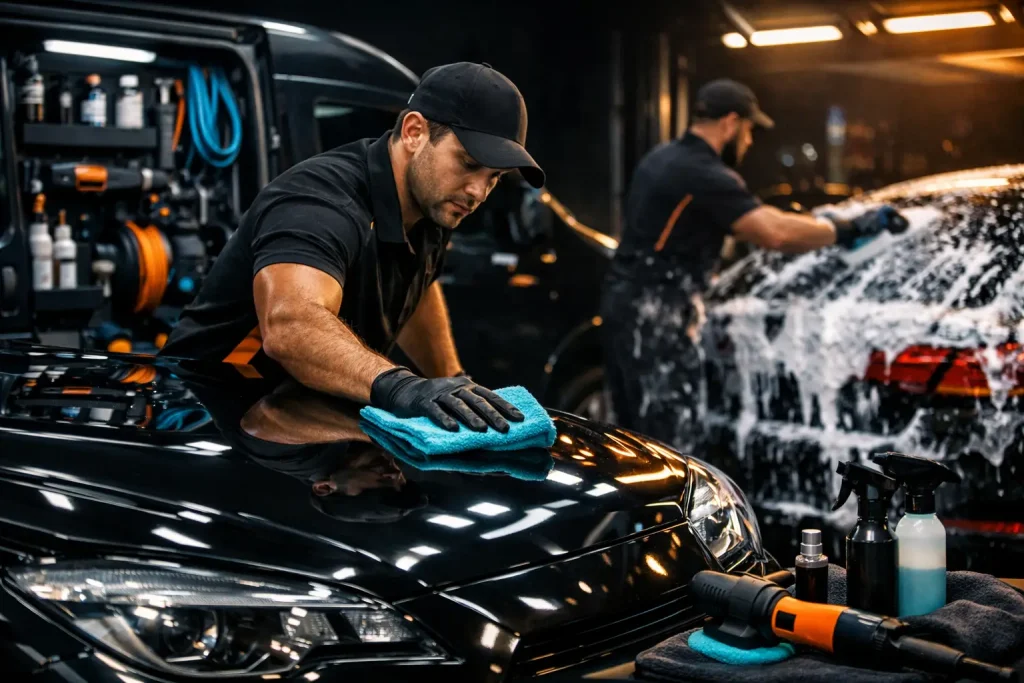
That slick, freshly coated finish does not stay sharp by accident. If you want to know how to maintain ceramic coating, the answer is simple: wash it correctly, touch it less, and stay consistent. Ceramic coating gives your vehicle stronger protection and easier cleaning, but it is not a free pass to ignore maintenance.
A lot of owners hear “long-lasting protection” and assume the car can handle anything with minimal care. That is where the finish starts to lose its edge. Water spots build up, gloss gets muted, and contamination begins sitting on top of the coating instead of releasing cleanly. The coating may still be there, but it stops performing the way you paid for it to perform.
What ceramic coating actually needs
Ceramic coating is designed to resist dirt, UV exposure, and chemical wear better than unprotected paint. It helps water bead, reduces how strongly grime sticks, and keeps washing easier. What it does not do is make your paint invincible.
Road film, hard water minerals, bird droppings, and improper washing can still wear down the top surface. In hot climates especially, contamination can bake onto the finish faster than most owners expect. That means maintenance is less about constant correction and more about preserving the coating before problems become visible.
The best approach is steady, light care. Aggressive cleaning usually means the routine was delayed too long.
How to maintain ceramic coating week to week
The most effective maintenance habit is a safe wash schedule. For most daily-driven vehicles, washing every one to two weeks keeps buildup under control. If the car is parked outdoors, driven on dusty roads, or exposed to sprinklers and construction dust, weekly care is the better move.
A pH-balanced car shampoo is the right place to start. Harsh degreasers and strong alkaline cleaners can strip away the behavior you want from the coating, even if they do not remove the coating itself in one wash. Over time, that repeated abuse dulls hydrophobic performance.
Hand washing is usually the safest option when done properly. Use a clean wash mitt, plenty of lubrication, and separate rinse water so grit is not dragged back across the paint. If you prefer professional service, the quality of the wash matters more than speed. A rushed wash with dirty tools can add swirl marks that no coating can prevent.
Drying matters just as much as washing. Letting water air dry on the surface is one of the fastest ways to create mineral spotting, especially in warm weather. Use a soft microfiber drying towel or controlled air drying to remove water before it leaves marks behind.
The biggest mistakes that shorten coating life
Most ceramic coating problems are maintenance problems in disguise. The coating gets blamed, but the routine is usually the issue.
The first mistake is using automatic brush washes. Even if the coating is durable, those brushes can still create fine scratches and haze. The surface may stay protected, but it will not keep that crisp, premium look.
The second is waiting too long between washes. Ceramic coating makes dirt easier to remove, but only when it is removed on time. Leave bug residue, bird droppings, tree sap, or hard water minerals sitting on the paint, and they can etch or stain the top layer.
The third is using the wrong products. Heavy polish, abrasive compounds, or household cleaners can interfere with the coating’s surface behavior. Not every “shiny” product is coating-safe. Some leave residue that masks the coating and makes water behavior worse instead of better.
How to wash a coated car without dulling the finish
A coated vehicle should feel easier to clean, not harder. That usually means less scrubbing, fewer passes, and more attention to technique.
Start with a proper rinse to loosen loose dirt. If the vehicle is especially dusty, a pre-wash foam or gentle pre-rinse helps reduce direct contact with the surface. Then wash from top to bottom because the lower panels carry the heaviest grime.
Keep your tools clean throughout the process. One dirty mitt can do more harm than the coating can offset. Wheels and lower sections should have separate tools from painted panels.
After rinsing, dry immediately. If you want to add gloss and support water behavior, a coating-safe drying aid or ceramic maintenance spray can help, but only if it is used lightly and correctly. More product does not mean more protection. Too much can smear and attract dust.
When decontamination is necessary
Even with regular washing, coatings can become clogged. You may notice weaker water beading, roughness on the paint, or a finish that looks flat even after a clean wash. That does not always mean the coating is failing. It often means contamination is sitting on top of it.
This is where decontamination comes in. Iron removers, water spot removers, and other coating-safe chemical treatments can restore performance when standard washing is no longer enough. The key is choosing the least aggressive option that solves the problem.
Clay bar treatment is a good example of where restraint matters. Clay can remove bonded contamination, but it can also add marring if used improperly and may slightly reduce the coating’s slickness. On a coated car, it should not be part of a casual routine. It is more of an occasional corrective step when needed.
How to maintain ceramic coating in hot, dusty conditions
In places like Dubai, ceramic coating maintenance needs a little more discipline. Heat, airborne dust, and mineral-heavy water can wear down appearance faster than many owners realize. A vehicle that looks clean in the morning can have a dusty film on it by afternoon, and water spots can set quickly if the car is washed in direct sun.
That is why timing matters. Washing early or in shaded conditions reduces spotting and helps products behave properly. It also helps to remove bird droppings and sprinkler marks as soon as possible instead of waiting for the next full wash.
For owners who rely on their car to look polished every day, consistency beats overcorrection. A clean, frequent maintenance wash is better than letting contamination pile up and then attacking it with stronger chemicals later.
Do you need ceramic boosters and toppers?
Sometimes yes, sometimes no. A good coating does not need constant layering to survive, but maintenance products can help restore slickness and improve water behavior between deeper services.
The trade-off is product buildup. If every wash ends with a different spray sealant, topper, or gloss enhancer, the surface can become harder to read. You may think the coating is performing well when you are really seeing the behavior of the last product applied. Or the opposite – residue may mute performance and make you think the coating is gone.
If you use boosters, keep the routine simple. Choose coating-compatible products and apply them on a clean surface at reasonable intervals, not every time you touch the car.
Signs your ceramic coating needs professional attention
A well-maintained coating should still feel slick, clean easily, and show decent water behavior. If it suddenly feels grabby, stains easily, or looks flat after proper washing, there may be contamination or product buildup that needs correction.
There is also a difference between reduced beading and coating failure. Some coatings sheet water more than they bead, and performance can change based on surface condition. That is why visual diagnosis from a distance is not always enough.
Professional maintenance can help when the finish needs deeper decontamination, a topper refresh, or a safe inspection of the coating’s condition. For busy owners, this is often the smartest move. The coating lasts longer when maintenance stays precise rather than improvised.
A realistic maintenance routine that works
If you want a practical answer to how to maintain ceramic coating, keep it simple. Wash the car every one to two weeks with coating-safe products, dry it properly, remove contaminants quickly, and avoid abrasive or low-quality wash methods.
Then adjust based on how the vehicle is used. A garage-kept weekend car can go longer between services than a daily-driven family SUV parked outdoors. A city commuter facing dust, heat, and hard water needs more attention than a vehicle with lighter exposure. The coating is only part of the system. Your environment and habits decide how well it keeps performing.
Ceramic coating rewards owners who stay consistent. Give it the right care, and it keeps delivering the kind of gloss, easy cleaning, and protection that makes every drive look better before you even turn the key.