

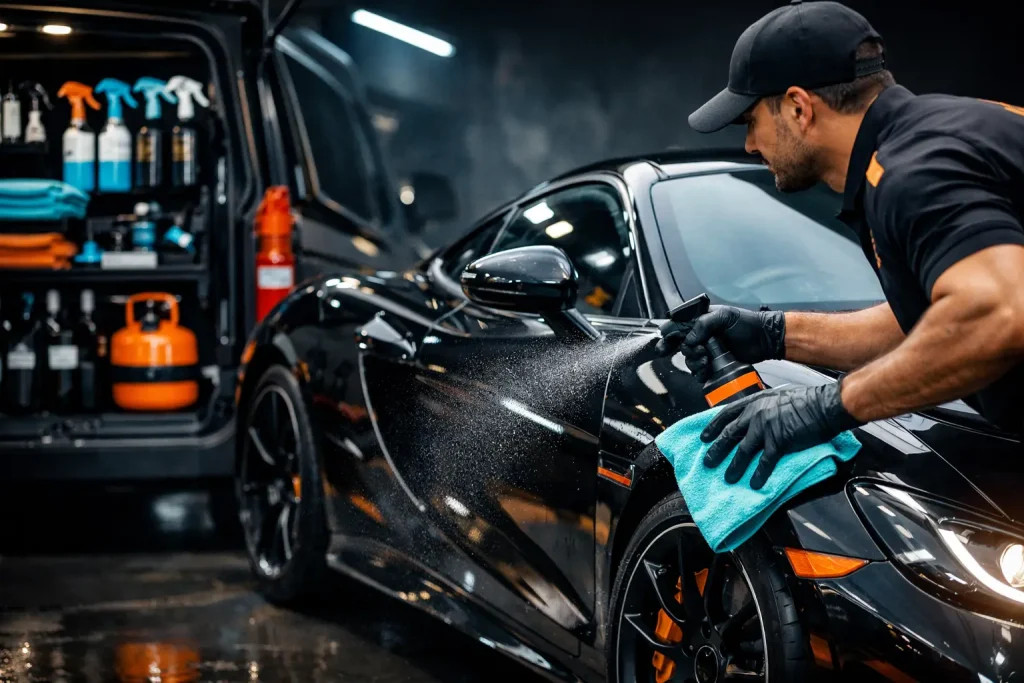
A dusty hood, fingerprints around the door handles, and a dull finish can make an otherwise well-kept vehicle look neglected fast. Waterless detailing is designed for exactly those moments: professional exterior care that restores a clean, polished appearance without the time, runoff, or disruption of a traditional wash.
For busy vehicle owners, the appeal is simple. Your car receives premium care where it is parked, whether that is at home, at the office, or in your building’s designated service area. Done correctly, it is not a quick wipe-down. It is a controlled cleaning process that lifts surface dust, refreshes gloss, and helps preserve the finish between deeper wash and detailing appointments.
What Is Waterless Detailing?
Waterless detailing uses specialized, high-lubricity cleaning products that surround and loosen light dirt from a vehicle’s painted surfaces. A trained technician applies the product panel by panel, then gently removes contaminants with clean microfiber towels. The process is followed by a finishing towel or protectant, depending on the service level and condition of the vehicle.
The goal is to clean without dragging dry dust across the paint. That distinction matters. Using the wrong product, too little product, or worn towels can create fine marks over time. Premium waterless detailing relies on professional techniques, fresh microfiber, and a careful assessment of the vehicle before work begins.
It is also worth clearing up one common misunderstanding: waterless does not mean careless or chemical-heavy. It means the service does not require hoses, buckets of rinse water, or runoff. Quality formulas are made to provide lubrication, lift light contamination safely, and leave a clean finish with minimal water use.
When Waterless Detailing Is the Right Choice
Waterless detailing is at its best when your vehicle has light to moderate dust, road film, fingerprints, pollen, or recent city grime. It is ideal for regular upkeep, especially when you want your vehicle to look presentable without setting aside time for a wash center visit.
For Dubai drivers, it is particularly useful between more intensive cleanings. Fine dust can settle on a parked vehicle quickly, and frequent dry wiping is never the answer. A proper waterless service gives that dust a safe path off the paint while restoring the deep, clean look that makes a maintained vehicle stand out.
It is a smart fit for vehicles stored in covered parking, cars that are cleaned regularly, and households managing multiple vehicles. A doorstep appointment also makes routine care far easier to maintain. Instead of waiting until the vehicle looks heavily soiled, you can keep it consistently clean through scheduled visits.
When a Traditional Wash Is Better
Waterless methods are not the best answer for every vehicle condition. Heavy mud, sand buildup, thick grime around lower panels, sticky residues, or a vehicle that has been driven through rain and construction debris often needs a rinse-based wash first. These contaminants should be flushed away rather than worked loose with towels.
The same applies to heavily soiled wheels, wheel wells, and underbody areas. Those places collect abrasive brake dust, road debris, and compacted dirt that require more targeted cleaning. A professional should recommend the service that protects your vehicle rather than trying to force every condition into one method.
That is the value of a quality-first approach: the right treatment is selected for the actual condition of the vehicle, not simply the fastest option available.
The Premium Waterless Detailing Process
A proper service begins before the first spray. The technician checks the paintwork, glass, trim, wheels, and exterior surfaces to identify heavy contamination, bird droppings, sap, or areas that may need a different treatment. Bird droppings and tree sap should be addressed promptly because they can affect clear coat if left untreated.
The exterior is then cleaned section by section. Working in small areas keeps the product from drying prematurely and allows each panel to receive the attention it needs. Clean microfiber towels are essential. One towel lifts away the dirt, while another buffs the surface to a clear, even finish.
Door handles, mirrors, window edges, badges, and other high-touch areas receive extra attention because they are where dust and fingerprints tend to show first. Glass is finished separately to avoid haze, and tires can be dressed when included in the selected package. The result should look refined, not overly slick or artificially shiny.
At Ride Revivers, that standard is built around visible revival: clean paint, crisp glass, refreshed trim, and a finish that feels cared for rather than merely wiped down.
Why Technique Matters More Than the Product Bottle
Many vehicle owners buy a waterless cleaner, use a household cloth, and expect the same result as a professional service. The risk is not the concept of waterless cleaning. It is poor technique.
A dusty panel needs enough lubricating product to safely lift the dust. Towels must be folded into clean working sides and changed regularly. Pressure should stay light, with straight and controlled passes rather than aggressive rubbing. If the towel becomes saturated with dirt, it should no longer touch the paint.
Professional teams also know when to stop. If a panel is too dirty, the correct move is to recommend a rinse wash or deeper exterior treatment. Preserving gloss is always more valuable than rushing to finish a service that is not suitable for the vehicle’s condition.
Benefits That Go Beyond a Clean Exterior
The most immediate benefit is convenience. Mobile waterless detailing brings quality vehicle care to your schedule, so you do not need to drive to a wash location, wait in line, or rearrange your day. For families and professionals, that saved time adds up quickly.
There is also a practical environmental advantage. Conventional washing can use significant amounts of water and create runoff carrying detergents and surface contaminants. Waterless methods reduce the need for rinse water while keeping the process contained and efficient. In a city where water use deserves thoughtful attention, that is a meaningful choice.
Regular exterior maintenance also supports long-term appearance. Dust, road film, bug residue, and pollution can make paint look flat over time. While waterless detailing cannot replace paint correction or ceramic coating, it helps maintain the finish between those higher-level protective services.
A clean vehicle can also feel more valuable. Whether you are preparing for a client meeting, keeping a family SUV in order, or protecting a car you plan to sell later, consistent care helps the vehicle present better every day.
How Often Should You Book Waterless Detailing?
The right frequency depends on where and how you drive. A car parked outdoors, used daily, or exposed to dust may benefit from weekly or biweekly maintenance. A vehicle kept in covered parking and driven less often may only need a waterless service every two to four weeks.
The condition of the finish matters too. Vehicles protected with wax, sealant, or ceramic coating are often easier to maintain because dust and light grime release more readily. That does not eliminate the need for careful cleaning, but it can help preserve a sharper gloss between appointments.
If you manage more than one vehicle, a recurring plan can be especially practical. Regular visits prevent grime from becoming a bigger job and give every vehicle a more consistent standard of care. It is less about washing more often and more about avoiding the cycle of letting a vehicle become heavily soiled before doing anything about it.
Make the Most of a Doorstep Service
Before your appointment, remove personal items from the exterior storage areas and make sure the vehicle is accessible. If it is parked in direct sun, a shaded space is preferable when available, since cooler panels allow detailing products to work more evenly.
Be clear about recent issues as well. Mention bird droppings, paint splashes, sticky marks, construction dust, or any concern about existing scratches. That helps the technician choose the safest method and set the right expectations before beginning.
For the best long-term result, think of waterless detailing as part of a care routine. Pair regular exterior maintenance with periodic deep cleaning, interior detailing, paint protection, and wheel care according to your vehicle’s real needs. The finish stays cleaner, the process stays safer, and your vehicle keeps the polished presence it deserves.
A well-maintained vehicle does not need to wait for a free weekend. With the right professional care at your doorstep, a clean, protected, glossy ride can simply become part of your routine.