

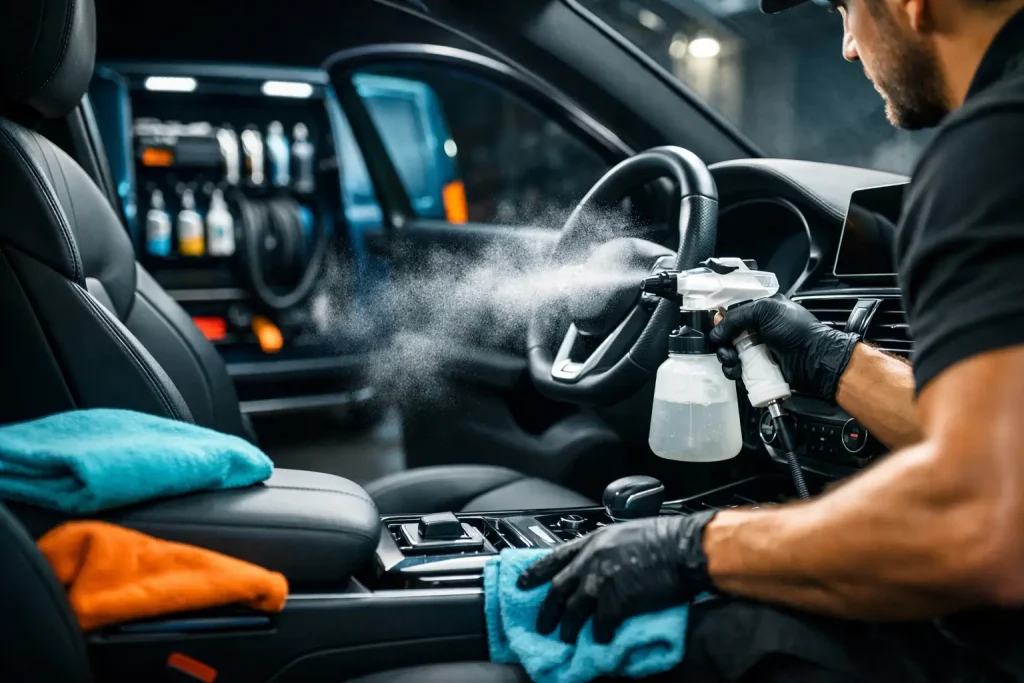
A clean-looking cabin is not always a disinfected one. Crumbs, dust, and stains are easy to spot, but the areas your hands touch most – the steering wheel, gear selector, door handles, seat belt buckle, and infotainment controls – can hold the residue that makes a car feel less fresh than it looks. The best car interior disinfecting methods combine proper cleaning, material-safe disinfectants, and enough contact time to do the job without drying out leather, damaging screens, or leaving a harsh chemical smell behind.
For busy drivers and families, the goal is not to turn every car wash into a deep-detailing project. It is to maintain a cabin that feels spotless, smells clean, and is treated with the same care as the exterior finish.
Start by Cleaning Before You Disinfect
Disinfectant works best on a clean surface. If a cup holder is sticky, a seat has food residue, or the steering wheel is coated in sunscreen and skin oils, spraying disinfectant over it will not deliver the result you want. Soil can shield germs from the active ingredients in a disinfectant and leave behind a dull, smeared finish.
Start with a thorough vacuum of the seats, carpets, seams, door pockets, and floor mats. Use a soft detailing brush around buttons, vents, stitching, and trim gaps to lift dust without scratching. Then wipe hard surfaces with a gentle interior cleaner and a clean microfiber towel. This first pass removes the buildup that makes a cabin look neglected and prepares the surface for targeted disinfection.
For fabric seats and carpets, spot-clean stains before moving on. Moisture trapped in upholstery can create musty odors, especially in warm climates, so avoid soaking the fabric. A light application, careful agitation, and proper drying are more effective than flooding the material with cleaner.
Focus on the Cabin’s High-Touch Zones
You do not need to disinfect every square inch of the interior every day. Prioritize the places that receive the most contact, particularly after school runs, ride sharing, road trips, gym visits, or a passenger illness.
The steering wheel is the first priority. It is handled constantly and collects natural oils, hand lotion, food residue, and dirt. Clean around the wheel controls carefully, applying product to the microfiber towel rather than spraying directly into buttons or seams.
Next, treat the gear selector, parking brake, start button, door pulls, interior door handles, window switches, seat adjustment controls, seat belt latch, armrests, and center console. Do not forget the trunk release, fuel-door button, rear-seat controls, and child-seat contact areas if they are frequently used.
Screens deserve special care. Infotainment displays, gauge-cluster lenses, and piano-black trim can scratch or develop cloudy spots when cleaned with the wrong product. Use a screen-safe cleaner or a lightly dampened, clean microfiber cloth. Never spray liquid straight onto a display, and avoid abrasive towels, glass cleaner containing ammonia, or rough paper products.
Choose a Disinfectant That Matches the Material
The most effective product is not automatically the strongest one. A good car interior disinfectant must be appropriate for the material being treated and used according to the label directions. Check whether it is approved for hard, nonporous surfaces and whether it requires a rinse or wipe-down after the stated dwell time.
For coated plastics, vinyl, and sealed trim, an automotive-safe disinfectant or an alcohol-based solution used sparingly can be effective. The surface should remain visibly wet for the product’s required contact time. Wiping it dry immediately may remove the disinfectant before it can work.
Leather requires a more measured approach. Modern automotive leather is often coated, but frequent use of harsh disinfectants can still dry the finish, cause discoloration, or accelerate wear. Use a leather-safe cleaner first, then apply a product specifically labeled safe for leather or use a lightly dampened towel with a compatible disinfecting solution. Follow with a quality leather conditioner once the surface is dry. This helps preserve the soft, premium look that harsh cleaning can strip away.
Avoid bleach, strong household degreasers, acetone, and undiluted hydrogen peroxide in a vehicle cabin. These products can fade upholstery, weaken fibers, stain trim, and leave fumes in an enclosed space. Also, never mix cleaning chemicals. Combining products can create dangerous vapors and unpredictable surface damage.
Steam Cleaning Is Powerful, but Not for Everything
Steam is one of the best car interior disinfecting methods when used by someone who understands vehicle materials. High-temperature steam can lift grime from textured plastics, cup holders, seams, fabric, and hard-to-reach areas while using very little chemical product. It is especially useful for refreshing cloth upholstery and detailed interior trim.
However, steam is not a universal solution. Too much heat or moisture can loosen adhesives, affect delicate headliners, damage electronic controls, distort low-quality plastic, or push moisture into seat foam. It should never be blasted directly into switches, screens, speaker grilles, airbag covers, charging ports, or ventilation electronics.
The difference is technique: controlled steam, a microfiber towel to capture lifted dirt, and careful drying afterward. A professional detailer can use steam selectively, rather than treating the entire cabin as if every surface has the same tolerance for heat and moisture.
Handle Odors at Their Source
Disinfection and odor removal are related, but they are not the same service. A fragrance spray may make the cabin smell pleasant for an afternoon, yet it cannot remove the source of an odor trapped in carpet, upholstery, the air-conditioning system, or under a seat.
If the odor comes from spilled food or drinks, the affected area needs to be cleaned and fully dried. If it comes from pets, smoke, mold, or a recurring musty smell when the air conditioning starts, deeper treatment may be necessary. Upholstery extraction, targeted enzyme treatment, and cabin-filter servicing can make a meaningful difference because they address the source rather than covering it up.
Be cautious with ozone treatments. They can be useful in professional, controlled situations, but they are not a casual DIY shortcut. Ozone must be used in an unoccupied vehicle and handled correctly, as improper use can be unsafe and may affect certain interior materials over time.
Build a Routine That Keeps the Cabin Fresh
A quick wipe of high-touch points once or twice a week is usually enough for regular maintenance. Families, frequent commuters, and ride-share drivers may want to do it more often. Keep a soft microfiber towel and an interior-safe cleaner in the car, but do not leave aerosol cans or products that are sensitive to heat in direct sun.
A deeper interior clean every few months helps prevent the gradual buildup that is easy to miss during daily use. This is the right time to vacuum beneath the seats, clean seat belts, treat upholstery, condition leather, refresh mats, and inspect the cabin filter. If the vehicle has been used for a long trip, carried pets, or experienced a spill, move that deeper service forward rather than waiting for the next scheduled detail.
For a polished, professionally maintained result, Ride Revivers can bring premium interior care directly to your doorstep. The right service should leave the cabin visibly revived, comfortably dry, free of residue, and ready to use without a strong chemical scent.
When Professional Interior Disinfection Makes Sense
Professional care is worth considering when the cabin has persistent odors, visible mold, smoke exposure, pet hair embedded in fabric, heavy staining, or delicate leather and trim that you do not want to risk. It is also a practical choice before selling a vehicle, after buying a pre-owned car, or when preparing the family vehicle for a new baby.
The best result is not the one with the most product or the strongest fragrance. It is a clean, sanitized cabin where each surface has been treated correctly and the materials still look, feel, and perform as they should. Keep up the small weekly touch-ups, and let deeper professional care restore the details that turn everyday driving into a fresher experience.