

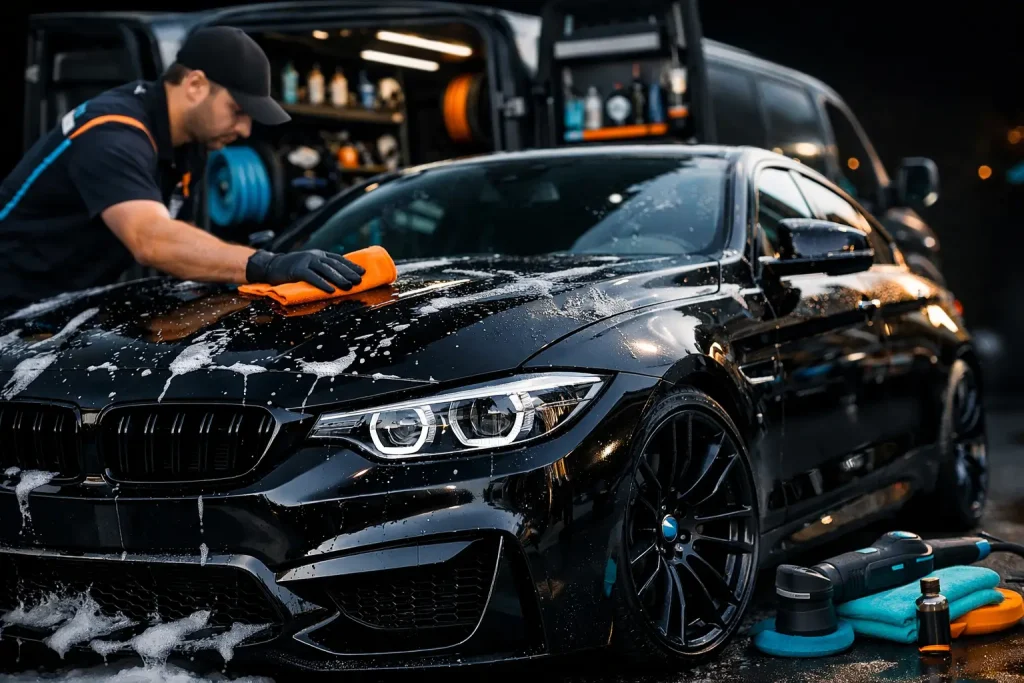
A black car can look exceptional at 7 a.m. and tired by lunchtime. Dust settles fast, water spots show clearly, and one rushed wipe can leave fine marks across the paint. That is why paint protection for black cars is less about chasing a temporary shine and more about preserving the deep, mirror-like finish that made you choose black in the first place.
Black paint is not necessarily weaker than other colors, but it is far less forgiving. Every swirl mark, dried mineral deposit, and light scratch creates contrast against the dark surface. With the right wash routine and a professionally selected protective treatment, your vehicle can keep its rich gloss while becoming easier to maintain between services.
Why Black Paint Needs More Protection
A light-colored vehicle can hide a surprising amount of dust and wash-induced marring. Black paint does not get that luxury. Fine scratches scatter light, turning a clean-looking panel into a web of visible swirls under sun, parking-lot lights, or a phone flashlight.
Dubai conditions add another layer of pressure. Airborne dust can be abrasive when it is wiped across a dry surface. Heat can bake contaminants onto the paint, while hard-water minerals can leave stubborn spots after washing. Bird droppings, tree sap, and road grime can also bond more quickly when left on a hot panel.
The goal is not to make a car invincible. No coating, wax, or film can prevent every stone chip or scratch. The goal is to create a sacrificial layer that reduces direct exposure, improves water behavior, and gives contaminants less grip on the paint.
Paint Protection for Black Cars: Your Main Options
The best option depends on how you use the vehicle, where it is parked, and how long you want the protection to last. A quick wash-and-wax may suit a regularly maintained family vehicle, while a ceramic treatment may make more sense for a black daily driver that spends long hours outdoors.
Wax: Warm Gloss With Short-Term Protection
Quality wax gives black paint a noticeably richer, wetter appearance. It is a smart choice when the vehicle is already in good condition and you want an affordable refresh before a special occasion or as part of regular detailing.
Its trade-off is durability. Wax gradually breaks down from heat, frequent washing, and environmental exposure. It needs reapplication more often than other options, so it works best for owners committed to consistent vehicle care.
Paint Sealant: A Practical Step Up
Synthetic paint sealants usually last longer than traditional wax and offer reliable protection from routine dirt, water, and UV exposure. They deliver a clean, high-gloss finish and can be a sensible middle ground for owners who want more durability without committing to a longer-term coating.
On black paint, proper surface preparation matters more than the product name. Applying a sealant over oxidation, swirl marks, or bonded contaminants may add shine, but it will also lock the visible imperfections beneath it.
Ceramic Coating: Long-Term Gloss and Easier Maintenance
A ceramic coating creates a durable protective layer that bonds to the paint. It is popular for black cars because it enhances depth and gloss while helping water, dust, and grime release more easily during maintenance washes.
Ceramic coating is not a substitute for washing. Dust will still settle, rain can still leave minerals behind, and careless cleaning can still scratch the surface. What changes is the maintenance experience: contaminants are generally easier to remove, and the paint stays protected between professional treatments.
For the best result, polishing should come before coating. This step removes or reduces swirl marks and light defects so the coating is applied over a clearer, more refined finish. A coating preserves the condition underneath it, which is why preparation is where premium results begin.
Paint Protection Film: Defense Against Physical Damage
Paint protection film, often called PPF, is the strongest choice for defending high-impact areas from stone chips, road debris, and light scuffs. It is especially useful on bumpers, hoods, mirrors, and door edges. Some films can also self-heal minor surface marks when exposed to heat.
PPF is a higher-investment solution and is not necessary for every vehicle. For a car that sees frequent highway driving, tight parking areas, or heavy daily use, protecting the front-end impact zones can be a worthwhile decision. Many owners pair PPF on vulnerable panels with ceramic coating across the rest of the vehicle.
The Finish Depends on What Happens Before Protection
A protected black car only looks as good as the paint beneath the treatment. If the surface is rough, dull, or filled with wash marks, applying protection alone will not create a flawless finish.
A professional paint-prep service typically starts with a careful wash to remove loose dirt safely. Clay bar treatment can then lift bonded contamination that washing cannot remove, leaving the surface smooth. Polishing follows when needed to refine the clear coat, reduce swirls, and restore clarity before wax, sealant, or ceramic coating is applied.
This is also why a quick roadside wash can create problems for dark paint. Using dirty towels, low-quality products, or a dry dusting method can drag abrasive particles across the surface. The marks may not be obvious immediately, but they build over time.
How to Keep a Protected Black Car Looking Fresh
Protection works best alongside a gentle maintenance routine. Do not wait until the paint looks gray with dust or until water spots have hardened after several hot days. Regular care keeps contaminants from becoming a correction job.
Use clean, dedicated microfiber towels and avoid wiping dry dust from the car. If the vehicle is dusty, rinse or use an appropriate wash method first. During washing, work from the cleanest sections downward and use enough lubrication so dirt can lift away rather than scrape across the paint.
Drying matters just as much as washing. Letting water air-dry in strong heat can leave mineral spots, particularly on black panels. A clean microfiber drying towel or professional blow-drying method helps prevent those marks and preserves the sharp, polished look.
Parking choices also make a difference. Covered parking reduces UV exposure, dust buildup, and bird droppings, but it is not always available. When the vehicle stays outdoors, a durable protective treatment and more frequent maintenance become even more valuable.
When Is It Time to Refresh the Protection?
The easiest sign is a change in water behavior. On a well-protected surface, water tends to bead or sheet away more readily. When the paint begins to hold water flatly, feels rough after washing, or loses its slick finish, the protection may need a top-up or replacement.
Do not judge only by shine. A black car can look glossy after a wash while its protective layer has already weakened. A professional assessment can determine whether the paint needs a maintenance treatment, a fresh sealant, or polishing before a new coating.
For cars that receive regular doorstep care, building protection into the maintenance schedule is often more cost-effective than waiting for visible damage. Ride Revivers can combine careful washing, clay treatment, polishing, and protective options based on the condition of the paint rather than applying the same solution to every vehicle.
The Right Choice Is the One You Can Maintain
A ceramic-coated black car that is wiped with a dusty towel will not stay flawless. A waxed vehicle that receives gentle, consistent care can look outstanding. The right treatment is the one that fits your parking conditions, driving routine, and willingness to maintain the finish.
Give black paint the treatment it asks for: safe cleaning, proper preparation, and protection chosen for real life. The reward is visible every time the light hits the panel and the paint still looks deep, clean, and unmistakably premium.