

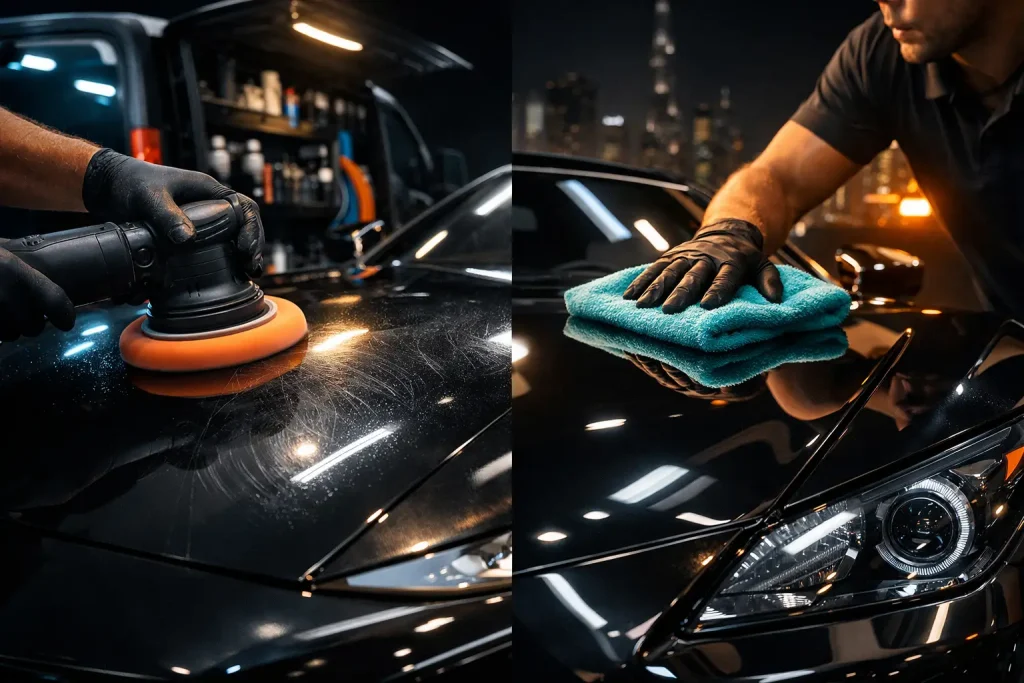
A clean car can still look tired under direct sunlight. Fine swirls, water spots, hazy paint, and light scratches become obvious the moment the sun hits the panel. That is where paint correction vs polishing becomes more than detailing jargon. Both services improve your vehicle’s appearance, but they solve different problems and deliver different levels of restoration.
For owners who want their vehicle to look properly revived, choosing the right treatment protects both the finish and the money you invest in it. The goal is not simply more shine. It is a clearer, deeper, more even finish that stays looking its best between services.
Paint Correction vs Polishing: The Core Difference
Polishing is designed to enhance gloss, smooth the paint surface, and reduce very light imperfections. Think of it as a refinement service. A professional polish can brighten dull paint, improve clarity, and make a well-maintained vehicle look freshly detailed again.
Paint correction is a more intensive process. It targets visible defects in the clear coat, such as swirl marks, oxidation, light scratches, etching, and stubborn water-spot marks. Using measured machine-polishing techniques, trained detailers carefully level a very thin amount of the clear coat around those defects. The result is a noticeably sharper reflection and a more uniform finish.
The distinction matters because polishing is not always enough for damaged or heavily swirled paint. At the same time, paint correction is not necessary every time your car loses a little gloss. The right choice depends on the condition of the paint, your expectations, and how you use the vehicle.
What a Professional Polish Can Do
A polish is an excellent option when your paint is generally healthy but has lost some of its crispness. Daily driving, regular washing, dust, heat, and exposure to the elements can leave a finish looking flat even when there are no deep defects.
During a professional polishing service, the vehicle is first cleaned thoroughly so loose dirt cannot be dragged across the paint. Depending on the surface condition, decontamination may also be needed to remove bonded particles that ordinary washing leaves behind. The polish is then selected to suit the paint and worked carefully across the panels to improve depth and gloss.
Polishing is especially suited to vehicles that receive routine care. It can reduce faint wash marring and soft haze while bringing back that clean, reflective look. It is also a smart preparation step before applying wax, sealant, or ceramic protection, because protection looks and performs better on a clean, refined surface.
What polishing will not do is remove every scratch. If a mark catches your fingernail, it may extend beyond the clear coat and cannot be safely polished away. A trustworthy detailer will not promise a perfect result where the paint thickness or defect depth makes that impossible.
When Paint Correction Is Worth It
Paint correction is for the vehicle that looks rough in sunlight despite being washed. You may see spiderweb-like swirls across the hood, dullness around frequently wiped areas, water-spot etching, random scratches near door handles, or a cloudy reflection that hides the paint’s true color.
A correction service typically begins with a full wash and decontamination. The paint is then inspected under proper lighting, which reveals defects that can be difficult to see in a parking garage or shaded driveway. The detailer chooses a test area first, matching pads and compounds to the paint response before treating the rest of the vehicle.
This is not a process that should be rushed. Different manufacturers use different paint systems, and even panels on the same car can behave differently after previous repairs or repainting. A premium correction process focuses on safe improvement, not aggressive cutting for a short-lived result.
Depending on the vehicle’s condition, correction may be performed as a one-step enhancement or a more detailed multi-stage service. A one-step approach aims for meaningful defect reduction and strong gloss in a practical timeframe. Multi-stage correction is more meticulous and can deliver a higher level of clarity, but it takes longer and costs more because each panel receives more refinement.
How to Tell Which Service Your Vehicle Needs
The simplest test is to inspect your paint in direct sunlight or under a bright LED light. If the vehicle looks mostly glossy but shows only minor haze or very faint marks, polishing is likely the right fit. If you can see widespread swirls, etched spots, oxidation, or obvious scratches across multiple panels, paint correction may provide the better transformation.
Age alone does not decide it. A two-year-old car that has been washed with harsh brushes may need correction, while a five-year-old vehicle maintained with careful hand washes may only need a light polish. Paint color also changes what you see. Black and dark colors reveal swirls quickly, while white and silver finishes can hide defects until viewed closely.
Your plans for the vehicle matter too. If you are preparing to sell, a quality polish can make a strong visual difference without overinvesting. If you have purchased a pre-owned vehicle, plan to apply ceramic coating, or want to restore a cherished car’s finish, correction is often the more valuable starting point.
The Trade-Off: Better Results Need Better Aftercare
Paint correction removes only a microscopic amount of clear coat, but clear coat is finite. That is why it should be done thoughtfully, not repeatedly as a routine wash add-on. A skilled service team will prioritize paint safety and recommend correction only when it creates real value.
Once the paint has been polished or corrected, protection is essential. Without it, the surface is again exposed to UV rays, dust, road film, water minerals, and improper washing. A quality wax or sealant adds a useful protective layer and enhances gloss. Ceramic coating offers longer-term protection and easier maintenance, but it is not a force field against scratches, stone chips, or poor wash methods.
The habits after detailing make the difference. Avoid dry-wiping dust from the paint, use clean microfiber towels, and choose careful wash methods rather than abrasive brushes. Regular maintenance keeps the corrected finish looking sharper for longer and reduces the need for intensive work in the future.
Why Mobile Professional Care Makes Sense
A paint service is only as good as the preparation, products, technique, and inspection behind it. Convenience should not mean cutting corners. With professional doorstep care, your vehicle can receive focused attention at home or work without losing a day to a detailing center.
Ride Revivers approaches exterior revival with the same priority customers expect from premium vehicle care: visible results, trained professionals, and treatment matched to the paint’s actual condition. Whether your car needs a gloss-enhancing polish or a more involved correction, the best outcome starts with an honest assessment rather than a one-size-fits-all package.
A fresh finish deserves more than a quick shine. Look at your paint in the light, choose the level of care it truly needs, then protect that result with consistent maintenance. Your car will keep reflecting the standard you expect from it.