

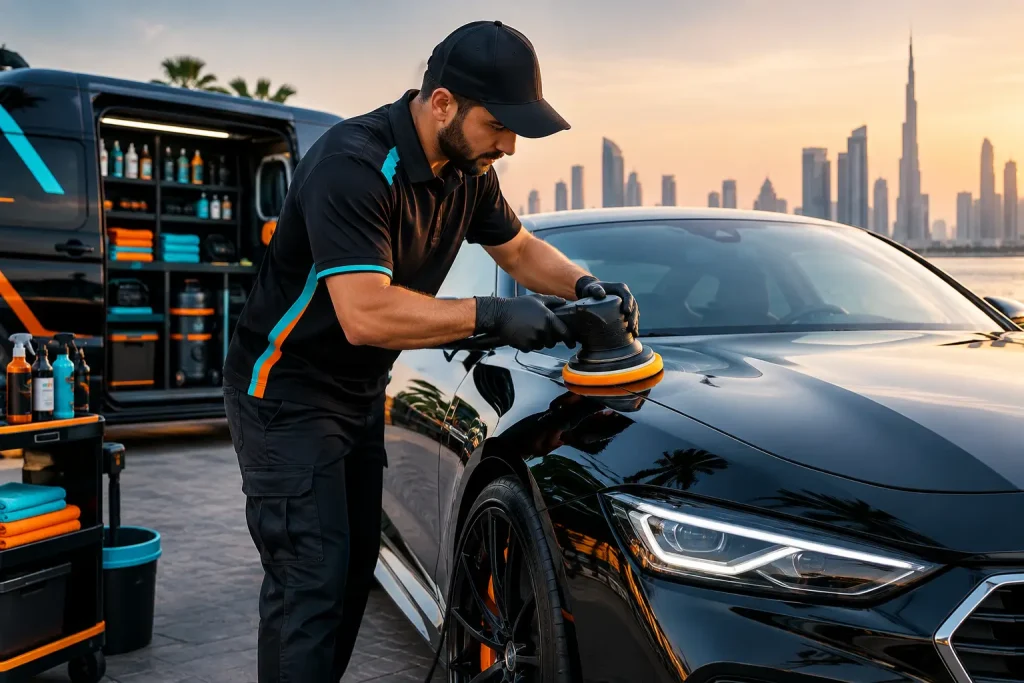
A vehicle can be freshly washed and still look tired. Fine swirl marks, water spots, faded paint, and dull trim catch the light in ways a regular wash cannot fix. This guide to exterior car polishing explains what polishing actually does, when it is worth booking, and how to keep that revived finish looking premium between services.
For drivers in Dubai, exterior care is more than a cosmetic extra. Strong sun, airborne dust, road grime, and frequent washing can gradually reduce paint clarity. The right polishing treatment brings back depth and gloss while preparing the surface for protection that lasts.
What Exterior Car Polishing Really Does
Exterior polishing is a paint-refinement process. A trained detailer uses a polish and machine pad combination to reduce the appearance of light defects in the vehicle’s clear coat. The goal is not simply to make the paint shiny for a day. It is to improve the way light reflects from the surface, creating a cleaner, deeper, more even finish.
Polishing can improve light swirl marks, wash-induced scratches, haze, oxidation, minor water spotting, and dullness caused by contamination. It can also make a dark-colored vehicle look dramatically richer, since black, gray, blue, and other deep colors tend to show surface imperfections more clearly.
It does have limits. A polish cannot reliably remove deep scratches that catch a fingernail, chipped paint, cracked clear coat, or damage that has reached the color layer or metal beneath it. In those cases, paint repair may be required before polishing can deliver a consistent result.
Washing, Polishing, Waxing, and Coating Are Different Services
These terms are often used together, but each serves a distinct purpose. A premium exterior wash removes loose dirt, traffic film, and everyday contamination. It creates the clean foundation every vehicle needs, but it does not correct defects already present in the paint.
Polishing refines the paint itself. Wax adds a protective, glossy layer on top of that paint, usually with a warm finish but a shorter lifespan than advanced protection. Ceramic coating is a longer-term protective treatment that bonds to the exterior and helps make routine washing easier while improving resistance to environmental exposure.
The strongest results usually come from the right sequence: wash, decontaminate, polish where needed, then protect. Applying a wax or ceramic coating over uncorrected paint may add gloss, but it can also seal in the visual appearance of swirl marks and haze. Preparation is what makes protection look its best.
When Your Vehicle Is Ready for Polishing
Paint does not need to look severely neglected before it can benefit from professional polishing. In fact, addressing mild defects early can be a smart approach to maintaining a vehicle’s appearance and resale appeal.
Look closely at the paint in direct sunlight or under bright parking-garage lighting. If you see circular marks around door handles, on the hood, or across the trunk, those are often swirls from improper washing or drying. If the paint looks flat after a wash, feels rough to the touch, or has lost its crisp reflection, polishing may be the next step.
A few situations make a polish especially worthwhile: before selling a vehicle, after a long season of outdoor parking, before applying ceramic protection, or when you want to restore the finish ahead of a special occasion. It is also a practical reset for family vehicles that receive frequent washing but rarely get deeper exterior care.
How often should it be done? That depends on how the vehicle is washed, parked, driven, and protected. Aggressive polishing too often is unnecessary because every correction process works with a finite clear-coat layer. For many well-maintained vehicles, an annual assessment and occasional light polish are more sensible than repeated heavy correction.
The Professional Exterior Polishing Process
A quality polish should never begin with a machine on a dirty panel. Dirt particles can create further scratching, so the process starts with careful cleaning.
1. Clean and decontaminate the exterior
The exterior is washed to remove loose debris, dust, and road film. A clay bar or similar decontamination process may then be used to lift bonded contaminants that ordinary washing cannot remove. These particles can include industrial fallout, mineral deposits, brake dust, and residue that leaves the paint feeling rough.
This stage matters because polishing over contamination can compromise the finish. A smooth surface allows the polish to work evenly and gives the protection applied afterward a better foundation.
2. Assess the paint before correction
Not every panel needs the same approach. A trained technician checks the paint condition, identifies deeper defects, and considers the vehicle’s age, color, prior paintwork, and clear-coat sensitivity. This assessment determines whether the vehicle needs a gentle enhancement polish or a more involved correction process.
The best service is not always the most aggressive one. A premium result balances visible improvement with long-term paint preservation.
3. Polish in controlled sections
Polishing is completed one panel at a time using the appropriate machine, pad, polish, speed, and pressure. The detailer works in small sections, inspects the surface, and adjusts the method as needed. This is why professional results look consistent rather than patchy or overly glossy in one area and dull in another.
Edges, body lines, plastic trim, badges, and delicate painted surfaces require extra care. Quick work can create avoidable issues, while experienced polishing focuses on controlled improvement.
4. Protect the revived finish
Once the paint has been refined, it needs protection. Depending on your goals, that may be a wax, sealant, or ceramic coating. The right choice depends on how long you plan to keep the vehicle, how often it is exposed to sun and dust, and how much ongoing maintenance you prefer.
Wax can be ideal for drivers who enjoy regular detailing and want a rich, freshly treated appearance. Ceramic protection is often a stronger fit for owners seeking long-term gloss retention and easier upkeep. Neither option eliminates the need for washing, but both help preserve the effort invested in polishing.
How to Keep the Gloss Between Appointments
The finish after polishing is only as good as the care that follows. The most common cause of new swirl marks is not driving – it is poor washing and drying habits.
Avoid dry wiping dust from the paint. Even light dust can contain abrasive particles, and dragging it across the panel creates fine scratches. Instead, use a proper wash process with clean tools, quality shampoo, and gentle drying materials. Ask your service team to recommend a maintenance schedule based on where the vehicle is parked and how often it is used.
Parking under cover whenever possible helps reduce exposure to harsh sun, tree residue, and bird droppings. If bird droppings, fuel splashes, or other contaminants land on the paint, remove them promptly. Leaving acidic residue in place can etch the surface and reduce the clean clarity polishing was meant to restore.
It also helps to maintain wheels, glass, trim, and tires alongside the paint. A polished hood will not look fully revived if faded trim and stained wheels pull attention away from the finish. Complete exterior care creates the polished, well-kept appearance people notice immediately.
Why Mobile Professional Care Makes Sense
Exterior polishing requires time, clean tools, proper products, and a careful eye. For busy professionals and households with more than one vehicle, finding time to visit a detailing center can be the hardest part of keeping paint in good condition.
Doorstep service removes that friction. With Ride Revivers, trained staff can deliver premium exterior care where your vehicle is already parked, helping you protect its appearance without reshaping your day. It is a practical option for routine maintenance, seasonal paint revival, or preparing a vehicle for an important sale or event.
A polished exterior should look refined, not artificially covered up. Give the paint the care it needs, protect it after correction, and treat every wash as part of preserving the finish you worked to restore.