

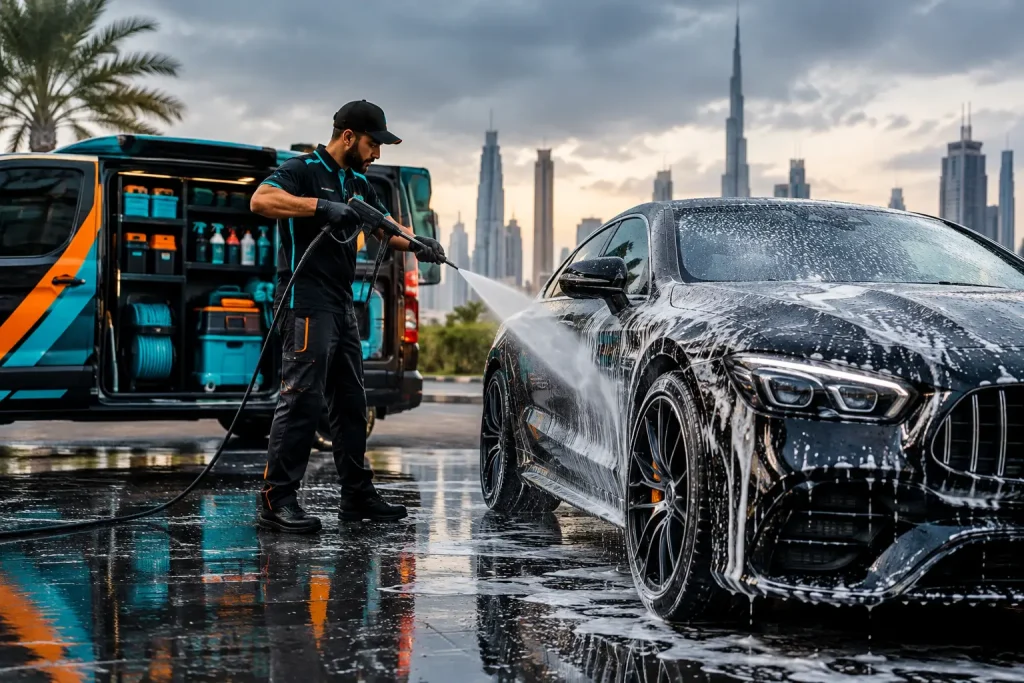
A few drops on the windshield do not always cancel a wash. But can mobile washers work rain conditions and still deliver the spotless, polished result you expect? Sometimes, yes. The decision depends on rainfall intensity, wind, the service you booked, your parking setup, and whether the weather will compromise the quality or safety of the work.
A premium mobile wash should never treat rain as an excuse for a rushed service. At the same time, washing a vehicle in unsuitable conditions can waste your time and leave a fresh finish exposed before it has the chance to look its best. The right approach is practical: proceed when conditions allow professional work, and reschedule when they do not.
Can Mobile Washers Work in Rain?
Light rain or a brief drizzle does not automatically stop a mobile wash. If your vehicle is parked in a covered area, such as a garage, carport, or sheltered residential bay, a trained team can often complete many services without affecting the result. Interior detailing, vacuuming, leather cleaning, odor treatment, engine bay care, and certain protected exterior services may remain possible as long as the workspace is safe.
The exterior is where timing matters most. Rainwater carries dust and contaminants from the air, especially after dry weather. If it lands on a newly cleaned car and dries naturally, it can leave water spots or a light film on the paint. That does not mean the wash was ineffective. It means the weather changed the final presentation sooner than anyone would prefer.
Steady rain, high winds, lightning, or poor drainage are different. These conditions can make exterior washing unsafe and prevent products from performing correctly. Professional mobile washers should postpone work rather than compromise the finish, the vehicle, or their team’s safety.
When a Mobile Service Can Still Go Ahead
A mobile appointment is often workable when the rain is light, intermittent, or likely to clear quickly. The best-case scenario is a sheltered parking location with enough room for the technician to move safely around the vehicle. Covered villas, private garages, and parking structures give the service team greater control over water, drying, and finishing steps.
Some services are naturally less weather-dependent than others. Interior cleaning is usually an excellent option during wet weather because the vehicle cabin is protected. A technician can restore the areas that make daily driving feel better: dusty dashboards, marked door panels, stained mats, pet hair, crumbs between seats, and lingering odors.
A maintenance wash may also be possible under cover. This is especially useful for subscription customers who want to keep a regular care schedule instead of letting dust, fingerprints, and road grime build up between appointments. The team may adjust the service sequence or focus on the parts of the vehicle that can be finished to premium standard in the available conditions.
When Rescheduling Is the Better Choice
Rescheduling is the smart call when rain is heavy enough to continually wet the paint after drying. It is also appropriate when wind blows dust, leaves, or debris onto the vehicle during the service. A freshly cleaned exterior should not be immediately covered in new contamination.
Ceramic coating, paint polishing, waxing, and other protective treatments deserve even more caution. These services require clean, controlled surfaces and suitable curing conditions. Applying a premium treatment while rain or moisture can interfere with the process is not good value. The vehicle may look improved initially, but the durability and finish you paid for may not reach their full potential.
Poor lighting can also matter. Detailers rely on clear visibility to inspect paintwork, identify residue, and check the final result. A dark stormy afternoon in an open parking space may not allow the level of inspection required for correction work or a high-gloss polish.
If a service is postponed, that is quality control, not inconvenience for its own sake. The goal is to give your vehicle the clean, revived finish it deserves, not simply mark an appointment as complete.
Rain Can Affect More Than the Exterior
Many drivers assume rain naturally cleans a car. In reality, rain often makes a vehicle look worse once it dries. Water gathers airborne dust, mineral particles, and pollution, then leaves them behind across the hood, roof, glass, and side panels. In a city environment, this can create visible spots and dull the finish.
The first rain after a long dry stretch is often the messiest. Dust sitting in the air and on surrounding surfaces becomes muddy runoff. It can settle into door jambs, wheel arches, grilles, and lower panels – places that quickly make an otherwise clean vehicle look neglected.
Wet roads add another layer of grime. Tires throw dirty water onto rocker panels and wheels, while traffic spray coats the rear of SUVs and sedans. That is why a post-rain maintenance wash can be worthwhile, even if your vehicle was cleaned shortly before the weather changed.
How to Protect Your Vehicle Before and After Rain
The best defense against rainy weather is not skipping vehicle care. It is choosing the right kind of care at the right time. A properly maintained protective layer helps water bead and roll off more easily, which makes post-rain cleanup less demanding and reduces how tightly dirt sticks to the paint.
For everyday protection, regular washing and a quality wax or sealant can help preserve gloss between appointments. For drivers who want longer-lasting protection, ceramic coating can make routine maintenance easier while enhancing the depth and clarity of the paint. Neither option makes a vehicle immune to dirt or water spots, but both give contamination less opportunity to cling to the surface.
After rainfall, avoid wiping a dusty wet vehicle with a dry towel. That can drag grit over the paint and create fine scratches. If the rain was light and the car has only a few spots, a gentle rinse followed by proper drying may be enough. If road spray or muddy residue is visible, book a wash instead of trying to rub it away in the parking lot.
Pay attention to the details rain tends to expose. Clean glass improves visibility, clear door drains help prevent standing water, and fresh floor mats stop moisture and grime from traveling into the cabin. If children, pets, or wet shoes are regular passengers, an interior refresh after rainy days keeps the vehicle from developing that damp, closed-in smell.
What to Expect From a Professional Mobile Team
A quality mobile service does not rely on one rigid weather rule. The team should assess the forecast, your parking arrangement, the service selected, and the condition of the vehicle. Communication matters: if the weather changes shortly before an appointment, you should know whether the service can be adapted, moved to a covered space, or rescheduled.
For a simple exterior wash, the team may recommend waiting until the rain passes so your vehicle can be properly washed, dried, and checked. For interior work, there may be no reason to lose the appointment at all. For protective treatments, patience is usually worth more than speed.
Ride Revivers takes this approach because premium doorstep care is about the finished result, not just the process. A service should leave your vehicle looking cleaner, glossier, and better protected – not vulnerable to an avoidable weather-related setback.
A Simple Way to Plan Your Appointment
Check the forecast the morning of your booking, but do not cancel at the first sign of clouds. Light rain may pass, while a covered parking space can keep an appointment fully practical. If you are scheduling polishing, ceramic coating, or a detailed exterior restoration, choose a dry window whenever possible and allow enough time after the service for the finish to settle properly.
If rain arrives unexpectedly, send a quick update about your parking conditions. A photo of the available covered area can help a mobile team determine the best next step. This avoids guesswork and gives you a clear answer before the technician arrives.
Your vehicle does not need perfect weather to receive professional care. It needs the right service, the right conditions, and a team willing to protect the standard of the result. When the skies clear, a proper wash and protective finish can bring back the clean, confident look that rainy roads try to take away.