

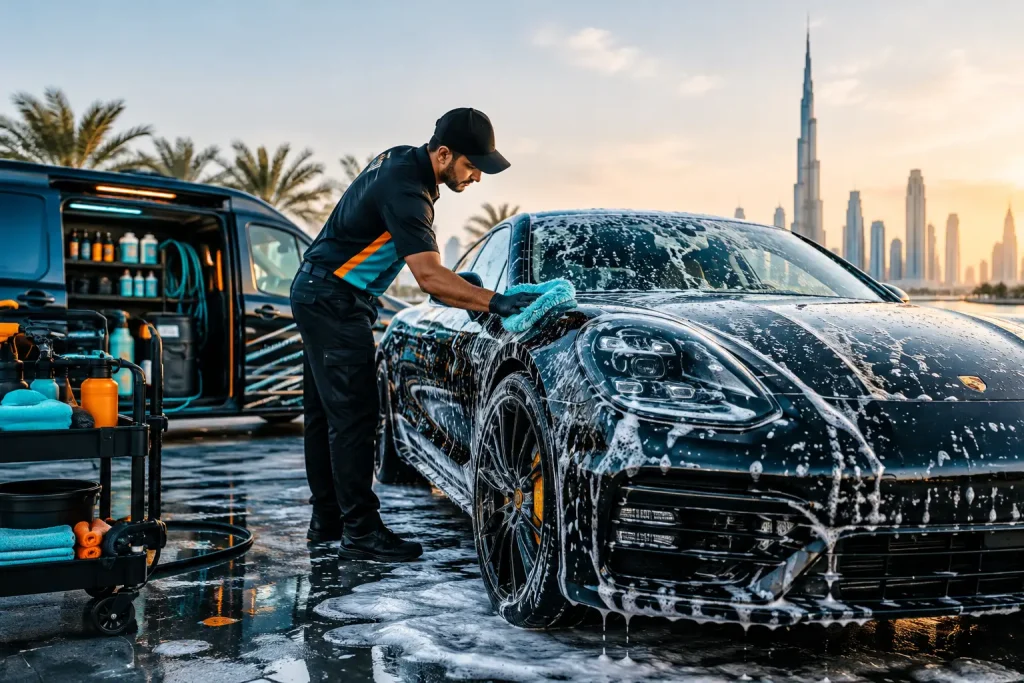
A clean vehicle should not leave behind wasted water, harsh runoff, or a dull finish. This eco friendly car wash guide is built for owners who expect a spotless car, motorcycle, or SUV without treating sustainability like an afterthought. The right approach protects the surfaces you see every day, helps preserve long-term value, and keeps vehicle care convenient enough to maintain.
For busy households, the best wash is not always the one with the biggest foam show. It is the one that removes dust, road film, fingerprints, and interior buildup safely, uses only the water and products required, and leaves the paint looking revived rather than rushed.
What Makes a Car Wash Eco Friendly?
An eco-friendly wash is not simply a wash that uses less water. It is a method that considers the full job: water use, product choice, runoff control, towel hygiene, and whether the process protects the vehicle well enough to reduce unnecessary corrective work later.
A professional wash should use biodegradable, vehicle-safe cleaning products and controlled application methods rather than flooding every panel with water. It should also avoid sending oils, brake dust, detergent residue, and road grime into storm drains. This matters in urban communities, where a quick driveway wash can carry contaminants across paving and into drainage systems.
Paint safety matters, too. Reusing a dirty bucket, wiping dry dust with the wrong towel, or using a strong household cleaner may look efficient in the moment, but it can create swirl marks, strip protective layers, or stain delicate trim. Sustainable care and premium care are not competing goals. Done properly, they support each other.
Eco Friendly Car Wash Guide: Start With the Right Method
The best method depends on how dirty the vehicle is, where it is parked, and the type of finish protection already in place. A lightly dusty car needs a very different process than an SUV returning from a sandy road trip or a vehicle with mud around the wheel arches.
For light dust and fresh city grime
A low-water or rinseless wash can be an excellent choice when the paint is lightly soiled. The surface is treated with a lubricating cleaning solution, then gently wiped with clean microfiber towels and finished dry. This approach can deliver a polished result with far less water than a traditional hose wash.
The key word is lightly. If dirt feels gritty under your fingertips, do not drag a towel across it. That is how fine scratches begin. A proper pre-treatment and safe rinse are worth the extra step.
For heavy dirt, sand, or road film
A controlled pressure rinse is often the smarter option for heavily soiled vehicles. It removes loose contamination before contact washing begins, reducing the chance of abrasive particles being moved across the paint. The goal is not maximum water pressure or maximum water volume. It is targeted cleaning that gets the contamination off efficiently.
Wheel wells, lower doors, tires, and the rear of the vehicle usually need the most attention. These areas collect the heaviest buildup, especially in hot, dusty conditions such as Dubai. Cleaning them correctly prevents grime from being transferred to cleaner paintwork later in the wash.
For protected paint and ceramic coatings
Ceramic-coated vehicles still get dirty, but they should not be treated with aggressive chemicals or rough tools. Use pH-balanced products, soft wash media, and clean drying towels to maintain the coating’s hydrophobic performance and gloss. Harsh degreasers can weaken the behavior of protective treatments over time, even when the paint still appears shiny.
A coating reduces maintenance effort. It does not eliminate the need for careful washing.
Use Products That Respect the Vehicle and the Environment
A premium result starts with products designed for automotive surfaces. Household dish soap may cut through grease, but it can also remove wax, dry out rubber trim, and leave protection compromised. Strong cleaners may be useful in specific professional applications, yet they should never be the default for every panel.
Look for biodegradable, pH-balanced formulas suited to the job: a gentle wash solution for paint, a dedicated wheel cleaner for brake dust, an interior-safe product for touchpoints, and a glass cleaner that does not leave haze. Product discipline reduces waste because you use the right amount of the right formula instead of repeatedly re-cleaning a surface.
Dilution also matters. More product does not mean more clean. Overusing concentrate creates residue, increases runoff, and can make rinsing take longer. Trained technicians measure products carefully so the finish stays clean, clear, and protected.
Microfiber Care Is Part of the Process
The towel is one of the most underestimated parts of vehicle care. Premium microfiber can lift dirt away from paint when it is clean and used correctly. A towel that has picked up grit from wheels or lower panels can do the opposite within seconds.
Keep separate towels for paint, wheels, glass, and interior surfaces. Fold paint towels into clean sections, switch them out frequently, and never use a dropped towel on the vehicle without washing it first. This is a small operational detail with a major impact on gloss.
For drying, use absorbent microfiber rather than rough cotton rags or improvised cloths. Blot or glide the towel gently, especially on darker paint where swirl marks are easier to see. A quality drying aid can add lubrication and help reduce water spotting without excessive product use.
Do Not Forget the Interior
Eco-conscious car care extends beyond the bodywork. The interior is where drivers and passengers spend their time, and it benefits from a focused, low-waste routine. Vacuuming mats and seats, removing debris from door pockets, and wiping high-touch areas with surface-appropriate products can make the cabin feel genuinely refreshed.
Avoid saturating seats, carpets, or headliners. Excess moisture can create odors and extend drying time, particularly in humid weather. A controlled approach uses minimal liquid, targeted brushes, clean towels, and effective extraction when deeper treatment is needed.
For families, focus on cup holders, seat creases, child-seat zones, handles, and rear-seat mats. For daily commuters, prioritize steering wheels, touchscreens, gear selectors, and air vents. The right interior service should leave no greasy shine, sticky residue, or overpowering fragrance behind.
Protect the Finish So You Wash Less Aggressively
Protection is one of the most practical ways to make routine washing more efficient. Wax, sealants, and ceramic coatings create a barrier between the vehicle and contaminants such as dust, water spots, bird droppings, and tree residue. When contamination does not bond as strongly to the surface, it can often be removed with less friction and less intensive cleaning.
Each option has a different role. Wax offers rich gloss and short-term protection. Synthetic sealants usually provide longer-lasting durability. Ceramic coatings offer stronger chemical resistance and easier maintenance, but require careful preparation and professional application to perform as intended.
No protective treatment makes a vehicle invincible. Bird droppings, tree sap, and fuel spills should still be removed promptly. Leaving them in place can etch or stain paint, turning a simple maintenance wash into a correction job.
A Simple Routine That Keeps Standards High
For most vehicles, a regular maintenance wash every one to two weeks prevents dirt from becoming difficult to remove. The exact schedule depends on parking conditions, driving frequency, weather, and whether the vehicle is protected. A garage-kept weekend car may need less attention than a family SUV parked outdoors every day.
Between full washes, take a minute to deal with the small issues that become bigger ones: fresh bird droppings, windshield residue, spilled drinks, or sand collecting in floor mats. This keeps the next service faster, safer, and more resource-conscious.
A useful routine includes four habits:
- Remove fresh contaminants before they bake into the paint.
- Keep separate microfiber towels for different surfaces.
- Choose a low-water method only when the vehicle is lightly soiled.
- Schedule protective treatments before the finish begins to look tired.
Why Doorstep Service Can Be the Smarter Choice
Convenience should not require lower standards. A trained mobile team can bring a structured process, professional products, clean equipment, and the right techniques directly to your location. That means less time waiting in line, less unnecessary driving, and a more consistent approach to maintaining every vehicle in the household.
For multi-car families, recurring service plans can be especially useful. Regular care prevents buildup across daily drivers, school-run vehicles, and weekend cars, while add-on detailing can be booked when a deeper reset is needed. Ride Revivers approaches this work as more than a basic wash: the aim is visible revival, lasting protection, and a finish that feels worth coming back to.
Your vehicle does not need a wasteful routine to look exceptional. Give it considered care, use the right method for the dirt in front of you, and keep protection in place so every wash works harder for the shine you want.