

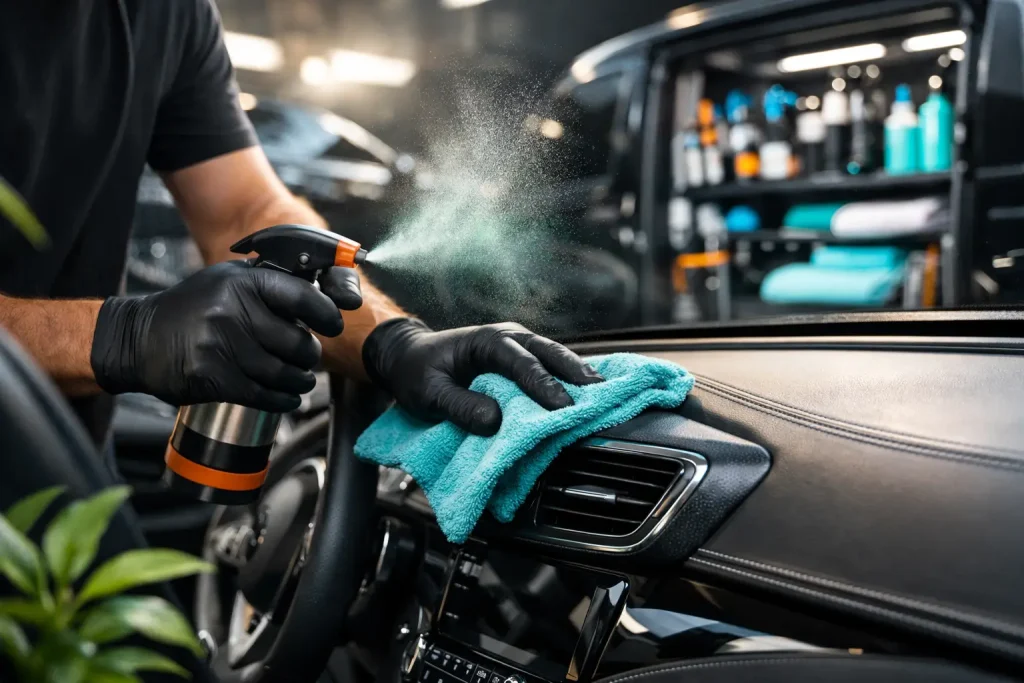
That stale smell usually starts small – yesterday’s coffee, gym shoes in the back seat, food crumbs in the console, a little trapped moisture from the floor mats. Then one day you open the door and the cabin feels tired instead of clean. If you want to know how to keep car cabin fresh, the answer is not one air freshener hanging from the mirror. It is a few smart habits, regular interior care, and fast action before odors settle into fabric, vents, and carpets.
A fresh cabin changes the entire driving experience. It makes your car feel newer, cleaner, and better cared for. For families, it keeps the daily school-run chaos under control. For busy professionals, it helps the car feel polished instead of lived-in. And if you care about long-term value, a clean-smelling interior is one of the first things people notice.
How to keep car cabin fresh starts with the real cause
Most bad interior odors are not mysterious. They come from buildup. Dust settles into vents. Food drops under the seats. Sweat gets absorbed into upholstery. Moisture lingers in mats and carpets. Even a car that looks tidy on the surface can hold odor deep inside soft materials.
That is why masking the smell rarely works for long. A strong fragrance may cover the problem for a day or two, but once it fades, the original odor is still there. In some cases, heavy perfume-based products make the cabin feel worse because they mix with the underlying smell instead of removing it.
The better approach is simple. Remove the source, clean the surfaces that hold odor, and keep air moving through a dry, uncluttered interior.
Keep the cabin empty enough to stay fresh
A car becomes stale faster when it doubles as storage. Receipts, empty bottles, takeout bags, sports gear, and kids’ items all hold odor longer than most drivers realize. The more clutter you keep inside, the easier it is for smells to build up quietly.
Start with a daily reset. When you park at home, take out trash, food packaging, used tissues, and anything damp. If you keep gym clothes, beach towels, or sports equipment in the trunk, move them out the same day. This one habit makes a bigger difference than most odor sprays.
It also helps to limit what stays in the car permanently. Keep only what you actually need. A cleaner cabin is easier to wipe down, vacuum, and ventilate.
Vacuuming matters more than fragrance
If you are serious about how to keep car cabin fresh, vacuuming should be part of your routine. Crumbs, hair, dust, and dirt settle into carpets, seat seams, and under-seat areas where odor begins. Once that buildup mixes with heat and humidity, the cabin starts smelling older than it should.
A light vacuum once a week is enough for many drivers. Families with kids or pet owners may need it more often. Focus on carpets, floor mats, seat edges, and the narrow spaces around the center console. Those hidden areas collect the most debris.
Floor mats deserve extra attention. They absorb moisture, dirt, and whatever comes in on your shoes. If they stay damp or dirty, the entire car can smell musty. Remove them, shake them out, wash when needed, and let them dry fully before putting them back.
Wipe the surfaces that trap oils and smells
The dashboard may look clean, but interior surfaces hold more than dust. Door panels, steering wheels, armrests, cup holders, and touchpoints collect skin oils, drink spills, and grime that slowly affect how the cabin smells.
Use a safe interior cleaner and microfiber cloth to wipe hard surfaces regularly. Cup holders and storage compartments need closer attention because they often trap sticky residue. If a spill happened weeks ago, that may be the odor you are still noticing now.
Leather seats need a different approach than cloth. Leather should be cleaned gently and conditioned occasionally to prevent a dry, worn smell. Cloth seats absorb odor more easily, so they benefit from more frequent fabric-safe cleaning. The trade-off is simple – leather is easier to wipe down, while cloth can feel more comfortable but holds smells longer.
Don’t ignore the AC system
Sometimes the cabin smells fine until the air conditioning turns on. That usually points to dust, moisture, or bacteria in the vents or cabin air filter. If your AC has a sour, damp, or musty smell, spraying the seats will not fix it.
The cabin air filter should be checked and replaced at the interval recommended for your vehicle, or sooner if you drive often in dusty conditions. A dirty filter restricts airflow and allows odors to circulate back into the cabin.
It also helps to run the fan for a minute before shutting the car off, especially after heavy AC use. This can reduce moisture left in the system. If the smell is persistent, a deeper vent and HVAC cleaning may be the right move. That is one of those cases where a professional service saves time and gets better results than trial and error.
Moisture is the fastest way to lose freshness
A dry cabin almost always smells better than a damp one. Spilled drinks, wet umbrellas, damp mats, and even a small leak can create a lingering odor surprisingly fast. In warmer climates, trapped moisture becomes a bigger problem because heat accelerates the smell.
If anything wet gets into the car, dry it the same day. Blot fabric seats and carpets immediately. Remove mats if needed. Crack the windows in a safe setting or ventilate the car while parked. If moisture has already soaked into the carpet padding, surface cleaning may not be enough.
This is where many drivers underestimate the issue. The visible area may feel dry while deeper layers still hold moisture. If the car smells musty no matter what you do, the problem may be underneath, not on top.
Be careful with air fresheners
Air fresheners have their place, but they should be the finishing touch, not the main strategy. A subtle, clean scent can make the cabin feel polished. An overpowering scent can feel cheap, distracting, or even cause headaches.
Choose lighter fragrances and use less than you think you need. If the car only smells fresh when the product is brand new, the underlying cabin probably needs cleaning. A truly clean interior should smell neutral first, then lightly scented if you prefer.
Activated charcoal bags and odor absorbers can also help in between cleanings, especially in cars that stay parked for long periods. They are not instant fixes, but they can support a fresher environment without adding heavy fragrance.
Food rules make a real difference
If you eat in the car often, freshness becomes much harder to maintain. Fast food, coffee, protein shakes, fries, and sauces all leave behind residue and odor particles, even when nothing obvious spills.
You do not have to ban food completely, but setting a few limits helps. Avoid leaving cups overnight. Clear packaging right away. Check under child seats and around the seat rails where snacks tend to disappear. Small leftovers are one of the biggest reasons a car smells off even after a quick wipe-down.
For rideshare drivers, parents, or anyone constantly on the move, this matters even more. The more your cabin functions like a second living space, the more disciplined the cleanup needs to be.
How to keep car cabin fresh long term
Daily habits keep odors under control, but long-term freshness comes from deeper interior care. Over time, normal use leaves a layer of embedded dust, fabric odor, and surface buildup that basic wiping cannot fully remove.
That is where professional interior detailing earns its value. Deep vacuuming, fabric treatment, leather care, vent cleaning, and focused attention on high-contact surfaces restore the cabin in a way that quick at-home cleaning usually cannot. For busy owners, it is also the easiest way to reset the vehicle without losing half a day.
If your schedule is full, using a premium mobile service makes the process even easier because the work happens at your doorstep. A properly detailed interior does more than look clean. It feels revived, smells balanced, and stays easier to maintain afterward.
Some cars need this more often than others. A family SUV, daily commuter, or pet-friendly vehicle may need deep interior care every few months. A lightly used sedan may go longer. It depends on how you use the car, who rides in it, and how much heat, dust, and traffic your routine brings into the cabin.
Freshness is not about chasing perfume. It is about keeping the interior clean enough that clean air, clean fabric, and clean surfaces do the work for you. When your cabin feels crisp the moment the door opens, every drive starts better.