

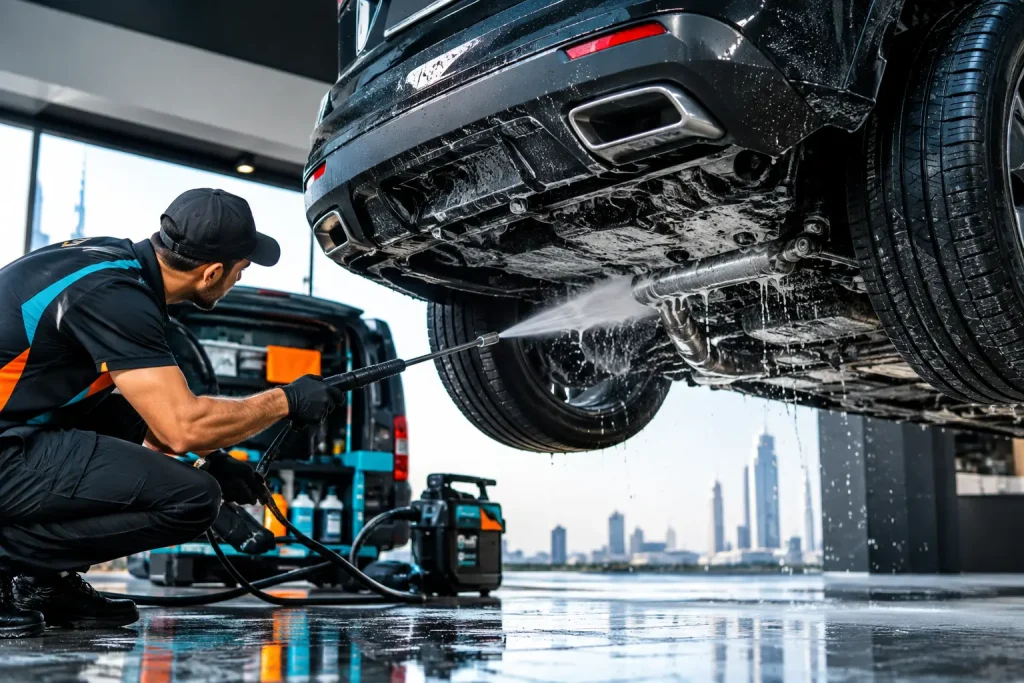
Road dust is easy to see on paintwork. The buildup underneath your vehicle is not – until it begins to affect how clean, protected, and well-maintained your ride feels. The right underbody wash methods remove the dirt that ordinary exterior washes cannot reach, helping protect the components that work hardest every day.
For busy vehicle owners, this is not about adding another unnecessary service. It is about giving your car a complete clean when it has been exposed to dusty roads, sand, construction debris, rainwater runoff, or frequent long drives. A quality underbody wash is targeted, controlled, and designed to clean thoroughly without treating sensitive components carelessly.
Why the Undercarriage Needs Special Attention
Your vehicle’s underbody is constantly exposed to road grime, fine dust, mud, salt residue, oil traces, and moisture. Even a car with a spotless exterior can carry a surprising amount of buildup around wheel wells, suspension parts, protective panels, and the lower chassis.
Over time, that grime can trap moisture against metal surfaces and make it harder to spot early issues such as fluid leaks, worn components, or damaged shields. In dry, dusty conditions, fine particles can also settle into tight spaces and turn into a stubborn layer that a quick rinse will not remove.
An underbody wash does not replace mechanical maintenance, and it will not repair corrosion or worn parts. What it does provide is a cleaner foundation for routine care. It helps preserve the fresh, looked-after appearance of your vehicle while making the underside easier to inspect during servicing.
The Main Underbody Wash Methods
There is no single best method for every vehicle. The right approach depends on how dirty the undercarriage is, the vehicle’s ground clearance, the surfaces being cleaned, and whether you need maintenance cleaning or a deeper revival.
Low-Pressure Rinsing
A controlled low-pressure rinse is the gentlest starting point. It flushes loose dust, sand, and fresh mud from accessible areas beneath the vehicle, including wheel arches and lower protective panels.
This method is ideal for regular upkeep, especially after driving through dusty areas or following light rain. It is less aggressive than high-pressure washing, which makes it a sensible choice around aging components, rubber boots, electrical connectors, and areas where excessive force could push water where it does not belong.
Its limitation is simple: low pressure will not fully shift hardened dirt, greasy residue, or packed mud. For a vehicle that has gone too long without underbody care, it may need to be combined with a more detailed process.
Targeted Pressure Washing
Targeted pressure washing is one of the most effective underbody wash methods when performed by trained professionals. Instead of blasting the entire underside at maximum force, the technician uses the right pressure, nozzle angle, and working distance for the specific area being cleaned.
This approach is effective at removing compacted road dirt from wheel wells, suspension areas, skid plates, and lower chassis surfaces. It can bring a visibly neglected undercarriage back to a cleaner condition far more efficiently than a basic rinse.
The trade-off is that pressure must be handled with care. Too much force at close range can damage delicate finishes, dislodge loose material, or force water into vulnerable areas. Premium care is not about using the strongest setting available. It is about using the right setting in the right place.
Foam and Degreasing Treatment
When the underside has oily film, greasy residue, or stubborn dirt bonded to the surface, a dedicated cleaner may be needed before rinsing. A professional-grade, surface-appropriate degreaser loosens contamination so it can be removed with less aggressive water pressure.
This method is particularly useful around the lower engine area, wheel wells, and protective covers that collect heavy grime. The product should be applied selectively, allowed to dwell briefly, then rinsed thoroughly. Leaving strong chemicals on surfaces for too long can create avoidable risk, so this is not a case for overapplication.
Eco-conscious products matter here. The goal is a cleaner vehicle without relying on unnecessarily harsh chemicals or allowing runoff to become an afterthought.
Undercarriage Spray Tools
Specialized undercarriage spray tools use a low-profile bar or wand to direct water upward beneath the vehicle. They are useful for reaching areas that are difficult to access from the side, particularly on sedans and SUVs with limited clearance.
The benefit is broader, more even coverage. The limitation is precision. These tools are excellent for flushing loose debris but may not reach every tight corner or remove stubborn buildup without follow-up work around wheel wells and accessible components.
For routine washes, an undercarriage sprayer can be a practical part of the process. For deeper detailing, it works best alongside targeted cleaning rather than as the only step.
Steam Cleaning for Detail Work
Steam is sometimes used for precise underbody detailing because it can soften grime using minimal water. It is especially useful for tight spots, textured surfaces, and areas where technicians want more control than a broad water spray provides.
Steam cleaning is not always necessary for a standard underbody wash. It takes more time and is best reserved for detailed restoration work, localized grime, or vehicles receiving a more comprehensive treatment. On the right vehicle, however, it can deliver a refined finish with less runoff.
What a Professional Underbody Wash Should Include
A premium service should begin with an assessment, not a one-size-fits-all rinse. The technician should consider the vehicle’s clearance, visible buildup, recent driving conditions, and any areas that need a gentler approach.
The wash should focus on accessible underbody surfaces, wheel wells, lower panels, and suspension-adjacent areas without interfering with mechanical parts. It should also include a careful final rinse to remove loosened dirt and cleaning product residue. A quick visual check afterward helps confirm that the work is complete and that no obvious issue has been hidden beneath grime.
At Ride Revivers, the focus is on doorstep care that respects both your time and your vehicle. That means bringing professional technique to the service rather than treating an underbody wash as an add-on completed in a rush.
How Often Should You Clean the Underbody?
For most daily-driven vehicles, an underbody wash every few months is a smart maintenance habit. You may want it more often if you regularly drive on unpaved roads, near construction zones, through standing water, or in conditions where sand and debris collect quickly.
A family SUV that sees school runs, weekend drives, and frequent outdoor parking may need more attention than a sedan used mostly for short city commutes. Similarly, a vehicle that has just returned from a beach trip or a muddy road should not wait for its next routine wash cycle.
The best indicator is not the calendar alone. Look at your wheel wells and lower panels. If they show caked dirt, dried mud, or heavy dust after a normal wash, the underside likely needs care too.
Avoid These Common Underbody Cleaning Mistakes
The biggest mistake is treating the underside as if every surface can handle maximum pressure. Another is applying household cleaners or harsh degreasers without knowing whether they are appropriate for automotive materials. Both can create more problems than they solve.
Avoid crawling under an unsupported vehicle to clean it. If access is limited, use proper equipment or book a trained mobile service. Also avoid washing immediately after a long drive when components may still be very hot. Let the vehicle cool first, then clean with controlled water pressure and suitable products.
A clean undercarriage is not the most visible upgrade you can make, but it is one of the clearest signs of complete vehicle care. Give the surfaces beneath your vehicle the same standard of attention you expect from the paint, wheels, and cabin – and your ride will stay fresher from every angle.