

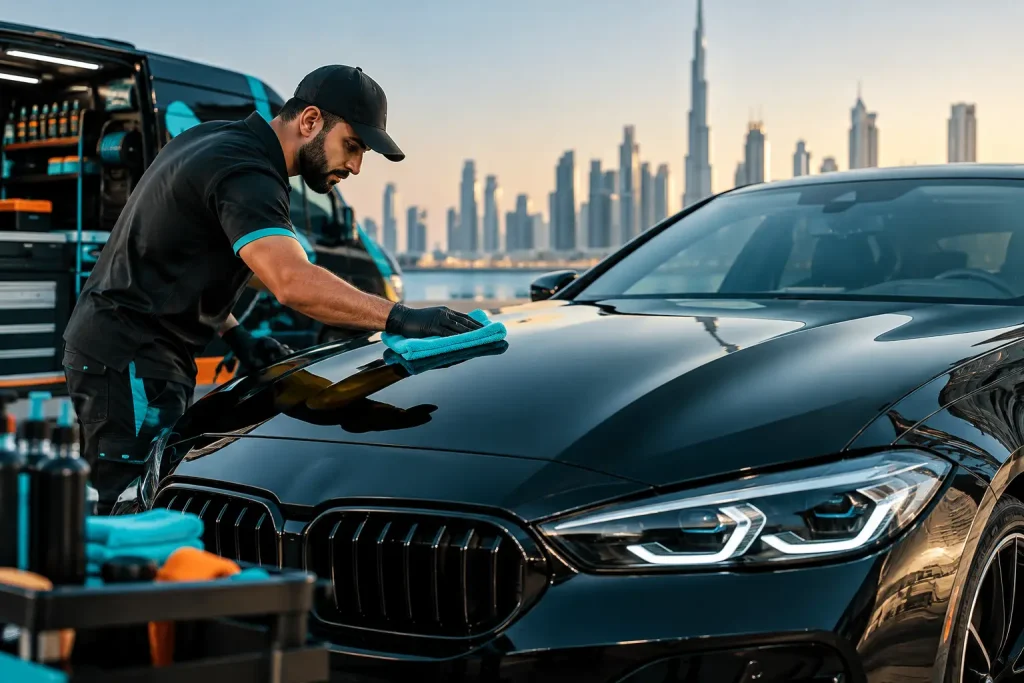
A freshly detailed car can look exceptional for a week. Then dust settles, water spots appear, and road grime starts dulling the finish. What does ceramic coating do differently? It gives the painted surface a durable, glossy layer that makes your vehicle easier to clean and helps it stay polished between washes.
Ceramic coating is not a replacement for regular vehicle care, and it will not make paint invincible. It is a premium protective treatment designed to reduce the impact of everyday exposure while enhancing the deep, clean shine that makes a well-kept car stand out.
What Does Ceramic Coating Do?
A ceramic coating bonds to your vehicle’s clear coat, creating a thin protective barrier over the painted surface. Most professional coatings use advanced ceramic-based chemistry that cures into a hard, water-repelling finish. Rather than sitting on top of the paint like a traditional wax, the coating is designed to adhere more permanently when it is correctly applied to properly prepared paint.
The immediate difference is often visual. Paint looks richer, reflections look sharper, and the surface has a slick, freshly polished appearance. The practical benefit follows every time you wash the car: dirt, dust, light mud, and grime have a harder time clinging to the surface.
For drivers who take pride in a consistently clean vehicle but do not have time for frequent deep detailing, that combination of gloss and lower-maintenance protection is the real value.
It repels water and makes washing easier
One of the most noticeable ceramic coating benefits is hydrophobicity. Water beads up and rolls away instead of spreading across the paint. This helps carry away loose dirt and makes drying faster after a wash or rain shower.
Hydrophobic does not mean self-cleaning. Your car will still collect dust, especially when parked outdoors, and it will still need routine washing. What changes is the effort required. Contaminants are less likely to bond aggressively to a protected surface, so a professional wash can restore that crisp finish more efficiently.
This matters in places such as Dubai, where fine dust, heat, and frequent driving can quickly take the edge off an unprotected shine. A coating helps simplify maintenance, but regular gentle washing remains essential.
It helps defend paint from daily contaminants
Your vehicle encounters more than just dirt. Bird droppings, tree sap, insects, fuel residue, industrial fallout, and road film can all affect the clear coat if left in place for too long. Ceramic coating provides an additional sacrificial layer between these contaminants and your paint.
That extra barrier can reduce the likelihood of staining or etching when contaminants are removed promptly. It also offers some resistance to UV exposure, which helps preserve the paint’s clarity and color over time.
The key phrase is “helps protect.” Ceramic coating is not a force field. Strong chemicals, neglected bird droppings, hard-water deposits, and long-term sun exposure can still cause damage. The coating gives you more time and a better chance of avoiding it, not permission to ignore routine care.
It creates a deeper, longer-lasting gloss
Wax can deliver an attractive shine, but it generally wears away relatively quickly. Ceramic coating is chosen by many owners because it delivers a more durable finish with a high-gloss appearance that can last far beyond a typical wax application.
The look is especially striking on dark colors, metallic paint, and vehicles that have been professionally polished before coating. Polishing removes or reduces light swirl marks and surface haze, allowing the coating to lock in a clearer, more reflective finish.
That preparation step is why a quality ceramic coating service is more than applying a bottle of product. The coating will preserve the condition underneath it. If the paint is dull, scratched, or contaminated before application, those imperfections may remain visible after the coating cures.
What Ceramic Coating Does Not Do
Ceramic coating is frequently marketed with big promises, so it is worth being direct about its limits. It does not make your car scratch-proof. Improper washing, dirty towels, branches, parking-lot contact, and abrasive debris can still leave marks on the surface.
It also does not prevent stone chips. A ceramic coating is extremely thin and is not designed to absorb the impact of rocks at highway speed. Drivers seeking impact protection for high-risk areas should consider a purpose-built paint protection film as a separate solution.
Ceramic coating does not eliminate the need to wash your car, either. Water may bead beautifully, but dust and minerals can still remain behind as water dries. Without proper maintenance, mineral deposits can create water spots even on coated paint.
Finally, it is not the right choice for every vehicle in every condition. If you plan to sell a vehicle immediately, need low-cost short-term shine, or have paint that needs substantial repair, a polish and wax service may be the more sensible first step. The best treatment depends on the car’s condition, how it is used, where it is parked, and how long you plan to keep it.
The Application Process Matters as Much as the Coating
A premium result starts with paint preparation. The vehicle should be thoroughly washed, decontaminated, and often treated with a clay bar to remove bonded particles that normal washing cannot lift. This creates a clean surface for polishing and coating.
Next comes paint correction or polishing when needed. Light swirls, oxidation, and haze can be reduced to improve clarity and gloss. This is the transformation stage: the paint is refined before the protective layer goes on.
Only then is the ceramic coating carefully applied in controlled sections and allowed to cure according to the product’s requirements. Rushing this process, applying coating over contamination, or skipping preparation can affect durability, appearance, and evenness.
At Ride Revivers, a ceramic coating treatment is best approached as part of a complete paint-care plan, not a quick add-on after an ordinary wash. The goal is to revive the finish first, then protect that renewed gloss with professional attention to the details.
How Long Does Ceramic Coating Last?
Durability varies widely. The product used, preparation quality, application method, parking habits, climate, wash routine, and vehicle usage all matter. Some entry-level ceramic treatments may provide strong performance for months, while professional-grade options can protect the finish for years when maintained properly.
A garage-kept weekend car will generally retain its coating differently than a daily driver parked outside under intense sun. Frequent automatic car washes with harsh brushes can also shorten the life and reduce the gloss of any protective finish.
The best way to extend coating performance is simple: wash the vehicle regularly with safe products, remove bird droppings and tree sap quickly, avoid abrasive wash tools, and schedule periodic professional maintenance. A coating makes good care easier, but good care is still what keeps the vehicle looking revived.
Is Ceramic Coating Worth It?
Ceramic coating is worth considering when you value a polished appearance, want easier routine cleaning, and plan to keep your vehicle looking its best over time. It is particularly useful for newer cars, freshly corrected paint, premium vehicles, and busy households that want lasting results without turning vehicle care into a weekend project.
It may be less compelling if you are looking solely for the lowest-cost shine or expect complete protection from scratches and road damage. In that case, a wax, sealant, or targeted paint repair may better fit your immediate needs.
The right coating should make owning your vehicle feel simpler: less time fighting grime, more confidence in the finish, and a clean gloss that still looks intentional long after detailing day. Start with honest advice about your paint’s condition, then choose the protection that supports how you actually drive, park, and care for your car.