

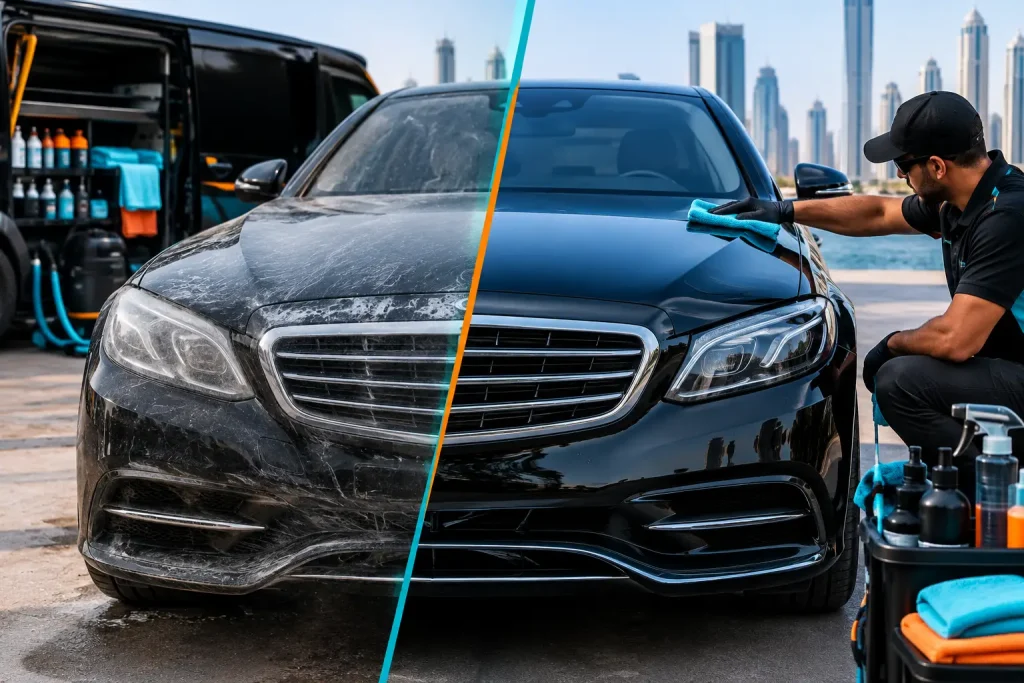
A vehicle can be freshly washed and still look tired. Under direct sunlight, fine swirls, hazy patches, water spots, and random scratches can flatten the paint’s color and make an otherwise well-kept car feel older than it is. This paint correction transformation story is about the difference between cleaning a surface and genuinely reviving it.
For owners who take pride in their vehicle, paint correction is not about chasing an unrealistic, filter-perfect finish. It is a carefully controlled process that improves clarity, depth, and gloss by reducing defects in the clear coat. The result is the kind of finish that makes you look back at your car after parking it – not because it is new, but because it looks properly cared for again.
The Starting Point: Clean, But Far From Clear
The vehicle arrived looking presentable from a distance. Its bodywork had been washed regularly, the wheels were tidy, and there was no major accident damage. But closer inspection told a different story.
The paint had accumulated the marks of normal ownership: circular swirls from improper washing, light scratches around the door handles, faint water-spot etching on horizontal panels, and dullness across the hood and roof. In the shade, the paint seemed acceptable. Under inspection lighting and Dubai’s intense sun, it lost its depth.
This is a common situation. Dust, sand, frequent washing, roadside parking, and quick wipe-downs all leave their mark over time. Even quality paint can appear gray or cloudy when its clear coat is covered in tiny, uneven abrasions.
A standard wash removes dirt. A wax may add temporary shine. Neither will reliably remove or substantially reduce defects already sitting in the paintwork. That is where correction earns its place.
Paint Correction Transformation Story: The Assessment
The most important work happened before a polishing machine touched the vehicle. A trained detailer assessed the condition of each panel, identified deeper scratches, and considered the paint type and overall finish.
Not every mark should be chased. Paint correction works by leveling the surface around defects, which means removing a very small amount of clear coat. That makes judgment essential. The goal is maximum visual improvement while respecting the long-term health of the paint.
In this case, the target was not “perfect at any cost.” The target was a refined, high-gloss finish with significant reduction in visible swirls and light scratches. A few deeper marks remained because removing them completely would have required more correction than was sensible. That is not a compromise in quality. It is professional paint care.
For premium vehicle owners, this distinction matters. A responsible correction service should explain what can improve, what may remain, and why protecting paint is more valuable than making promises no clear coat can support.
The Prep Work That Makes the Difference
Polishing a dirty surface can create more damage, so the transformation began with careful preparation. The exterior received a detailed wash to remove loose contamination, followed by a clay-bar treatment where needed to lift bonded particles that normal washing leaves behind.
Those particles can include industrial fallout, road film, embedded dust, and mineral residue. They may not be obvious to the eye, but they can make paint feel rough and interfere with polishing results. Once the surface was clean and smooth, the paint could be evaluated properly.
Sensitive areas were masked before correction began. Trim, badges, edges, and panel gaps require attention because they do not respond to polishing in the same way as painted surfaces. This is one reason professional work feels different from a quick shine service. The finish is only as good as the preparation behind it.
At Ride Revivers, the focus is never simply to make a car look glossy for the handover. The goal is to revive the finish responsibly, then help it stay cleaner and better protected after the service is complete.
Correcting the Paint, Panel by Panel
Paint correction is a measured process, not a single product applied across the entire car. The detailer selected a suitable pad and polish combination, performed a test section, and inspected the result under proper lighting.
The test section revealed how the paint responded. A more aggressive approach may remove defects faster, but it can also be unnecessary for light swirling. A finer polish may create excellent gloss but may not address heavier marks. The right process depends on the vehicle, its paint condition, and the owner’s expectations.
Once the approach was confirmed, correction continued panel by panel. The hood, roof, trunk, doors, and fenders were treated with steady passes and frequent inspection. The change was gradual while the work was underway, but dramatic once corrected and untreated areas could be compared side by side.
The cloudy reflection became sharper. Metallic flake appeared more defined. Dark paint regained depth rather than simply looking wet for a few hours. On lighter colors, the difference showed as a cleaner, brighter, more polished appearance.
This is the part many people do not expect: paint correction does not change the color of the vehicle. It reveals the color that has been hidden by surface defects.
The Before-and-After Moment Is About More Than Shine
After the final refinement, the vehicle was wiped down and inspected again. The change was visible from every angle. What had looked like ordinary, slightly dull paint now reflected light with clarity and consistency.
The hood no longer showed a web of swirls under sunlight. The doors looked smoother and deeper. Small scratches around the handles were substantially reduced, and the overall finish looked more intentional – closer to the standard people expect from a premium vehicle.
There is also a practical benefit. A corrected surface is easier to maintain when it is protected afterward. Dirt has less visual impact on a clear, glossy finish, and regular washing becomes more rewarding because the vehicle retains that revived appearance.
Still, correction is not permanent armor. New swirls, contamination, water spots, and scratches can return if washing habits remain the same. That is why paint correction should be followed by a suitable protective treatment, such as a quality wax, sealant, or ceramic coating, depending on how the vehicle is used and maintained.
Protection Decides How Long the Revival Lasts
A protective layer helps preserve the work by improving water behavior, reducing the grip of dirt, and adding a sacrificial barrier between the environment and the paint. Ceramic coating is often a strong choice for owners who want longer-term protection and easier maintenance, but it is not automatically the answer for every car.
A vehicle parked indoors, driven occasionally, and washed professionally may need a different plan than a daily driver exposed to heat, dust, construction areas, and outdoor parking. The best protection is the one that matches real life, not just a product label.
Ongoing care matters just as much. Avoid dry wiping dusty paint, use clean wash tools, and remove bird droppings or mineral-heavy water spots promptly. These small habits protect the finish far better than an occasional emergency polish.
For busy households with more than one vehicle, scheduled doorstep washing and maintenance can make that consistency much easier. The car stays presentable between deeper services, and problems are noticed before they become more difficult to correct.
Is Paint Correction Worth It?
Paint correction is worth considering when your paint looks dull despite regular washing, when swirl marks become obvious in sunlight, or when you are preparing a vehicle for an important occasion or resale. It is also a smart choice before applying ceramic protection, since coating over defects can lock in the look of those defects rather than improve them.
It may not be the right next step if the vehicle needs bodywork, has peeling clear coat, or has severe paint failure. Polishing cannot repair missing paint, deep chips, or structural damage. In those cases, a transparent assessment is more valuable than a quick cosmetic promise.
The right transformation is not the one that makes a vehicle look different for a day. It is the one that restores pride in every reflection, protects what can be protected, and gives your vehicle the care its daily role in your life deserves.